1 hour agoBusiness
23LENS
2 SourcesIndia
 thebalanced.news
India Expands Free Trade Agreements Amid Rising Trade Deficit and Sectoral Caution
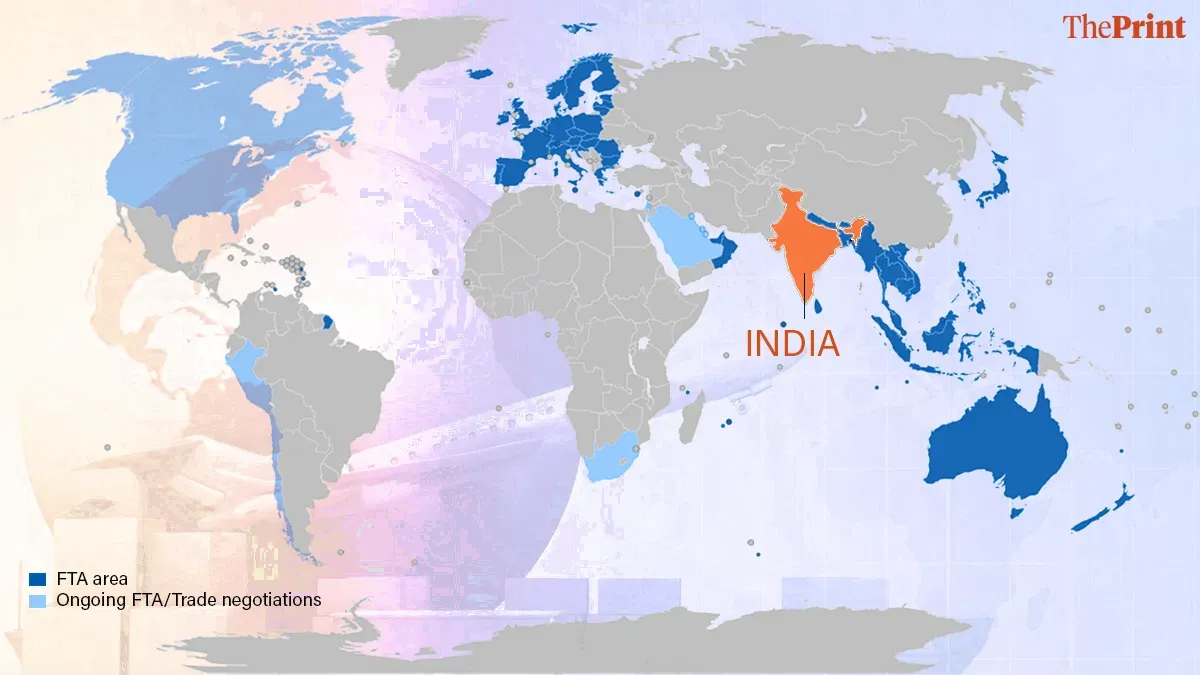
India is increasingly signing free trade agreements (FTAs), marking a shift from its historically protectionist stance. Between FY25 and FY26, exports grew by 4.22%, but imports rose faster at 6.47%, widening the trade deficit from $94.66 billion to $119.30 billion. While FTAs aim to boost exports and economic integration, India remains cautious, especially in sensitive sectors like agriculture and dairy, to protect domestic producers and livelihoods.
Political Bias
20%72%8%
Sentiment
50%
AI Analysis
Political bias across 2 sources
● Left 20%● Center 72%● Right 8%
The articles primarily present a factual overview of India's trade policy shifts without overt political framing. They highlight government data and policy approaches, noting both economic liberalization efforts and protective measures for sensitive sectors. The coverage reflects a balanced view of economic strategy without partisan commentary, focusing on policy implications rather than political debate.
Sentiment — Neutral (50/100)
The tone across the articles is neutral and analytical, emphasizing data on trade growth and deficits alongside cautious policy decisions. There is no evident positive or negative bias; instead, the coverage provides a measured assessment of the benefits and challenges of India's evolving trade agreements, acknowledging both progress and ongoing concerns.
How 2 sources covered this story
Each source's own headline, political lean, and sentiment — so you can see framing differences at a glance.
| Source | Their headline | Bias | Sentiment |
|---|---|---|---|
| theprint | India on an FTA signing spree, but limited utilisation widening trade deficits temper gains | Center | Neutral |
| theprint | India on an FTA signing spree, but limited utilisation widening trade deficits temper gains | Center | Neutral |
Coverage timeline
theprint broke this story on 24 May, 02:16 am. Other outlets followed.
- 1theprint24 May, 02:16 amIndia on an FTA signing spree, but limited utilisation widening trade deficits temper gains
- 2theprint24 May, 04:22 amIndia on an FTA signing spree, but limited utilisation widening trade deficits temper gains
Lens Score breakdown
23/100
Public interest0/100
Coverage gap100%
Well-covered story — coverage matches public importance.
Who's involved
Institutions and figures named across source coverage.
Government
Ministry of Commerce
Story context
- Category
- Business
- Location
- India
- Sources analysed
- 2
- Last analysed
- 24 May 2026
- Key entities
- Free trade agreementSouth Asian Free Trade AreaBalance of tradeProtectionismTariffAgricultureUnited States dollarIndiaChinaRegional Comprehensive Economic PartnershipSouth KoreaRules of origin
Related Coverage
Select a news story to see related coverage from other media outlets.