Review of Key Social and Technological Reforms in Modi Government’s 12 Years
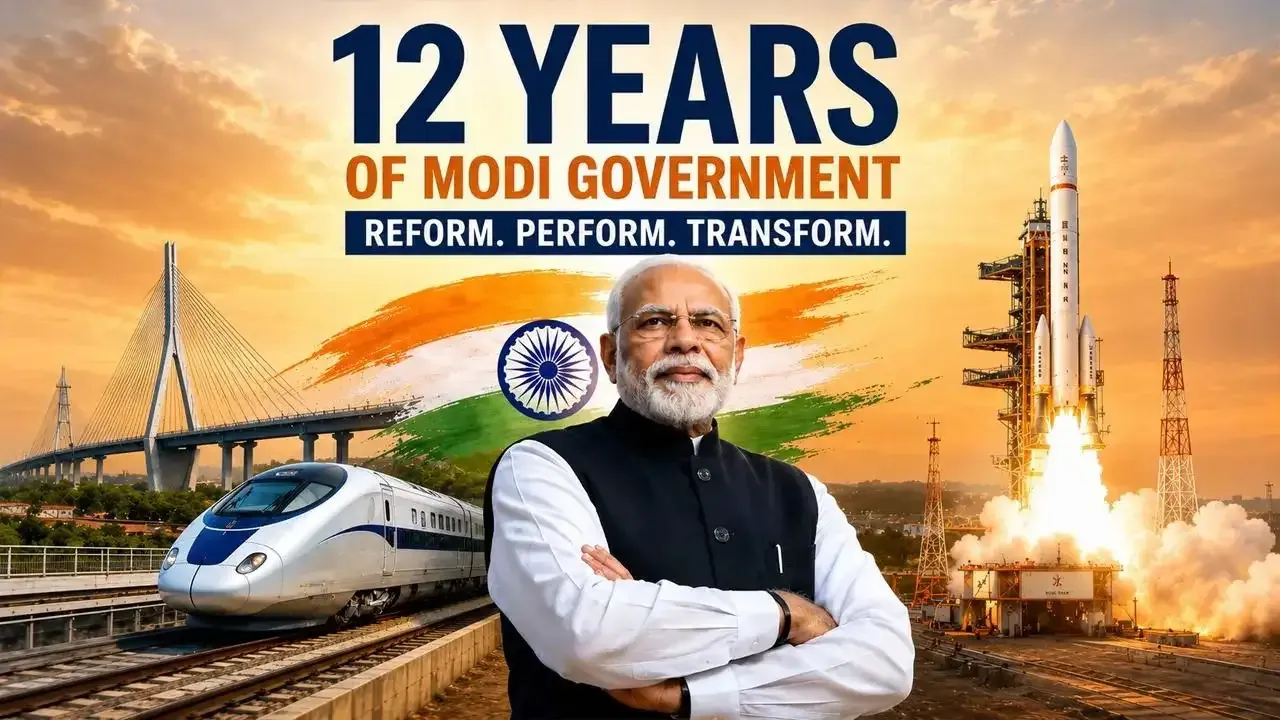
As Prime Minister Narendra Modi's government completes 12 years, key reforms have reshaped India’s social and technological landscape. Initiatives like Jan Dhan bank accounts, UPI digital payments, and the CoWIN vaccination app have expanded financial inclusion and digital access. Women's empowerment programs such as free LPG connections and education schemes have aimed to improve health and economic independence. Supporters highlight transformative impacts, while critics view some efforts as rebranded continuations of earlier policies.
First-hand measurement across 3 sources
We measured how 3 outlets covered this story. Coverage leans centre-right overall (Left 13%, Centre 37%, Right 50%). Overall sentiment is positive (75/100). Lens Score 30/100 — low public interest.
Outlets analysed (first-hand measurement by TBN's Bias Engine):
- wion— right-leaning framing, positive sentiment
- timesnow— balanced framing, neutral sentiment
- timesnow— right-leaning framing, positive sentiment
AI Analysis
The articles present a range of perspectives, highlighting both achievements and criticisms of the Modi government’s 12-year tenure. Supportive views emphasize technological advancements and social welfare initiatives, while critical voices question the novelty of reforms. Coverage includes government officials’ statements and public reactions, reflecting a balanced framing without overt partisan bias.
The overall tone is mixed, combining positive descriptions of technological progress and social programs with acknowledgment of contested interpretations. While achievements in digital payments and women’s schemes are noted appreciatively, some skepticism about the originality and impact of reforms introduces a nuanced sentiment across the articles.
How 3 sources covered this story
Each source's own headline, political lean, and sentiment — so you can see framing differences at a glance.