1 hour agoTech
28LENS
2 SourcesHyderabad, India
 thebalanced.news
Indian Doctor Performs Remote Robot-Assisted Surgery on Hyderabad Patient from Wuhan
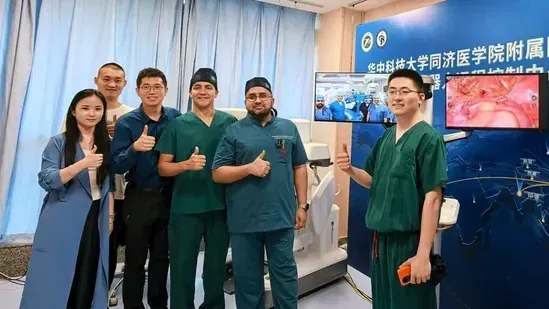
Indian urologist Dr. Syed Mohammed Ghouse performed a remote robot-assisted bladder surgery on a patient in Hyderabad from Wuhan, China, nearly 3,000 km away. Using China-developed robotic technology and ultra-fast 5G connectivity, the 90-minute procedure involved real-time control of robotic arms mirroring the surgeon's hand movements. Medical teams in both locations collaborated closely, with Hyderabad staff ready for emergency intervention. This milestone highlights advances in telemedicine integrating AI, 5G, and robotic technologies across international borders.
Political Bias
5%93%2%
Sentiment
75%
AI Analysis
Political bias across 2 sources
● Left 5%● Center 93%● Right 2%
The articles present a largely technical and medical achievement without overt political framing. One source highlights the collaboration between India and China, including official Chinese embassy praise, reflecting a diplomatic angle. Both sources focus on technological and healthcare aspects, with no partisan or ideological commentary, representing a neutral, cross-border cooperation perspective.
Sentiment — Positive (75/100)
Coverage across the articles is predominantly positive, emphasizing the successful medical procedure and technological innovation. The tone celebrates the advancement in telemedicine and international collaboration, with no critical or negative sentiment. The focus remains on the achievement and potential benefits for healthcare, conveying an optimistic outlook.
How 2 sources covered this story
Each source's own headline, political lean, and sentiment — so you can see framing differences at a glance.
| Source | Their headline | Bias | Sentiment |
|---|---|---|---|
| ndtv | Indian Doctor In China's Wuhan Performs Robot-Assisted Surgery On Hyderabad Patient 3,000 km Away | Center | Positive |
| hindustantimes | Indian doctor in Wuhan conducts surgery on Hyderabad patient from 3,000 km away | Center | Positive |
Coverage timeline
hindustantimes broke this story on 24 May, 06:22 am. Other outlets followed.
- 1hindustantimes24 May, 06:22 amIndian doctor in Wuhan conducts surgery on Hyderabad patient from 3,000 km away
- 2ndtv24 May, 11:41 amIndian Doctor In China's Wuhan Performs Robot-Assisted Surgery On Hyderabad Patient 3,000 km Away
Lens Score breakdown
28/100
Public interest0/100
Coverage gap100%
Well-covered story — coverage matches public importance.
Story context
- Category
- Tech
- Location
- Hyderabad, India
- Sources analysed
- 2
- Last analysed
- 24 May 2026
- Key entities
- HyderabadSurgeryRobot-assisted surgeryRobotic arm3D computer graphicsHigh-definition televisionAnesthesiaIndiaStereoscopyReal-time computing5GVideo game console
Related Coverage
Select a news story to see related coverage from other media outlets.