2 hours agoBusiness
23LENS
2 SourcesUnited States
 thebalanced.news
Singapore's Semiconductor Strategy and India's Industrial Expertise in Chip Manufacturing
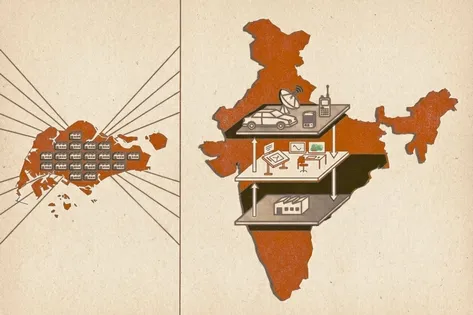
Singapore's semiconductor strategy evolved from nurturing a national champion to hosting a dense cluster of foreign fabs, exemplified by the 2010 sale of Chartered Semiconductor to GlobalFoundries, enhancing scale and R&D depth. Meanwhile, India's semiconductor strength lies in decades of patient industrial learning within key supply chain layers, emphasizing the long-term expertise and relationships essential to chip manufacturing. Both highlight different approaches to building semiconductor capabilities amid global industry complexities.
Political Bias
10%85%5%
Sentiment
68%
AI Analysis
Political bias across 2 sources
● Left 10%● Center 85%● Right 5%
The articles present contrasting national approaches to semiconductor development without partisan framing. One highlights Singapore's state-led economic strategy focusing on foreign investment and rentier models, while the other emphasizes India's gradual accumulation of industrial knowledge. Both perspectives are descriptive, reflecting economic and strategic viewpoints rather than political ideologies.
Sentiment — Positive (68/100)
The tone across the articles is analytical and neutral, focusing on factual recounting of semiconductor industry developments. There is no overtly positive or negative sentiment; instead, the coverage underscores challenges and strategic decisions in both countries, maintaining an objective and informative tone throughout.
How 2 sources covered this story
Each source's own headline, political lean, and sentiment — so you can see framing differences at a glance.
| Source | Their headline | Bias | Sentiment |
|---|---|---|---|
| news18 | Opinion The Hidden Architecture Of The Chip Economy | Center | Positive |
| swarajyamag | Singapore's Semiconductor Playbook Is A Rentier's Playbook. India Is Not A Rentier State | Center | Neutral |
Coverage timeline
swarajyamag broke this story on 25 Apr, 04:30 am. Other outlets followed.
- 1swarajyamag25 Apr, 04:30 amSingapore's Semiconductor Playbook Is A Rentier's Playbook. India Is Not A Rentier State
- 2news1825 Apr, 09:05 amOpinion The Hidden Architecture Of The Chip Economy
Lens Score breakdown
23/100
Public interest0/100
Coverage gap100%
Well-covered story — coverage matches public importance.
Who's involved
Institutions and figures named across source coverage.
Government
Indian Government
Corporate
AMDSynopsysMicronTexas InstrumentsIntelQualcommNVIDIA
Story context
- Category
- Business
- Location
- United States
- Sources analysed
- 2
- Last analysed
- 25 Apr 2026
- Key entities
- Semiconductor fabrication plantWafer (electronics)TSMCSemiconductorUnited StatesTaiwanSouth KoreaIndiaMicron TechnologyEcosystemAMDNanometre
Related Coverage
Select a news story to see related coverage from other media outlets.