1 hour agoBusiness
29LENS
2 SourcesBangalore, India
 thebalanced.news
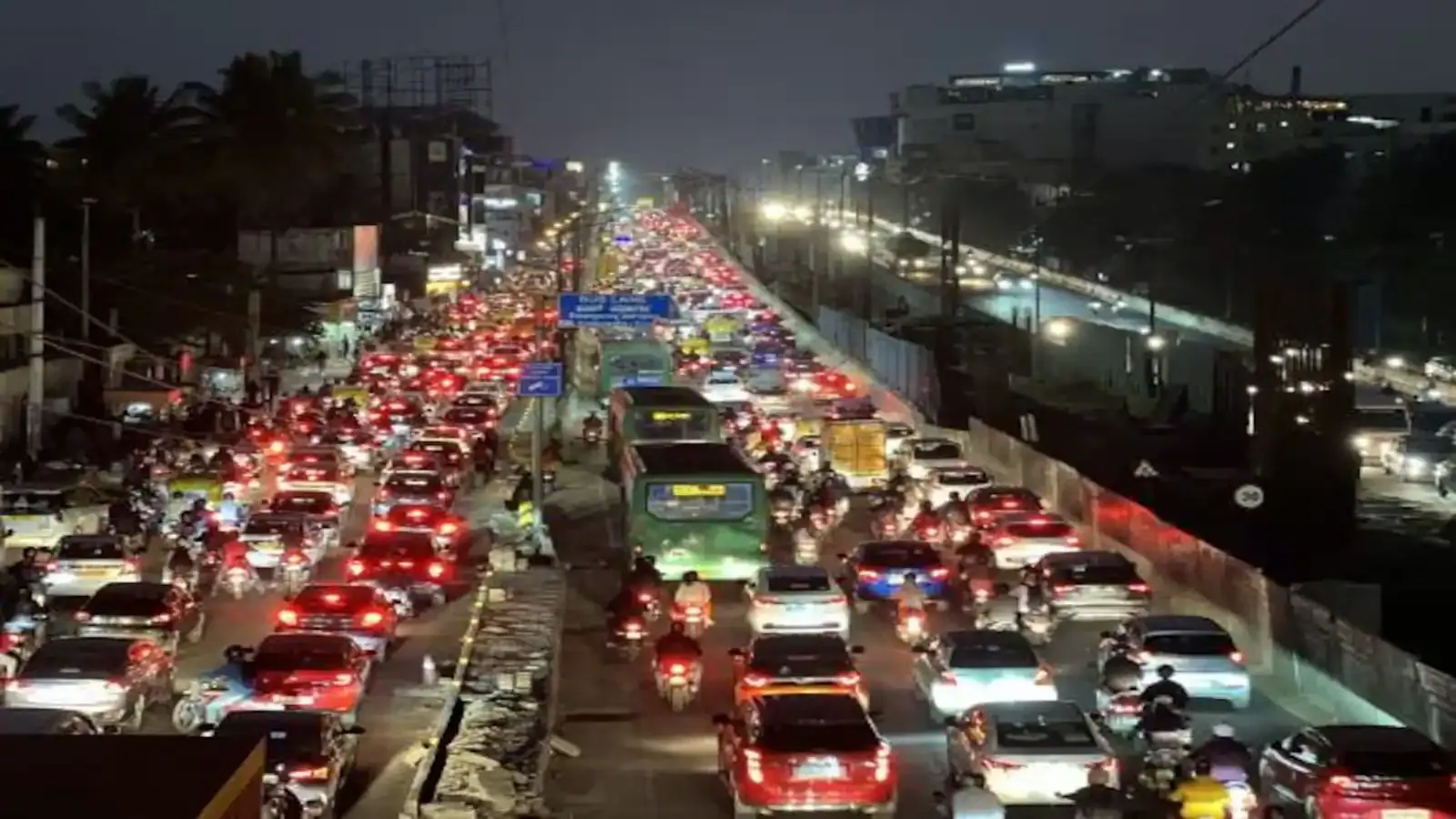
Bengaluru Professionals Lose Over 750 Hours Annually in Traffic Amid WFH Rollback
Bengaluru's working professionals spend an average of 754 hours annually commuting, equivalent to 68 full working days lost to traffic, as average one-way commute times rose 16% from 54 minutes in 2024 to 63 minutes in 2025. Peak-hour traffic slows to about 13.2 kmph, barely faster than jogging pace. The increase in congestion coincides with companies rolling back work-from-home policies. Economic losses from traffic delays are estimated at around Rs 20,000 crore annually, according to multiple studies.
Political Bias
5%90%5%
Sentiment
38%
AI Analysis
Political bias across 2 sources
● Left 5%● Center 90%● Right 5%
The articles primarily present data-driven insights on Bengaluru's traffic congestion and its economic impact, referencing government appeals for work-from-home policies without partisan framing. They include official traffic data and expert studies, reflecting perspectives from authorities and transportation experts. The coverage is factual, focusing on the implications of policy changes rather than political debate.
Sentiment — Neutral (38/100)
The tone across the articles is largely neutral to concerned, emphasizing the significant time and economic losses due to traffic congestion. While the data highlights negative impacts on commuters and the economy, the coverage remains factual without emotive language, focusing on the practical consequences of reverting work-from-home policies.
How 2 sources covered this story
Each source's own headline, political lean, and sentiment — so you can see framing differences at a glance.
| Source | Their headline | Bias | Sentiment |
|---|---|---|---|
| moneycontrol | PM Modi's WFH call: How much of their lives are Bengaluru's office-goers really losing to traffic?- Moneycontrol.com | Center | Neutral |
| news18 | PM Modi's Work-From-Home Message: How Much Time Bengaluru Employees Waste In Daily Traffic | Center | Neutral |
Coverage timeline
news18 broke this story on 12 May, 10:55 am. Other outlets followed.
- 1news1812 May, 10:55 amPM Modi's Work-From-Home Message: How Much Time Bengaluru Employees Waste In Daily Traffic
- 2moneycontrol13 May, 05:38 amPM Modi's WFH call: How much of their lives are Bengaluru's office-goers really losing to traffic?- Moneycontrol.com
Lens Score breakdown
29/100
Public interest0/100
Coverage gap100%
Well-covered story — coverage matches public importance.
Who's involved
Institutions and figures named across source coverage.
Enforcement
Bengaluru Traffic Police
Story context
- Category
- Business
- Location
- Bangalore, India
- Sources analysed
- 2
- Last analysed
- 13 May 2026
- Key entities
- CommutingBangaloreRemote workIndiaCroreIndian rupeeMinnesotaNetwork18 GroupNarendra ModiOuter Ring Road, HyderabadTrafficRush hour
Related Coverage
Select a news story to see related coverage from other media outlets.