2 hours agoEducation
26LENS
2 SourcesIndia
 thebalanced.news
UPSC Economy Insights: PM SVANidhi Scheme Update and Balance of Payments Overview
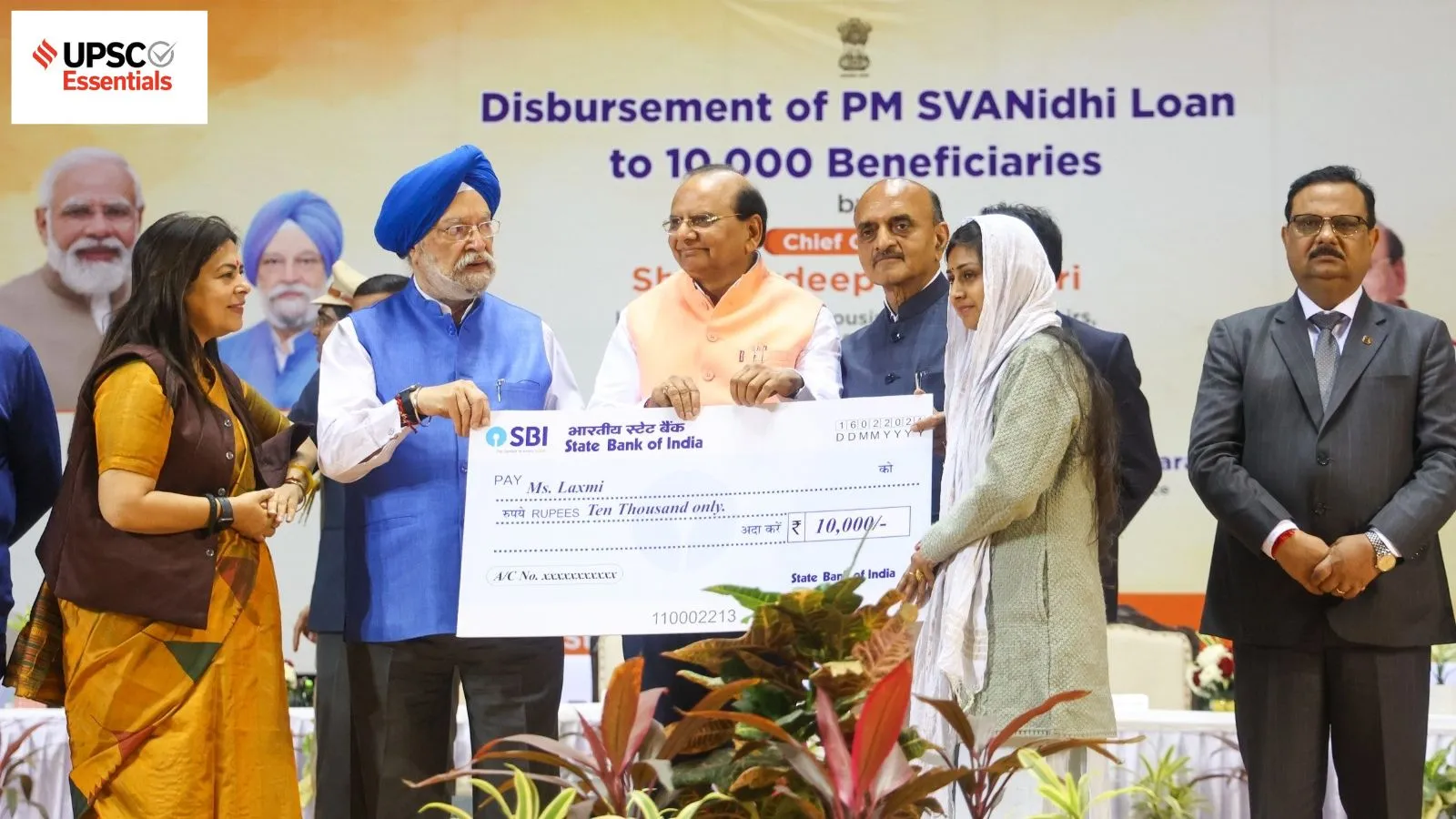
The articles provide UPSC aspirants with key economic concepts and updates. One article details the PM SVANidhi scheme, launched in 2020 to support street vendors during the COVID-19 pandemic, recently restructured to extend loan benefits until 2030 and implemented by the Ministry of Housing and Urban Affairs. The other explains India's Balance of Payments (BoP), highlighting recent data showing a moderated current account deficit and outlining BoP components and historical context, including the 1991 crisis.
Political Bias
0%100%0%
Sentiment
60%
AI Analysis
Political bias across 2 sources
● Left 0%● Center 100%● Right 0%
The articles focus on educational content for UPSC exam preparation, presenting government schemes and economic data without political commentary. They represent official government perspectives and factual economic explanations, avoiding partisan framing or critique, thus maintaining a neutral stance centered on informing aspirants.
Sentiment — Neutral (60/100)
The tone across the articles is neutral and informative, aiming to educate readers on economic topics relevant to UPSC exams. There is no emotional or evaluative language; instead, the coverage emphasizes factual updates and foundational knowledge, resulting in a balanced and objective sentiment.
How 2 sources covered this story
Each source's own headline, political lean, and sentiment — so you can see framing differences at a glance.
| Source | Their headline | Bias | Sentiment |
|---|---|---|---|
| indianexpress | UPSC Essentials Daily subject-wise quiz : Economy MCQs on PM SVANidhi scheme, Coffee in India and more (Week 159) | Center | Neutral |
| indianexpress | Knowledge Nugget BoP basics for your UPSC exam: Current account, capital account and rupee dynamics | Center | Neutral |
Coverage timeline
indianexpress broke this story on 24 Apr, 08:20 am. Other outlets followed.
- 1indianexpress24 Apr, 08:20 amKnowledge Nugget BoP basics for your UPSC exam: Current account, capital account and rupee dynamics
- 2indianexpress24 Apr, 05:25 pmUPSC Essentials Daily subject-wise quiz : Economy MCQs on PM SVANidhi scheme, Coffee in India and more (Week 159)
Lens Score breakdown
26/100
Public interest0/100
Coverage gap100%
Well-covered story — coverage matches public importance.
Who's involved
Institutions and figures named across source coverage.
Government
Department of Financial ServicesUnion CabinetMinistry of Housing and Urban AffairsReserve Bank of India
Story context
- Category
- Education
- Location
- India
- Sources analysed
- 2
- Last analysed
- 24 Apr 2026
- Key entities
- Union Public Service CommissionReserve Bank of IndiaIndiaForeign direct investmentInstagramRepurchase agreementInterest rateCOVID-19 lockdownsCoronavirusMinistry of Housing and Urban AffairsCooperative bankingRuPay
Related Coverage
Select a news story to see related coverage from other media outlets.