3 hours agoEducation
28LENS
2 SourcesNew Delhi, India
 thebalanced.news
JNU Approves 5% Supernumerary Quota for Staff Wards from 2026-27 Academic Year
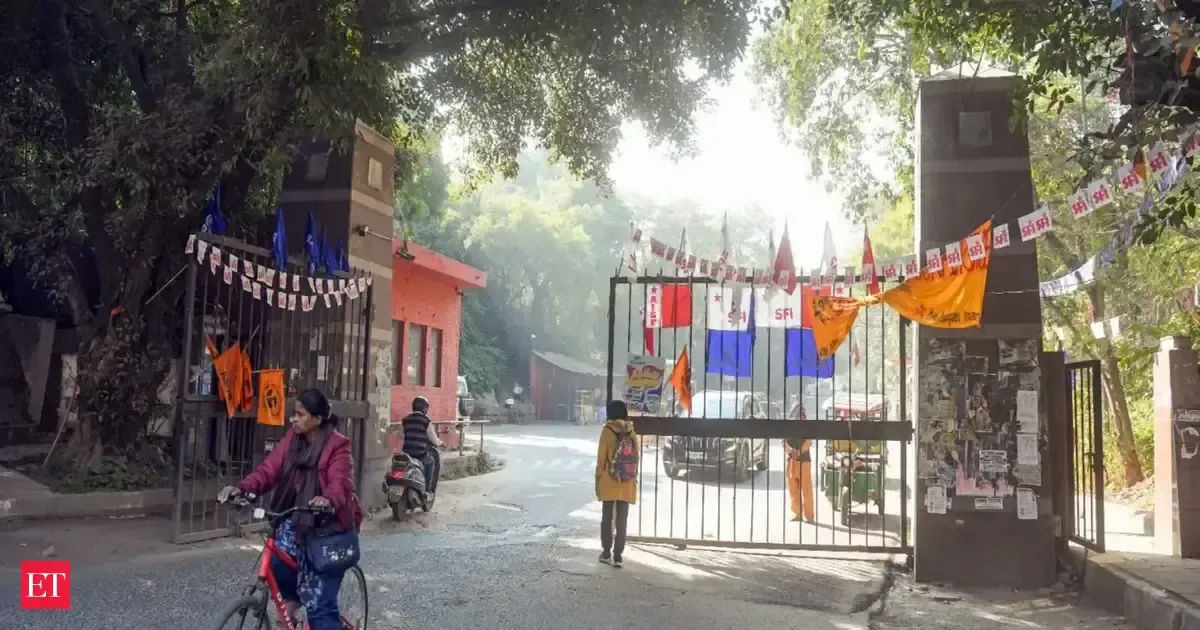
Jawaharlal Nehru University has approved a five percent supernumerary quota for the wards of teaching and non-teaching staff across all undergraduate and postgraduate courses starting from the 2026-27 academic session. This quota increase from less than one percent will be implemented by creating additional seats beyond the sanctioned intake, ensuring the existing seat matrix remains unaffected. The decision follows recommendations from a committee and addresses long-standing demands from university employees, aligning JNU with other central universities offering similar quotas.
Political Bias
10%88%2%
Sentiment
65%
AI Analysis
Political bias across 2 sources
● Left 10%● Center 88%● Right 2%
The articles present a straightforward institutional decision without evident political framing. They focus on administrative actions and employee demands, reflecting perspectives from university authorities and staff representatives. The coverage is neutral, emphasizing procedural details and comparisons with other central universities, without partisan commentary or political implications.
Sentiment — Neutral (65/100)
The tone across the articles is neutral and informative, highlighting the approval of the quota increase as a procedural development. There is no emotional language or evaluative judgment, and the coverage centers on factual reporting of the decision, its rationale, and implementation, resulting in a balanced and matter-of-fact sentiment.
How 2 sources covered this story
Each source's own headline, political lean, and sentiment — so you can see framing differences at a glance.
| Source | Their headline | Bias | Sentiment |
|---|---|---|---|
| economictimes | JNU: 5 supernumerary quota for teaching, non-teaching staff kids from 2026-27 | Center | Neutral |
| news18 | JNU: 5 supernumerary quota for teaching, non-teaching staff kids from 2026-27 | Center | Neutral |
Coverage timeline
news18 broke this story on 20 Apr, 09:45 am. Other outlets followed.
- 1news1820 Apr, 09:45 amJNU: 5 supernumerary quota for teaching, non-teaching staff kids from 2026-27
- 2economictimes20 Apr, 10:05 amJNU: 5 supernumerary quota for teaching, non-teaching staff kids from 2026-27
Lens Score breakdown
28/100
Public interest0/100
Coverage gap100%
Well-covered story — coverage matches public importance.
Story context
- Category
- Education
- Location
- New Delhi, India
- Sources analysed
- 2
- Last analysed
- 20 Apr 2026
- Key entities
- Jawaharlal Nehru UniversityWard (electoral subdivision)Undergraduate educationPostgraduate educationUniversityNew DelhiCentral university (India)Delhi UniversityBanaras Hindu UniversityHigher educationCabinet (government)Asian News International
Related Coverage
Select a news story to see related coverage from other media outlets.