20 hours agoPolitics
22LENS
2 SourcesLithuania
 thebalanced.news
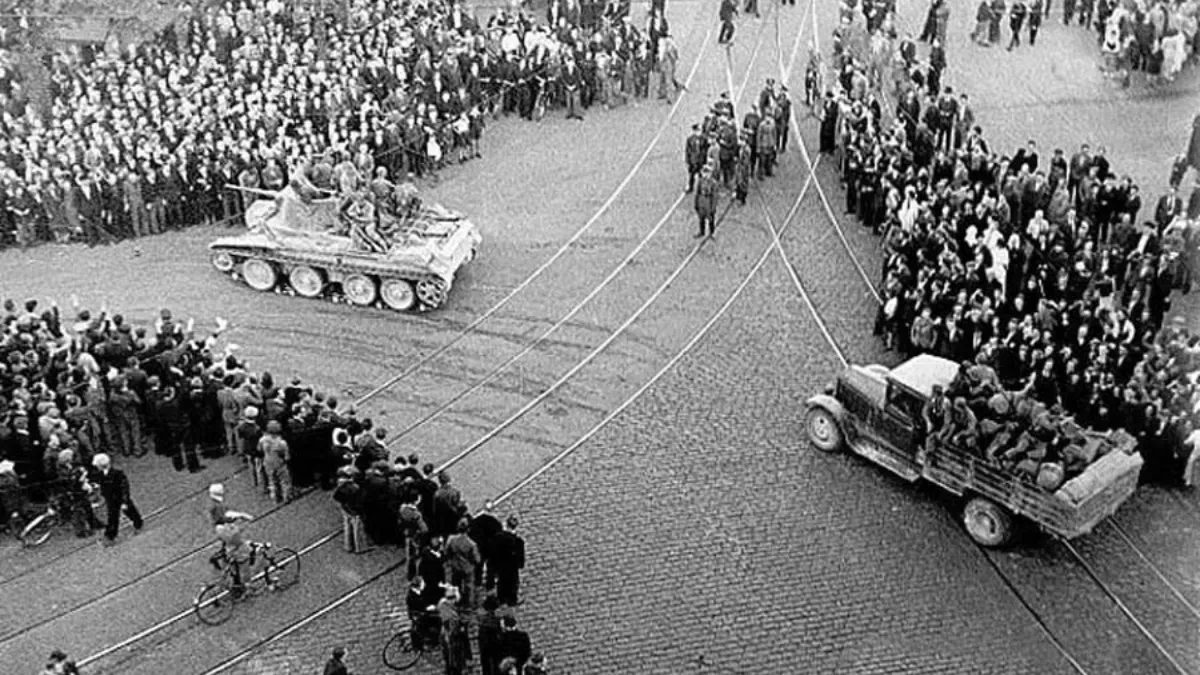
Baltic States Recall Soviet Occupation Following World War II and Molotov-Ribbentrop Pact
The Baltic states—Estonia, Latvia, and Lithuania—were not represented at the 1945 United Nations Charter signing, as World War II's end marked the start of nearly five decades of Soviet occupation rather than freedom. Following the 1939 Molotov-Ribbentrop Pact between Nazi Germany and the Soviet Union, the Baltics were assigned to Soviet control, leading to their 1940 occupation and annexation through military takeover and staged referenda. After Nazi occupation from 1941, Soviet rule was reestablished in 1945, leaving the Baltics caught between two totalitarian regimes.
Political Bias
5%93%2%
Sentiment
40%
AI Analysis
Political bias across 2 sources
● Left 5%● Center 93%● Right 2%
The articles primarily present the Baltic perspective emphasizing Soviet occupation as illegal and oppressive, reflecting a viewpoint aligned with Baltic national narratives. They highlight Soviet actions as violations of sovereignty, referencing historical agreements like the Molotov-Ribbentrop Pact. The coverage does not include Soviet or Russian perspectives, focusing instead on the Baltic experience and international principles of self-determination.
Sentiment — Neutral (40/100)
The tone across the articles is somber and reflective, emphasizing the loss of independence and prolonged occupation experienced by the Baltic states. The sentiment is largely negative regarding Soviet actions, portraying them as oppressive and illegitimate. There is no celebratory or positive framing; instead, the narrative underscores historical grievances and the struggle for sovereignty.
How 2 sources covered this story
Each source's own headline, political lean, and sentiment — so you can see framing differences at a glance.
| Source | Their headline | Bias | Sentiment |
|---|---|---|---|
| theprint | Why the Baltic states remember the Soviet Union as an occupier | Center | Neutral |
| theprint | Why the Baltic states remember the Soviet Union as an occupier | Center | Neutral |
Coverage timeline
theprint broke this story on 8 May, 05:22 am. Other outlets followed.
- 1theprint8 May, 05:22 amWhy the Baltic states remember the Soviet Union as an occupier
- 2theprint8 May, 05:46 amWhy the Baltic states remember the Soviet Union as an occupier
Lens Score breakdown
22/100
Public interest0/100
Coverage gap100%
Well-covered story — coverage matches public importance.
Story context
- Category
- Politics
- Location
- Lithuania
- Sources analysed
- 2
- Last analysed
- 8 May 2026
- Key entities
- Red ArmyNazi GermanyIndependenceBaltic statesWorld War IISoviet UnionOccupation of the Baltic statesBaltic regionLithuaniaLatviaEstoniaCharter of the United Nations
Related Coverage
Select a news story to see related coverage from other media outlets.