1 hour agoPolitics
21LENS
2 SourcesTelangana, India
 thebalanced.news
Historical Overview of Hyderabad Beyond Mughal Influence
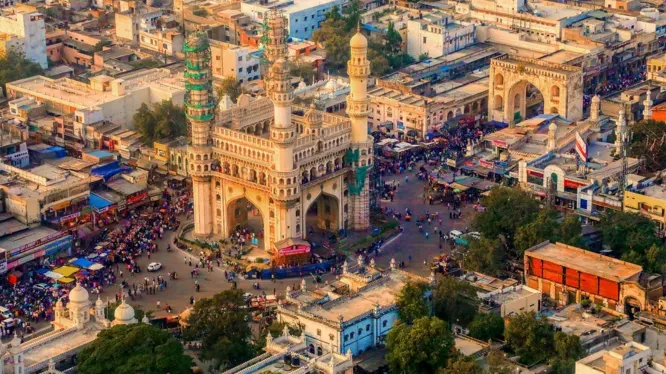
The articles highlight the historical significance of the Bahmani empire's collapse in 1518, which led to the rise of independent kingdoms like Golconda and the founding of Hyderabad by the Qutb Shahi dynasty in 1591. They emphasize that Mughal influence in the region began only after 1526 and note that Aurangzeb's 1687 campaign nearly destroyed Hyderabad. The pieces argue for greater regional historical awareness beyond the dominant Mughal narrative, especially among Hyderabadis and South Indians.
Political Bias
50%48%2%
Sentiment
48%
AI Analysis
Political bias across 2 sources
● Left 50%● Center 48%● Right 2%
The articles present a perspective critical of the central government's focus on Mughal history, suggesting a regionalist viewpoint that prioritizes Deccan and Hyderabad's local history. They emphasize the importance of recognizing the Bahmani empire and Qutb Shahi dynasty's roles, reflecting a viewpoint that challenges dominant national historical narratives. The framing is cultural and historical rather than overtly political.
Sentiment — Neutral (48/100)
The tone across the articles is informative and corrective, aiming to broaden historical understanding without expressing strong positive or negative sentiment. The sentiment is largely neutral, with a subtle critique of historical education and government emphasis, encouraging readers to appreciate regional history more fully.
How 2 sources covered this story
Each source's own headline, political lean, and sentiment — so you can see framing differences at a glance.
| Source | Their headline | Bias | Sentiment |
|---|---|---|---|
| theprint | Why Hyderabadis need a history lesson beyond the Mughal court | Center | Neutral |
| theprint | Why Hyderabadis need a history lesson beyond the Mughal court | Left | Neutral |
Coverage timeline
theprint broke this story on 29 Apr, 08:00 am. Other outlets followed.
- 1theprint29 Apr, 08:00 amWhy Hyderabadis need a history lesson beyond the Mughal court
- 2theprint29 Apr, 08:21 amWhy Hyderabadis need a history lesson beyond the Mughal court
Lens Score breakdown
21/100
Public interest0/100
Coverage gap100%
Well-covered story — coverage matches public importance.
Who's involved
Institutions and figures named across source coverage.
Government
BJP-led Central Government
Political
BJP-led central governmentBJP
Story context
- Category
- Politics
- Location
- Telangana, India
- Sources analysed
- 2
- Last analysed
- 29 Apr 2026
- Key entities
- GolcondaBahmani SultanateMughal EmpireTelanganaHyderabadQutb Shahi dynastyFirst Battle of PanipatBaburNizam of HyderabadDeccan PlateauGovernment of IndiaHistory of India
Related Coverage
Select a news story to see related coverage from other media outlets.