3 hours agoPolitics
31LENS
2 SourcesKerala, India
 thebalanced.news
Rising Welfare Spending and Public Debt Challenges in Indian States Including Kerala
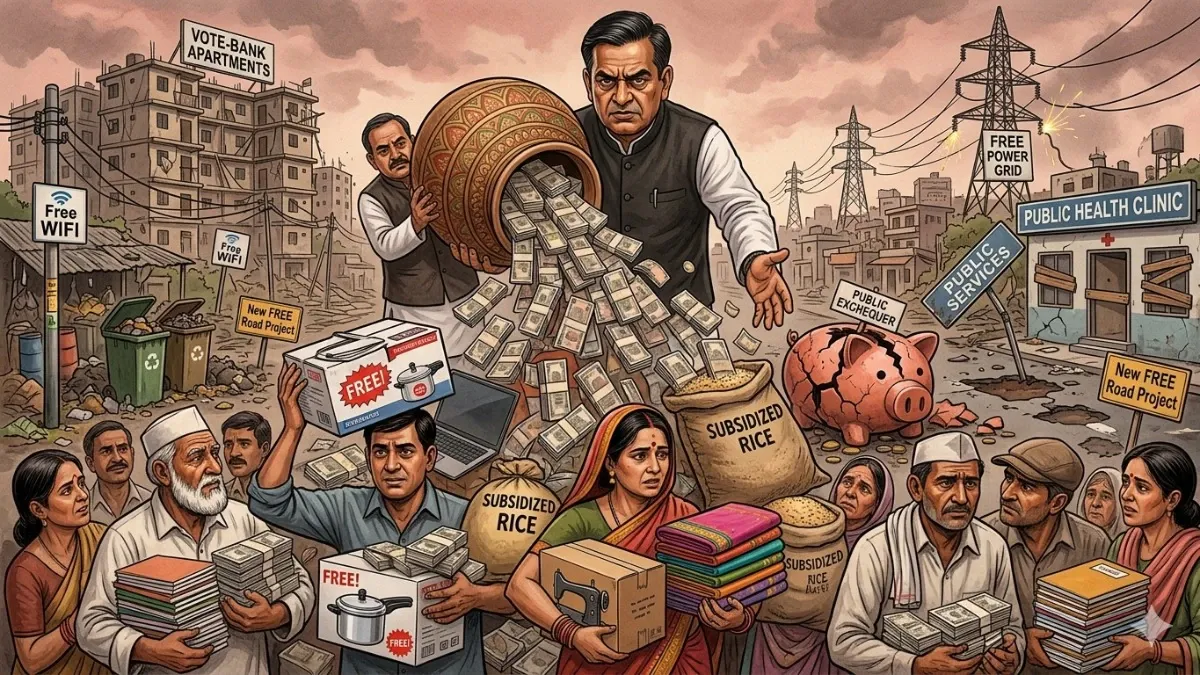
Indian states have significantly increased welfare spending, including unconditional cash transfers and subsidies, contributing to rising public debt and fiscal stress. While critics warn of unsustainable debt levels and reduced capital investment, research and some official reports highlight welfare's role in supporting consumption and human capital. In Kerala, despite elevated debt and fiscal deficits, welfare remains central to politics, with major parties prioritizing it amid concerns over financial sustainability and expenditure quality.
Political Bias
35%55%10%
Sentiment
48%
AI Analysis
Political bias across 2 sources
● Left 35%● Center 55%● Right 10%
The articles present multiple perspectives on welfare spending and fiscal health. One highlights government welfare initiatives and their economic benefits, while acknowledging opposition concerns about debt. The other focuses on Kerala's political consensus on welfare despite fiscal risks. Both sources frame the debate around sustainability and policy trade-offs without endorsing a particular political stance.
Sentiment — Neutral (48/100)
The overall tone is mixed, balancing recognition of welfare's social benefits with caution about fiscal sustainability. Coverage includes critical assessments of rising debt and expenditure quality alongside acknowledgment of welfare's positive impacts, reflecting a nuanced view rather than purely positive or negative sentiment.
How 2 sources covered this story
Each source's own headline, political lean, and sentiment — so you can see framing differences at a glance.
| Source | Their headline | Bias | Sentiment |
|---|---|---|---|
| businessstandard | Why welfare remains central in Kerala's politics despite rising public debt | Center | Neutral |
| indiatoday | The great Indian freebie dilemma | Center | Neutral |
Coverage timeline
indiatoday broke this story on 20 Apr, 09:57 am. Other outlets followed.
- 1indiatoday20 Apr, 09:57 amThe great Indian freebie dilemma
- 2businessstandard20 Apr, 11:55 amWhy welfare remains central in Kerala's politics despite rising public debt
Lens Score breakdown
31/100
Public interest0/100
Coverage gap100%
Well-covered story — coverage matches public importance.
Who's involved
Institutions and figures named across source coverage.
Government
Comptroller and Auditor GeneralNK Singh CommitteeNITI AayogEconomic SurveyComptroller and Auditor General of IndiaKerala State GovernmentCentral GovernmentReserve Bank of India
Political
BJP-led NDABharatiya Janata PartyOpposition partiesCPI(M)-led LDFCongress-led UDF
Story context
- Category
- Politics
- Location
- Kerala, India
- Sources analysed
- 2
- Last analysed
- 20 Apr 2026
- Key entities
- Indian rupeeIndiaWelfareGross domestic productComptroller and Auditor General of IndiaGovernment debtReserve Bank of IndiaPensionKeralaBharatiya Janata PartyLakhSubsidy
Related Coverage
Select a news story to see related coverage from other media outlets.