1 hour agoPolitics
32LENS
2 SourcesBatanes, Philippines
 thebalanced.news
U.S. and Allies Conduct Balikatan Exercises with Missile Deployment Near Taiwan
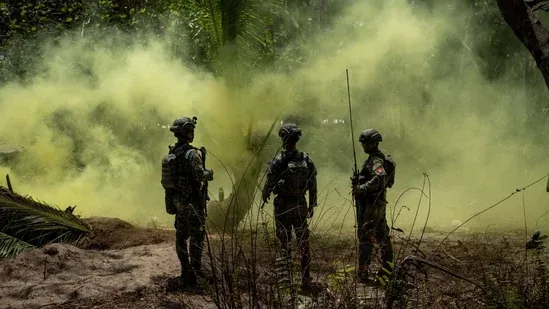
The annual Balikatan military exercises between the U.S. and the Philippines, involving around 17,000 personnel from seven nations, focus on enhancing joint defense capabilities amid regional tensions with China. This year’s drills included amphibious assault simulations in Palawan and deployment of the U.S. NMESIS coastal anti-ship missile system in Batanes near Taiwan. New participants such as Japan, Canada, and New Zealand joined, reflecting efforts to strengthen multilateral cooperation in the Asia-Pacific region.
Political Bias
10%78%12%
Sentiment
55%
AI Analysis
Political bias across 2 sources
● Left 10%● Center 78%● Right 12%
The articles present perspectives emphasizing U.S. and allied military cooperation to counter China’s regional influence, highlighting strategic deployments and expanded participation. They reflect a security-focused viewpoint common in Western and allied sources, with limited direct input from Chinese or opposing perspectives, framing the exercises as defensive and collaborative efforts without overt political commentary.
Sentiment — Neutral (55/100)
The tone across the articles is generally neutral to positive, focusing on the operational success and strategic importance of the exercises. Descriptions of military capabilities and multinational participation convey a sense of preparedness and cooperation, without sensationalism or negative language. The coverage emphasizes training benefits and alliance strengthening rather than conflict escalation.
How 2 sources covered this story
Each source's own headline, political lean, and sentiment — so you can see framing differences at a glance.
| Source | Their headline | Bias | Sentiment |
|---|---|---|---|
| hindustantimes | America's Pacific allies train to face down China together | Center | Neutral |
| theprint | US, Philippines deploy anti-ship missile system in Batanes near Taiwan for war games | Center | Neutral |
Coverage timeline
theprint broke this story on 4 May, 02:16 am. Other outlets followed.
- 1theprint4 May, 02:16 amUS, Philippines deploy anti-ship missile system in Batanes near Taiwan for war games
- 2hindustantimes4 May, 08:50 amAmerica's Pacific allies train to face down China together
Lens Score breakdown
32/100
Public interest0/100
Coverage gap100%
Well-covered story — coverage matches public importance.
Who's involved
Institutions and figures named across source coverage.
Government
Philippine Defense MinistryUnited States MilitaryPhilippines Department of National DefenseU.S. Department of Defense
Story context
- Category
- Politics
- Location
- Batanes, Philippines
- Sources analysed
- 2
- Last analysed
- 4 May 2026
- Key entities
- PhilippinesChinaBalikatanSouth China SeaBeijingSelf-governanceWashington (state)Department of National Defense (Philippines)Asia-PacificTaiwanPacific OceanNew Zealand
Related Coverage
Select a news story to see related coverage from other media outlets.