1 hour agoPolitics
33LENS
15 SourcesTamil Nadu, India
 thebalanced.news
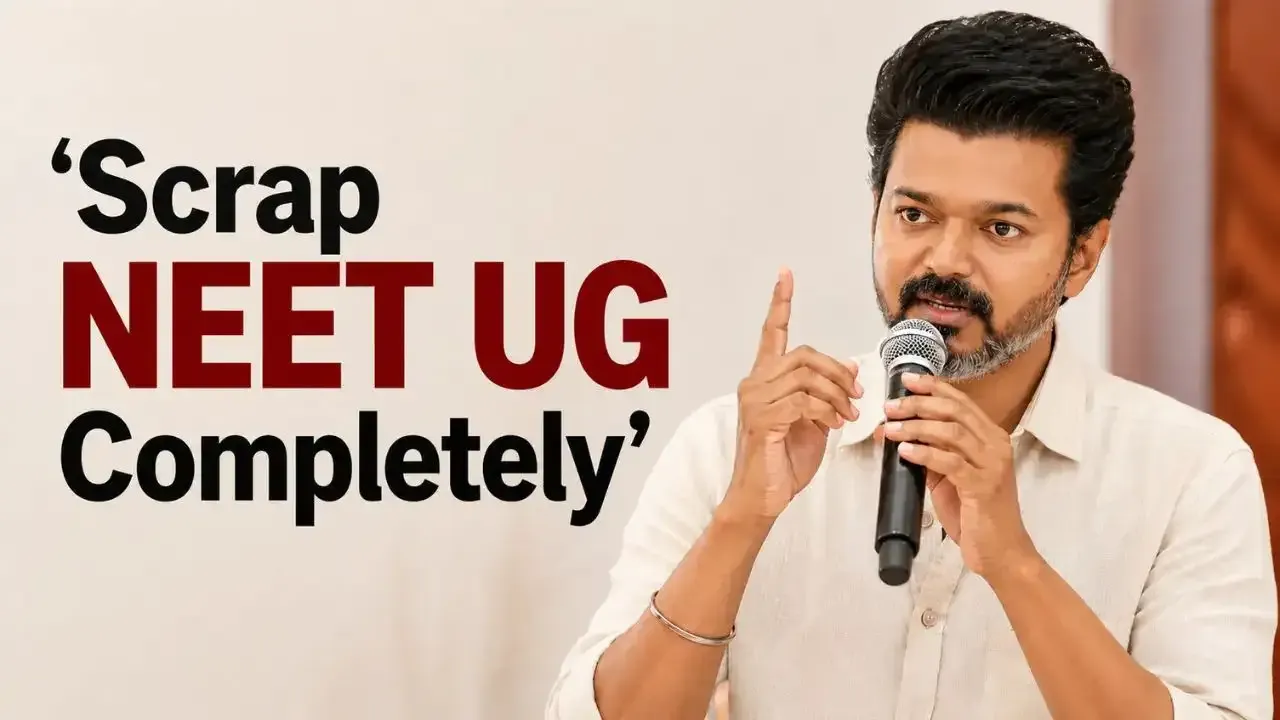
Tamil Nadu CM Urges Centre to Abolish NEET, Proposes Class 12 Marks for Medical Admissions
Following the cancellation of the NEET-UG 2026 exam due to an alleged paper leak affecting over 22 lakh candidates nationwide, Tamil Nadu Chief Minister C. Joseph Vijay renewed the state's longstanding demand to abolish NEET. He cited repeated leaks, including a 2024 incident, as evidence of structural flaws in the national exam system. Vijay urged the Union Government to allow states to conduct medical admissions based on Class 12 marks, arguing that NEET disadvantages students from rural, government, Tamil-medium, and socio-economically weaker backgrounds.
Political Bias
61%32%7%
Sentiment
34%
AI Analysis
Political bias across 15 sources
● Left 61%● Center 32%● Right 7%
The article group predominantly reflects Tamil Nadu's political stance opposing NEET, emphasizing the state's demand for abolishing the exam and restoring state-level control over medical admissions. It includes references to past and current state leadership positions, highlighting concerns about equity for disadvantaged students. The coverage largely centers on the Tamil Nadu government's viewpoint, with limited representation of the Union Government or NEET proponents.
Sentiment — Neutral (34/100)
The overall tone across the articles is critical of NEET, focusing on controversies like paper leaks and structural flaws. The sentiment conveys concern and disappointment over the exam's cancellation and its impact on students. While the coverage underscores Tamil Nadu's opposition and calls for reform, it remains factual without overtly emotional or sensational language.
How 15 sources covered this story
Each source's own headline, political lean, and sentiment — so you can see framing differences at a glance.
Coverage timeline
theprint broke this story on 12 May, 05:26 pm. Other outlets followed.
- 1theprint12 May, 05:26 pmNEET a 'scam', says DMK chief Stalin
- 2freepressjournal13 May, 01:38 pm'Fill Up Seats Based On Class 12 Marks': Tamil Nadu CM Vijay Demands End To NEET-Based Medical Admissions After NEET-UG 2026 Cancellation
- 3news1813 May, 01:49 pmNEET paper leak, cancellation proof of structural flaws, says TN CM
- 4timesnow13 May, 01:59 pmTamil Nadu CM Vijay Urges Centre To Scrap NEET, Restore MBBS Admissions Through Class 12 Marks
- 5news1813 May, 02:38 pmNEET paper leak, cancellation proof of structural flaws, abolish test says TN CM
- 6ndtv13 May, 04:15 pmVijay Pushes For Class 12-Based Medical Admissions After NEET-UG 2026 Cancellation
- 7news1813 May, 04:42 pmVijay Wants NEET Exam To Be Abolished In India, Suggests This Replacement Instead
- 8moneycontrol13 May, 05:03 pmNEET paper leak row: Vijay demands scrapping exam, says Class 12 marks should decide admissions- Moneycontrol.com
- 9moneycontrol13 May, 05:03 pmVijay urges Centre to abolish NEET after UG 2026 cancellation amid paper leak- Moneycontrol.com
- 10english13 May, 05:17 pm'Abolish Exam': Vijay Says UG NEET 2026 Paper Leak Is 'Not the First'
Lens Score breakdown
33/100
Public interest0/100
Coverage gap90%
Well-covered story — coverage matches public importance.
Accountability flags
TBN's analysis identified the following accountability dimensions in this story.
- systemic failure
This story points to a failure in institutional processes — regulation, safety, oversight, or service delivery breaking down at scale.
Who's involved
Institutions and figures named across source coverage.
Government
Union GovernmentSupreme CourtTamil Nadu Government
Political
Tamil Nadu Chief Minister S. Joseph VijayDMKTamil Nadu Chief Minister
Enforcement
CBI
Judiciary
Supreme Court
Story context
- Category
- Politics
- Location
- Tamil Nadu, India
- Sources analysed
- 15
- Last analysed
- 14 May 2026
- Key entities
- Chief ministerNational Eligibility cum Entrance Test (Undergraduate)Central Bureau of InvestigationVijay (actor)Tamil NaduLakhSupreme Court of IndiaGovernment of IndiaBachelor of Medicine, Bachelor of SurgeryFirst information reportIndian Space Research OrganisationGovernment of Tamil Nadu
Related Coverage
Select a news story to see related coverage from other media outlets.