2 hours agoPolitics
25LENS
2 SourcesUnited States
 thebalanced.news
Trump Shares Controversial Post Criticizing Indian and Chinese Immigrants Amid Immigration Debate
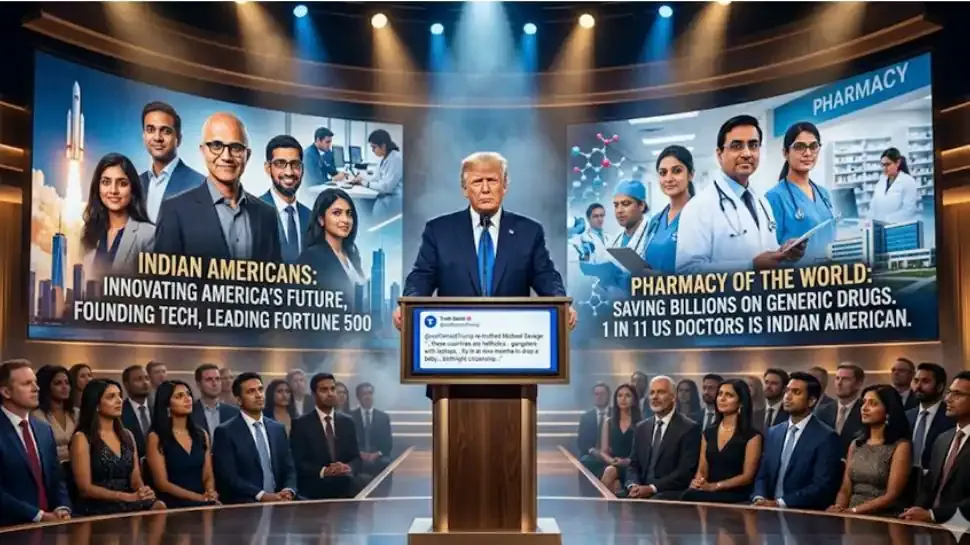
On April 22, 2026, former U.S. President Donald Trump shared a controversial post by radio host Michael Savage labeling India and China as "hellholes" and criticizing immigrants from these countries. The post included claims about birthright citizenship and accused immigrants of harming America. Critics highlight the significant contributions of Indian Americans to the U.S. economy and technology sectors, while others note this rhetoric reflects a resurgence of nativist sentiment and risks further marginalizing immigrant communities amid ongoing debates over immigration policies.
Political Bias
70%25%5%
Sentiment
32%
AI Analysis
Political bias across 2 sources
● Left 70%● Center 25%● Right 5%
The articles represent contrasting perspectives: one emphasizes the economic and social contributions of Indian Americans, countering Trump's remarks, while the other situates the comments within a historical pattern of nativism and anti-immigrant sentiment in the U.S. Both sources critique the rhetoric but from different angles—economic impact versus cultural and political implications—reflecting a broader discourse on immigration and identity politics.
Sentiment — Negative (32/100)
The overall tone across the articles is critical of the language used by Trump and Savage, highlighting the negative implications of such rhetoric. While acknowledging the factual contributions of Indian Americans, the coverage conveys concern about the divisive and inflammatory nature of the comments, resulting in a predominantly negative sentiment toward the statements and their potential social consequences.
How 2 sources covered this story
Each source's own headline, political lean, and sentiment — so you can see framing differences at a glance.
| Source | Their headline | Bias | Sentiment |
|---|---|---|---|
| zeenews | When America's President calls his own engine a 'hellhole': The geopolitics of Trump's anti-India outburst | Left | Neutral |
| indianexpress | The 'hellhole' comment is for politics. Real danger is othering of immigrants in Trump's America | Left | Negative |
Coverage timeline
indianexpress broke this story on 23 Apr, 11:55 am. Other outlets followed.
- 1indianexpress23 Apr, 11:55 amThe 'hellhole' comment is for politics. Real danger is othering of immigrants in Trump's America
- 2zeenews23 Apr, 03:02 pmWhen America's President calls his own engine a 'hellhole': The geopolitics of Trump's anti-India outburst
Lens Score breakdown
25/100
Public interest0/100
Coverage gap100%
Well-covered story — coverage matches public importance.
Who's involved
Institutions and figures named across source coverage.
Government
Supreme CourtFederal Reserve
Corporate
MicrosoftIBMAdobeAlphabet
Political
President Donald TrumpDonald Trump
Enforcement
DEA
Judiciary
Supreme Court
Story context
- Category
- Politics
- Location
- United States
- Sources analysed
- 2
- Last analysed
- 23 Apr 2026
- Key entities
- Donald TrumpUnited StatesIndiaTruth SocialMichael SavagePhiladelphiaChinaJus soliCitizenshipPharmacyIndian AmericansHealth care
Related Coverage
Select a news story to see related coverage from other media outlets.