14 minutes agoPolitics
31LENS
9 SourcesNew Delhi, India
 thebalanced.news
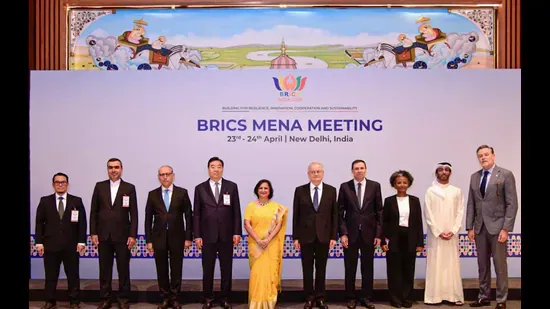
BRICS Meeting in Delhi Ends Without Joint Statement Amid West Asia Conflict Differences
The recent BRICS meeting of deputy foreign ministers and special envoys in New Delhi ended without a joint statement due to sharp differences over the West Asia conflict, particularly between Iran and the UAE. India, chairing the meeting, maintained its longstanding support for a two-state solution on Palestine but reportedly sought to soften language on Israel-Palestine, which was opposed by several members. Opposition leaders criticized India's stance, alleging it contributed to the lack of consensus and diplomatic isolation within BRICS.
Political Bias
46%46%8%
Sentiment
37%
AI Analysis
Political bias across 9 sources
● Left 46%● Center 46%● Right 8%
The article group presents multiple perspectives, including official sources emphasizing India's consistent position on Palestine and the diplomatic challenges posed by Iran-UAE disagreements. Opposition voices, notably from the Congress party, criticize India's approach as aligning closely with Israel, framing it as a factor in the meeting's failure to reach consensus. Coverage reflects a balance between government statements and political opposition critiques without endorsing either view.
Sentiment — Neutral (37/100)
The overall tone across the articles is mixed, combining neutral reporting of the meeting's outcomes and diplomatic dynamics with critical commentary from opposition leaders. While official sources convey concern and efforts to bridge gaps, opposition statements express disappointment and condemnation of India's stance. This blend results in a coverage that is neither wholly positive nor negative but highlights tensions and diplomatic complexities.
How 9 sources covered this story
Each source's own headline, political lean, and sentiment — so you can see framing differences at a glance.
Coverage timeline
theprint broke this story on 26 Apr, 04:21 pm. Other outlets followed.
- 1theprint26 Apr, 04:21 pmIndia's position on Palestine unchanged; no consensus on West Asia at BRICS meet due to differences: Sources
- 2hindustantimes26 Apr, 05:21 pmIran-UAE differences blocked joint statement at Delhi meet of Brics officials
- 3businessstandard26 Apr, 05:22 pmIndia's position on Palestine unchanged; no consensus on West Asia at Brics
- 4economictimes26 Apr, 05:42 pmIndia's position on Palestine unchanged; no consensus on West Asia at BRICS meet due to differences: Sources
- 5thehindu26 Apr, 05:50 pmUAE-Iran differences and India's plans to dilute language on Israel-Palestine derail joint statement at BRICS meet
- 6thetribune27 Apr, 10:51 amBRICS meet ends without joint statement in Delhi; Congress blames India's Israel-Palestine stance - The Tribune
- 7theprint27 Apr, 11:22 amShameful no statement issued at BRICS meet as India sought language dilution against Israel: Cong
- 8thestatesman27 Apr, 02:01 pmBRICS meet ends without joint statement; Congress alleges India's stance triggered rift
- 9thehindu27 Apr, 05:12 pmCongress targets Centre for lack of consensus on joint statement at BRICS meeting
Lens Score breakdown
31/100
Public interest0/100
Coverage gap90%
Well-covered story — coverage matches public importance.
Who's involved
Institutions and figures named across source coverage.
Government
Ministry of External Affairs
Political
Arab LeagueBRICS
Story context
- Category
- Politics
- Location
- New Delhi, India
- Sources analysed
- 9
- Last analysed
- 27 Apr 2026
- Key entities
- IndiaIsraelWestern AsiaIranUnited Arab EmiratesNew DelhiBRICSMiddle EastChinaArab LeagueTwo-state solutionGaza Strip
Related Coverage
Select a news story to see related coverage from other media outlets.