1 hour agoPolitics
24LENS
2 SourcesRussia
 thebalanced.news
India's Dependence on Maritime Chokepoints and Efforts to Develop Alternative Corridors
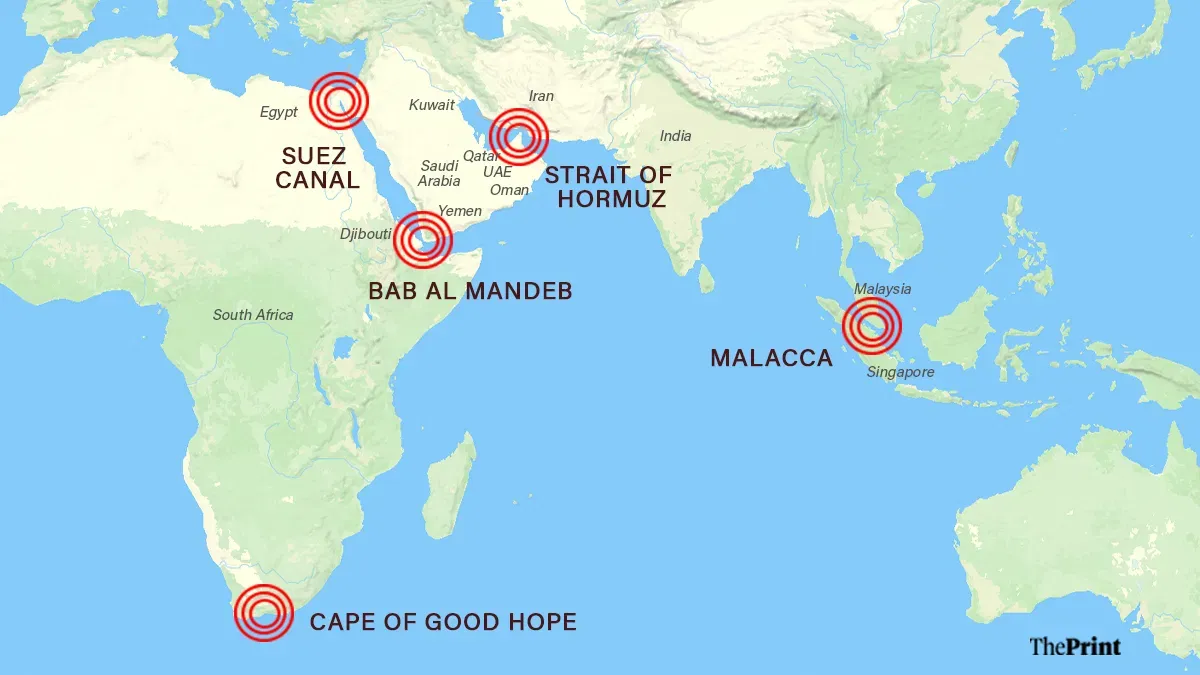
India relies heavily on four key maritime chokepoints—the Suez Canal, Bab al-Mandab, Strait of Hormuz, and Malacca Strait—for trade and energy supplies. The Suez Canal alone accounts for 35% of India's foreign trade, including exports to Europe and the US. To reduce dependence, India is exploring alternative corridors like the India-Middle East-Europe Economic Corridor, International North-South Transport Corridor, India-Myanmar-Thailand Highway, and Chennai-Vladivostok Maritime Corridor, though most remain incomplete or underutilized.
Political Bias
10%85%5%
Sentiment
55%
AI Analysis
Political bias across 2 sources
● Left 10%● Center 85%● Right 5%
The articles present a primarily factual and strategic perspective on India's trade routes and infrastructure projects without evident political bias. They focus on economic and logistical aspects, highlighting government-led initiatives to diversify trade corridors. The coverage does not emphasize partisan viewpoints or political controversies, maintaining a neutral stance centered on national economic interests.
Sentiment — Neutral (55/100)
The tone across the articles is neutral and informative, emphasizing challenges and ongoing efforts without emotional language. While acknowledging disruptions and underutilization of alternative routes, the coverage remains balanced, neither overly optimistic nor pessimistic about India's ability to reduce its maritime chokepoint dependence.
How 2 sources covered this story
Each source's own headline, political lean, and sentiment — so you can see framing differences at a glance.
| Source | Their headline | Bias | Sentiment |
|---|---|---|---|
| theprint | What's the extent of India's dependence on maritime chokepoints why alternatives are stunted | Center | Neutral |
| theprint | What's the extent of India's dependence on maritime chokepoints why alternatives are stunted | Center | Neutral |
Coverage timeline
theprint broke this story on 20 Apr, 02:13 am. Other outlets followed.
- 1theprint20 Apr, 02:13 amWhat's the extent of India's dependence on maritime chokepoints why alternatives are stunted
- 2theprint20 Apr, 02:58 amWhat's the extent of India's dependence on maritime chokepoints why alternatives are stunted
Lens Score breakdown
24/100
Public interest0/100
Coverage gap100%
Well-covered story — coverage matches public importance.
Who's involved
Institutions and figures named across source coverage.
Government
Border Roads OrganisationIndia Government
Story context
- Category
- Politics
- Location
- Russia
- Sources analysed
- 2
- Last analysed
- 20 Apr 2026
- Key entities
- International North–South Transport CorridorHouthi movementEnergy Information AdministrationStrait of MalaccaLiquefied natural gasStrait of HormuzStraitInternational tradeSuez CanalBab-el-MandebPipeline transportPetroleum
Related Coverage
Select a news story to see related coverage from other media outlets.