1 day agoPolitics
36LENS
2 SourcesIndia
 thebalanced.news
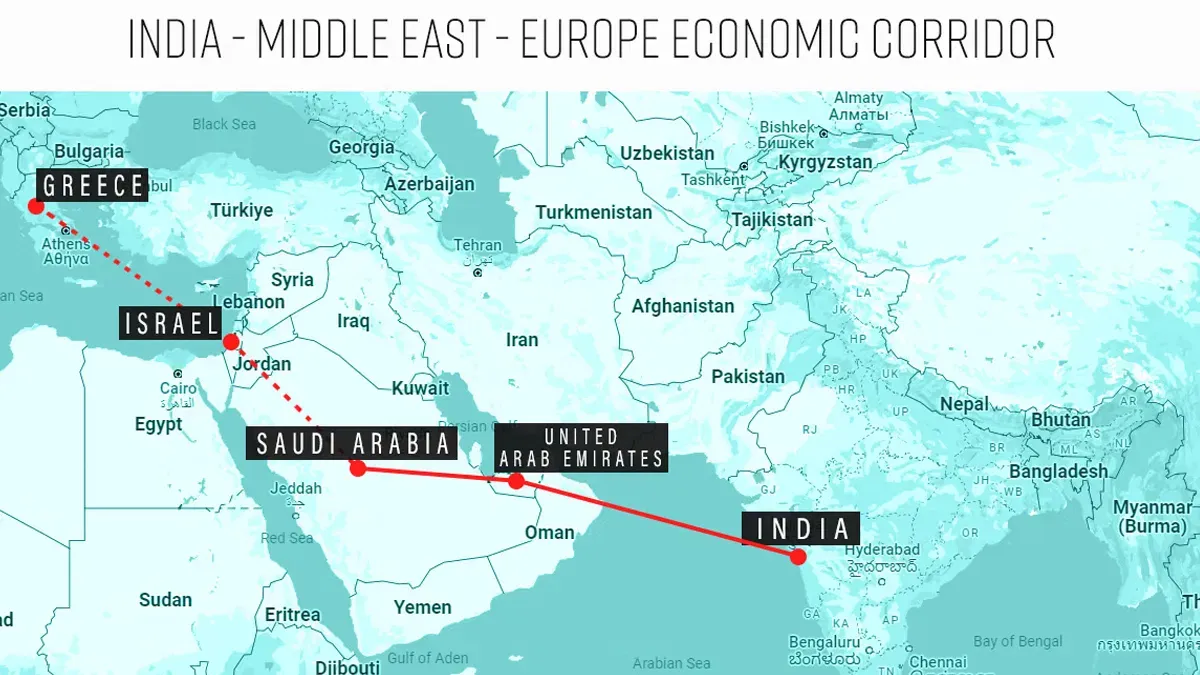
India-Middle East-Europe Economic Corridor Faces Challenges Amid West Asia Tensions
The India-Middle East-Europe Economic Corridor (IMEC), launched in 2023 to create an alternative trade route connecting India to Europe via the Middle East, faces challenges amid escalating West Asia tensions. The closure of the Strait of Hormuz and regional conflicts have disrupted supply chains, underscoring IMEC's strategic importance but slowing its progress. Despite geopolitical risks, India, the US, UAE, Saudi Arabia, and European partners continue diplomatic efforts to advance the corridor, aiming to diversify trade routes and enhance economic and security interests.
Political Bias
10%80%10%
Sentiment
62%
AI Analysis
Political bias across 2 sources
● Left 10%● Center 80%● Right 10%
The articles present perspectives from US officials emphasizing economic and security interests in IMEC, alongside Indian and regional diplomatic efforts. Coverage includes geopolitical complexities involving Iran, Israel, and Gulf states without favoring any side. The framing highlights strategic considerations and ongoing multilateral engagement, reflecting a balanced view of the corridor's potential and challenges.
Sentiment — Neutral (62/100)
The overall tone is cautiously optimistic but acknowledges significant obstacles due to regional instability. While the disruption of trade routes and conflict impacts are noted, the continued diplomatic dialogue and recognition of IMEC's strategic value contribute to a mixed sentiment that balances concern with forward-looking cooperation.
How 2 sources covered this story
Each source's own headline, political lean, and sentiment — so you can see framing differences at a glance.
| Source | Their headline | Bias | Sentiment |
|---|---|---|---|
| firstpost | Explained: Can IMEC survive the West Asia turmoil? | Center | Neutral |
| theprint | Dead on arrival to revival: IMEC regains momentum as India, UAE US look for new trade route | Center | Positive |
Coverage timeline
theprint broke this story on 16 Apr, 10:30 am. Other outlets followed.
- 1theprint16 Apr, 10:30 amDead on arrival to revival: IMEC regains momentum as India, UAE US look for new trade route
- 2firstpost17 Apr, 07:45 amExplained: Can IMEC survive the West Asia turmoil?
Lens Score breakdown
36/100
Public interest0/100
Coverage gap100%
Story is receiving appropriate media attention relative to public interest.
Who's involved
Institutions and figures named across source coverage.
Government
Indian GovernmentCommerce MinistryUAE GovernmentMinistry of External AffairsUS Department of State
Corporate
RITES LtdRitesAdani PortsDP World
Political
IndiaIsraelUnited Arab EmiratesSaudi ArabiaUnited StatesEuropean Union
Story context
- Category
- Politics
- Location
- India
- Sources analysed
- 2
- Last analysed
- 17 Apr 2026
- Key entities
- IMECTrade routeMiddle EastIndiaIsraelUnited Arab EmiratesWestern AsiaSuez CanalGeopoliticsSaudi ArabiaIranStrait of Hormuz
Related Coverage
Select a news story to see related coverage from other media outlets.