1 hour agoPolitics
37LENS
2 SourcesIndia
 thebalanced.news
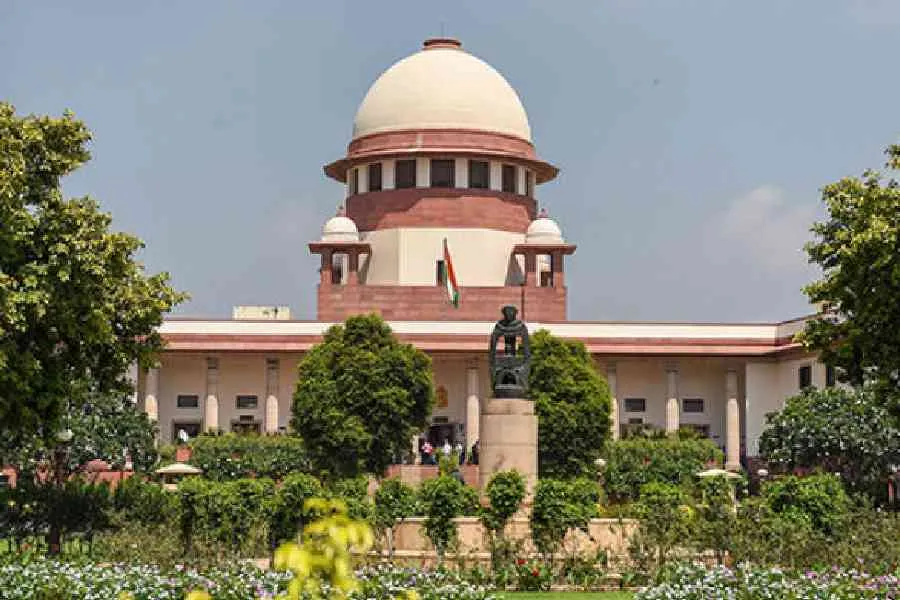
Supreme Court Mandates Hearing Before Cognisance in PMLA Cases Under BNSS
The Supreme Court ruled that under the Bharatiya Nagarik Suraksha Sanhita (BNSS), courts must hear an accused before taking cognisance of Prevention of Money Laundering Act (PMLA) complaints, affirming this as a constitutional right under Article 21. The bench of Justices Sundresh and Kotiswar Singh overturned prior rulings that denied such hearings, emphasizing that failure to do so renders proceedings void. The BNSS, effective from July 1, 2024, is described as a citizen-centric reform replacing the earlier CrPC.
Political Bias
5%93%2%
Sentiment
62%
AI Analysis
Political bias across 2 sources
● Left 5%● Center 93%● Right 2%
The articles present a legal development focusing on procedural rights under the BNSS without partisan framing. They include perspectives from the judiciary and legal advocates, highlighting the Supreme Court's interpretation of constitutional protections. The coverage centers on judicial reasoning and legislative reform, avoiding political commentary or alignment with specific parties.
Sentiment — Neutral (62/100)
The tone across the articles is neutral to positive, emphasizing the Supreme Court's endorsement of procedural safeguards and citizen rights. The coverage reflects respect for judicial authority and legal reform, without sensationalism or criticism, portraying the BNSS as an improvement over the previous law.
How 2 sources covered this story
Each source's own headline, political lean, and sentiment — so you can see framing differences at a glance.
| Source | Their headline | Bias | Sentiment |
|---|---|---|---|
| indianexpress | 'BNSS citizen-centric': Supreme Court rules hearing mandatory before cognisance in PMLA cases | Center | Neutral |
| thetelegraph | Pre-cognisance hearing mandatory in PMLA cases under BNSS, rules Supreme Court | Center | Neutral |
Coverage timeline
thetelegraph broke this story on 21 May, 02:13 am. Other outlets followed.
- 1thetelegraph21 May, 02:13 amPre-cognisance hearing mandatory in PMLA cases under BNSS, rules Supreme Court
- 2indianexpress21 May, 01:36 pm'BNSS citizen-centric': Supreme Court rules hearing mandatory before cognisance in PMLA cases
Lens Score breakdown
37/100
Public interest0/100
Coverage gap100%
Story is receiving appropriate media attention relative to public interest.
Who's involved
Institutions and figures named across source coverage.
Government
Uttarakhand High CourtEnforcement DirectorateSpecial CourtSupreme Court
Enforcement
Enforcement Directorate
Judiciary
Uttarakhand High CourtSpecial CourtSupreme CourtSpecial PMLA Court
Story context
- Category
- Politics
- Location
- India
- Sources analysed
- 2
- Last analysed
- 21 May 2026
- Key entities
- Modern Language AssociationSupreme Court of the United StatesCode of Criminal Procedure (India)Money launderingCriminal lawUttarakhand High CourtRight to a fair trialVoid (law)Constitution of IndiaSupreme courtAppealMagistrate
Related Coverage
Select a news story to see related coverage from other media outlets.