2 hours agoPolitics
26LENS
3 SourcesOdisha, India
 thebalanced.news
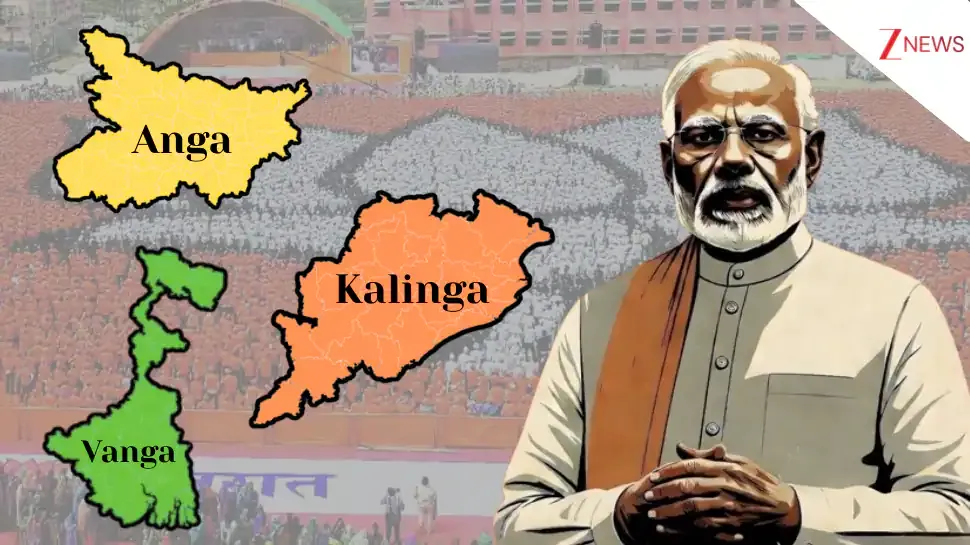
BJP's 2026 West Bengal Win Highlights 'Anga-Banga-Kalinga' Eastern India Strategy
Following the BJP's significant victory in the 2026 West Bengal Assembly Elections, Prime Minister Narendra Modi referenced the ancient regions of Anga (Bihar), Banga (Bengal), and Kalinga (Odisha) as foundational pillars of eastern India. The BJP aims to politically consolidate these areas, forming a strategic eastern corridor that could reshape India's political and economic landscape. These regions, historically significant as centers of trade and culture, are now central to the party's vision for eastern India's development and influence.
Political Bias
20%57%23%
Sentiment
68%
AI Analysis
Political bias across 3 sources
● Left 20%● Center 57%● Right 23%
The articles predominantly reflect perspectives aligned with the BJP's narrative, emphasizing the party's electoral success and strategic vision for eastern India. They highlight official statements from Prime Minister Modi and Home Minister Shah, framing the ancient regions as symbolic and political assets. Opposition or alternative viewpoints are not prominently featured, indicating a focus on the ruling party's interpretation of the election outcome and regional significance.
Sentiment — Positive (68/100)
The overall tone across the articles is positive, celebrating the BJP's electoral gains and framing the victory as a historic and strategic achievement. The language conveys optimism about the party's plans for eastern India, with references to cultural heritage and development. There is little critical or negative sentiment, reflecting a largely favorable portrayal of the election results and their implications.
How 3 sources covered this story
Each source's own headline, political lean, and sentiment — so you can see framing differences at a glance.
| Source | Their headline | Bias | Sentiment |
|---|---|---|---|
| zeenews | What are 'Anga, Vanga, Kalinga', and how these three ancient regions become BJP's modern metaphor in 2026? | Center | Neutral |
| timesnow | Eastern Citadel Cracked: BJP Seals 'Anga-Banga-Kalinga' Arc With Bengal Win - What's Next | Right | Positive |
| news18 | During Bengal Campaign, PM Modi HM Shah Promised 'Lotus In Ang, Bang, Kalinga' In May, Did It Happen? | Center | Neutral |
Coverage timeline
news18 broke this story on 4 May, 11:23 am. Other outlets followed.
- 1news184 May, 11:23 amDuring Bengal Campaign, PM Modi HM Shah Promised 'Lotus In Ang, Bang, Kalinga' In May, Did It Happen?
- 2timesnow5 May, 04:21 amEastern Citadel Cracked: BJP Seals 'Anga-Banga-Kalinga' Arc With Bengal Win - What's Next
- 3zeenews5 May, 06:28 amWhat are 'Anga, Vanga, Kalinga', and how these three ancient regions become BJP's modern metaphor in 2026?
Lens Score breakdown
26/100
Public interest0/100
Coverage gap90%
Well-covered story — coverage matches public importance.
Who's involved
Institutions and figures named across source coverage.
Government
Prime Minister's Office
Political
Bharatiya Janata PartyBhartiya Janata PartyHome Minister Amit ShahIndian Prime Minister Narendra ModiPrime Minister Narendra Modi
Story context
- Category
- Politics
- Location
- Odisha, India
- Sources analysed
- 3
- Last analysed
- 5 May 2026
- Key entities
- AngaKalinga (historical region)OdishaBengalBharatiya Janata PartyBiharWest BengalIndiaNarendra ModiVanga KingdomEast IndiaKarna
Related Coverage
Select a news story to see related coverage from other media outlets.