1 hour agoSocial
44LENS
2 SourcesJim Corbett National Park, India
 thebalanced.news
Study Finds Elevated Stress Hormones in Tigers Near Tourism Areas Across Indian Reserves
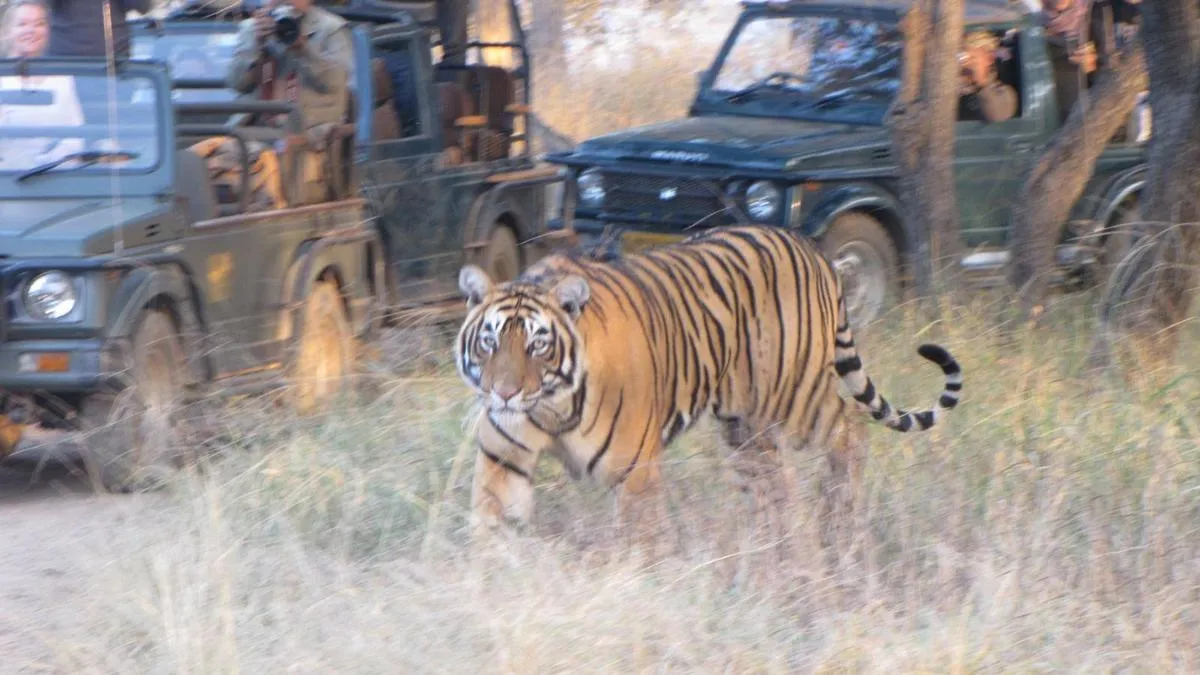
Researchers at Hyderabad's CSIR-Centre for Cellular and Molecular Biology studied 610 tiger scat samples across Indian reserves from 2020 to 2023, finding that tigers near tourism roads or high human activity areas exhibit elevated stress hormone levels. Notably, tigers in strictly protected core zones showed stronger stress responses to human disturbance than those in buffer zones, suggesting habituation in the latter. The study also explored how these stress levels may affect female reproduction, challenging assumptions about core zones as low-stress refuges.
Political Bias
10%90%0%
Sentiment
55%
AI Analysis
Political bias across 2 sources
● Left 10%● Center 90%● Right 0%
The articles present a scientific study without evident political framing, focusing on wildlife conservation and ecological research. Perspectives include the researchers' findings on human impact on tiger stress and reproduction, with no partisan viewpoints or policy debates. The coverage centers on environmental and scientific aspects rather than political implications.
Sentiment — Neutral (55/100)
The tone across the articles is neutral and informative, emphasizing research findings without emotional language. While the study highlights concerning effects of tourism on tiger stress, the coverage remains factual and measured, avoiding sensationalism or alarmist sentiment.
How 2 sources covered this story
Each source's own headline, political lean, and sentiment — so you can see framing differences at a glance.
| Source | Their headline | Bias | Sentiment |
|---|---|---|---|
| thehindu | Tourism and stress hormones: The troubling reality inside tiger habitats | Center | Neutral |
| thehindu | Tourism and stress hormones: The troubling reality inside tiger habitats | Center | Neutral |
Coverage timeline
thehindu broke this story on 9 May, 03:38 am. Other outlets followed.
- 1thehindu9 May, 03:38 amTourism and stress hormones: The troubling reality inside tiger habitats
- 2thehindu9 May, 09:21 amTourism and stress hormones: The troubling reality inside tiger habitats
Lens Score breakdown
44/100
Public interest0/100
Coverage gap100%
Story is receiving appropriate media attention relative to public interest.
Who's involved
Institutions and figures named across source coverage.
Government
Forest Departments of UttarakhandForest Departments of MaharashtraNational Tiger Conservation AuthorityCSIR-Centre for Cellular and Molecular BiologyMinistry of Environment, Forest and Climate ChangeDepartment of Science and TechnologyForest Departments of KeralaScience and Engineering Research BoardForest Departments of Madhya Pradesh
Story context
- Category
- Social
- Location
- Jim Corbett National Park, India
- Sources analysed
- 2
- Last analysed
- 9 May 2026
- Key entities
- FecesTigerTourismTadoba Andhari Tiger ReserveBandhavgarh National ParkBuffer zoneHormoneCentre for Cellular and Molecular BiologyMetaboliteQuality of lifeJim Corbett National ParkIndia
Related Coverage
Select a news story to see related coverage from other media outlets.