1 day agoSocial
37LENS
2 SourcesHaryana, India
 thebalanced.news
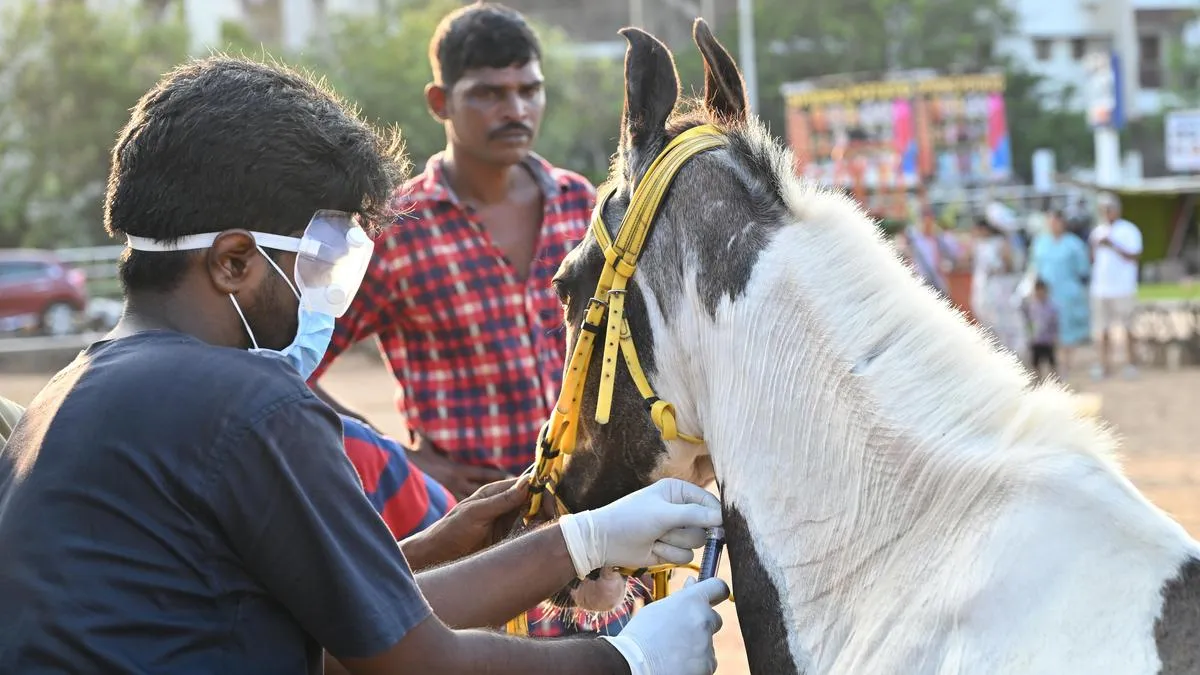
Samples from Chennai Joyride Horses Sent to Haryana for Glanders Testing
Following the death of a horse from glanders, a contagious bacterial disease affecting equines, nearly 200 samples from joyride horses and their handlers in Chennai have been sent to the ICAR-National Research Centre on Equines in Haryana for testing. Over 200 horses operate at various city beaches, often kept in poor conditions due to limited resources. Tamil Nadu authorities are collecting samples daily as part of the national action plan to monitor and control the disease, though enforcement of regulations remains weak.
Political Bias
0%100%0%
Sentiment
50%
AI Analysis
Political bias across 2 sources
● Left 0%● Center 100%● Right 0%
The articles primarily present official statements from Tamil Nadu's Animal Husbandry department and reference national government plans, reflecting a government-centric perspective focused on disease control efforts. There is no evident partisan framing or political critique, and the coverage centers on public health and regulatory enforcement without political commentary.
Sentiment — Neutral (50/100)
The tone across the articles is neutral and factual, emphasizing the ongoing testing and surveillance measures following a disease-related death. While noting poor conditions for horses, the coverage avoids emotive language, focusing instead on procedural responses and public health concerns, resulting in an overall informative and measured sentiment.
How 2 sources covered this story
Each source's own headline, political lean, and sentiment — so you can see framing differences at a glance.
| Source | Their headline | Bias | Sentiment |
|---|---|---|---|
| thehindu | Nearly 200 samples from joyride horses in Chennai sent to Haryana to test for glanders | Center | Neutral |
| thehindu | Nearly 200 samples from joyride horses in Chennai sent to Haryana Centre to test for glanders | Center | Neutral |
Coverage timeline
thehindu broke this story on 20 May, 03:10 am. Other outlets followed.
- 1thehindu20 May, 03:10 amNearly 200 samples from joyride horses in Chennai sent to Haryana Centre to test for glanders
- 2thehindu20 May, 08:04 amNearly 200 samples from joyride horses in Chennai sent to Haryana to test for glanders
Lens Score breakdown
37/100
Public interest0/100
Coverage gap100%
Story is receiving appropriate media attention relative to public interest.
Who's involved
Institutions and figures named across source coverage.
Government
Animal Husbandry and Veterinary Services, Tamil NaduICAR-National Research Centre on EquinesDirectorate of Public HealthDepartment of Animal Husbandry and Dairying
Story context
- Category
- Social
- Location
- Haryana, India
- Sources analysed
- 2
- Last analysed
- 20 May 2026
- Key entities
- Sampling (statistics)HorseEquus (genus)GlandersPathogenic bacteriaBeachHaryanaTriplicaneDepartment of Animal Husbandry and DairyingMinistry of Agriculture and Farmers' WelfareAdyar, ChennaiKovalam
Related Coverage
Select a news story to see related coverage from other media outlets.