1 hour agoTech
32LENS
2 SourcesBhopal, India
 thebalanced.news
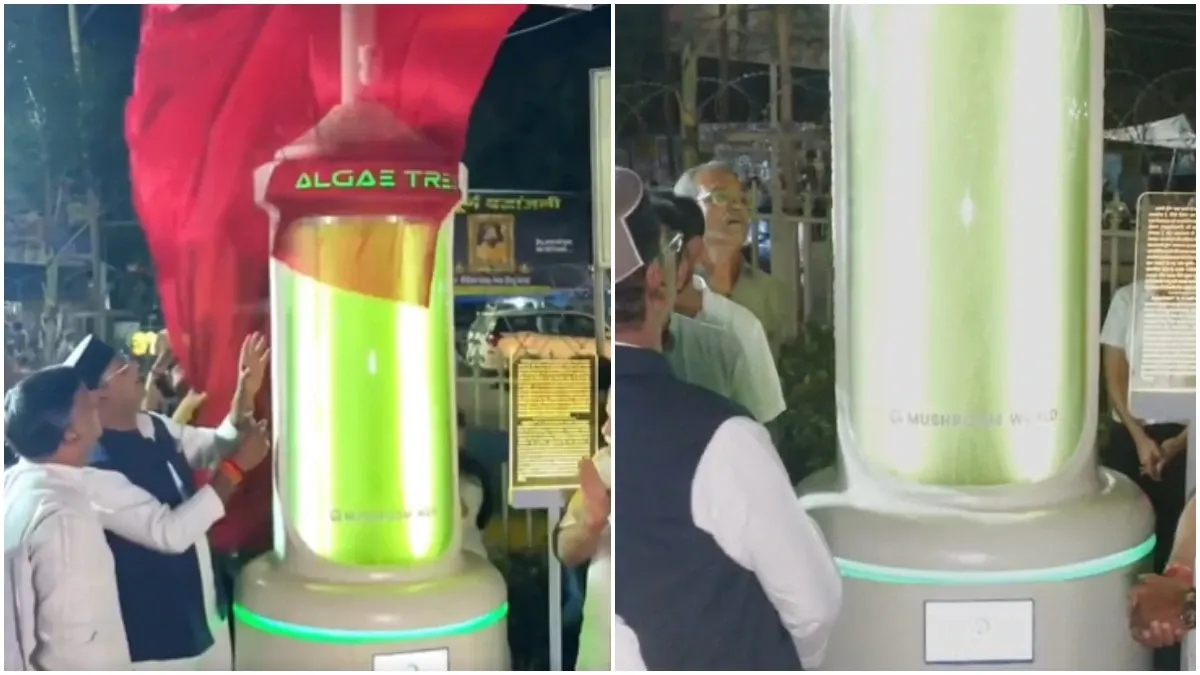
Bhopal Installs India's First Solar-Powered Algae Tree to Combat Pollution
Bhopal has installed India's first 'Algae Tree' at Swami Vivekananda Park, a solar-powered device using microalgae to absorb about 1.5 tonnes of carbon dioxide annually, equivalent to 20-25 mature trees. Developed by Mushroom World Group, it aims to improve air quality in urban areas with limited space for planting trees. While it cannot replace traditional greenery, the technology offers a compact, renewable-energy-based approach to reducing pollution and trapping dust particles, though its efficiency depends on sunlight availability.
Political Bias
0%100%0%
Sentiment
75%
AI Analysis
Political bias across 2 sources
● Left 0%● Center 100%● Right 0%
The articles primarily present a technological and environmental perspective without evident political framing. They focus on the innovation's potential benefits and limitations, reflecting viewpoints from developers and experts. There is no partisan commentary or political debate, and the coverage centers on urban environmental challenges and solutions.
Sentiment — Positive (75/100)
The tone across the articles is generally positive and optimistic about the algae tree's potential to address pollution and climate concerns. However, they also acknowledge limitations such as dependence on sunlight and the technology's role as a supplement rather than a replacement for natural trees, resulting in a balanced and informative sentiment.
How 2 sources covered this story
Each source's own headline, political lean, and sentiment — so you can see framing differences at a glance.
| Source | Their headline | Bias | Sentiment |
|---|---|---|---|
| indiatoday | This man-made algae tree can suck as much carbon dioxide as 25 trees. What is it? | Center | Positive |
| indiatoday | Bhopal introduces futuristic 'Algae Tree' to fight pollution | Center | Positive |
Coverage timeline
indiatoday broke this story on 11 May, 04:57 am. Other outlets followed.
- 1indiatoday11 May, 04:57 amBhopal introduces futuristic 'Algae Tree' to fight pollution
- 2indiatoday11 May, 05:48 amThis man-made algae tree can suck as much carbon dioxide as 25 trees. What is it?
Lens Score breakdown
32/100
Public interest0/100
Coverage gap100%
Well-covered story — coverage matches public importance.
Who's involved
Institutions and figures named across source coverage.
Government
Bhopal Smart City Initiative
Corporate
Mushroom World Group
Story context
- Category
- Tech
- Location
- Bhopal, India
- Sources analysed
- 2
- Last analysed
- 11 May 2026
- Key entities
- Carbon dioxideAlgaeOxygenBhopalIndiaPollutionSolar panelAir pollutionSwami VivekanandaSmart cityAtmosphereAbsorption (electromagnetic radiation)
Related Coverage
Select a news story to see related coverage from other media outlets.