3 hours agoTech
31LENS
2 SourcesCalifornia, United States
 thebalanced.news
NASA Shuts Down Voyager 1 Instrument to Conserve Power and Extend Mission
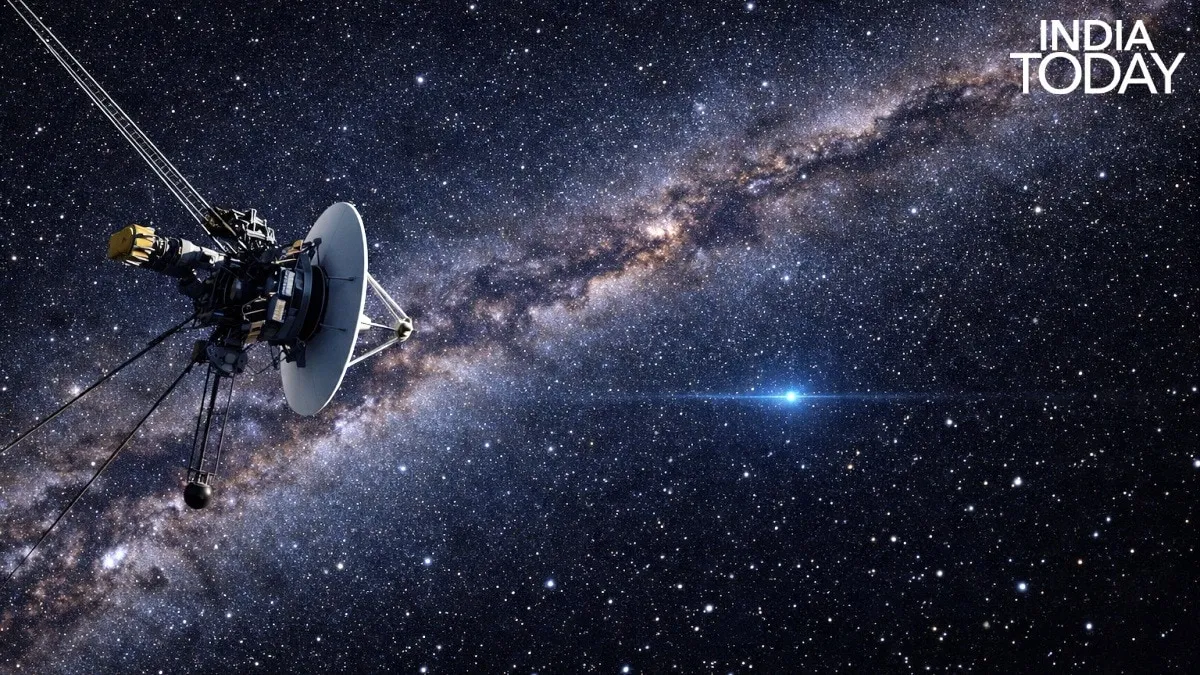
NASA has shut down Voyager 1's Low-Energy Charged Particles (LECP) instrument to conserve power and extend the spacecraft's operational life into the 2030s. Launched in 1977, Voyager 1 is humanity's most distant explorer, now over 24 billion kilometers from Earth. Its nuclear power source gradually loses energy, requiring engineers to prioritize essential instruments. The LECP experiment, vital for studying charged particles in interstellar space, was turned off following a power drop to maintain other key instruments measuring plasma waves and magnetic fields.
Political Bias
0%100%0%
Sentiment
72%
AI Analysis
Political bias across 2 sources
● Left 0%● Center 100%● Right 0%
The articles present a technical and scientific perspective focused on NASA's operational decisions without political framing. Both sources emphasize the engineering challenges and mission management, reflecting a consensus on the importance of sustaining Voyager 1. There is no evident political bias, as coverage centers on factual updates from NASA and mission officials.
Sentiment — Positive (72/100)
The tone across the articles is cautiously optimistic, highlighting the challenges of maintaining an aging spacecraft while emphasizing ongoing scientific achievements. The decision to shut down an instrument is portrayed as a necessary but measured step to preserve the mission, resulting in a balanced sentiment that acknowledges both limitations and continued progress.
How 2 sources covered this story
Each source's own headline, political lean, and sentiment — so you can see framing differences at a glance.
| Source | Their headline | Bias | Sentiment |
|---|---|---|---|
| indiatoday | How Nasa is keeping 49-year-old Voyager-1 alive as it flies outside Solar System | Center | Positive |
| ndtv | NASA Shuts Off Key Instrument On Voyager 1 To "Keep Humanity's 1st Interstellar Explorer Going" | Center | Positive |
Coverage timeline
ndtv broke this story on 19 Apr, 06:51 pm. Other outlets followed.
- 1ndtv19 Apr, 06:51 pmNASA Shuts Off Key Instrument On Voyager 1 To "Keep Humanity's 1st Interstellar Explorer Going"
- 2indiatoday20 Apr, 06:43 amHow Nasa is keeping 49-year-old Voyager-1 alive as it flies outside Solar System
Lens Score breakdown
31/100
Public interest0/100
Coverage gap100%
Well-covered story — coverage matches public importance.
Who's involved
Institutions and figures named across source coverage.
Government
Jet Propulsion LaboratoryNASANasa Jet Propulsion Laboratory
Story context
- Category
- Tech
- Location
- California, United States
- Sources analysed
- 2
- Last analysed
- 20 Apr 2026
- Key entities
- Voyager 1Radioisotope thermoelectric generatorSpacecraftJet Propulsion LaboratorySolar SystemNASANuclear powerCharged particleCosmic rayPlutoniumIonWaves in plasmas
Related Coverage
Select a news story to see related coverage from other media outlets.