1 hour agoTech
31LENS
3 SourcesTexas, United States
 thebalanced.news
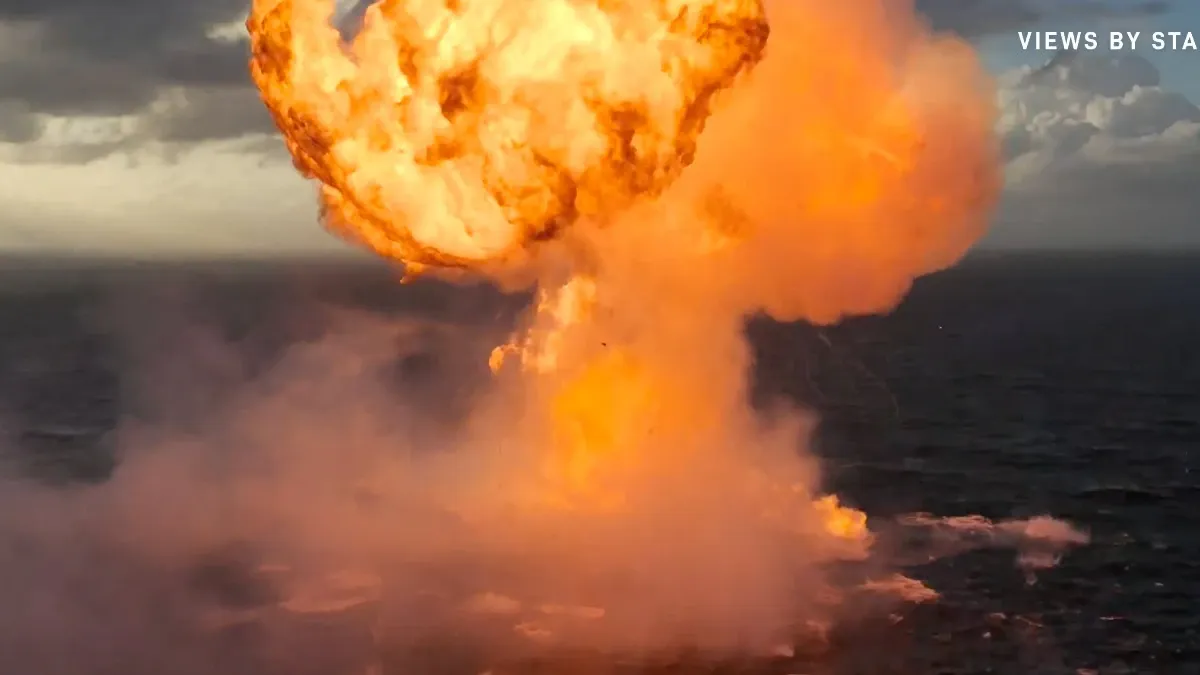
SpaceX's Starship-Super Heavy Test Flight Ends with Booster Explosion and Splashdown
SpaceX conducted a test flight of its Starship-Super Heavy rocket system from Texas, aiming for missions to the Moon and Mars. The Super Heavy booster successfully separated but exploded mid-air during its planned return over the Gulf of Mexico. Meanwhile, the upper-stage Starship spacecraft completed its orbit and performed a controlled splashdown in the Indian Ocean, ending with a hard landing that triggered an explosion. These events reflect ongoing technical challenges as SpaceX refines its next-generation reusable launch system.
Political Bias
0%100%0%
Sentiment
62%
AI Analysis
Political bias across 3 sources
● Left 0%● Center 100%● Right 0%
The articles primarily present a technical and operational perspective on SpaceX's test flight without political framing. Coverage focuses on SpaceX's engineering efforts and challenges, reflecting a neutral stance centered on aerospace development. There is no evident political bias, as the sources emphasize factual reporting of the mission's progress and setbacks.
Sentiment — Neutral (62/100)
The tone across the articles is mixed, combining recognition of SpaceX's achievements in advancing rocket technology with acknowledgment of the failures during the test flight. The coverage balances excitement about progress with the reality of technical difficulties, maintaining an objective and informative sentiment without sensationalism.
How 3 sources covered this story
Each source's own headline, political lean, and sentiment — so you can see framing differences at a glance.
| Source | Their headline | Bias | Sentiment |
|---|---|---|---|
| wion | SpaceX launches upgraded Starship V3 on debut test flight; loses booster on return | Center | Neutral |
| indiatoday | Watch: Elon Musk's Starship explodes in Indian Ocean seconds after water landing | Center | Neutral |
| indiatoday | Watch: Starship's Super Heavy rocket explodes mid-air minutes after launch | Center | Neutral |
Coverage timeline
indiatoday broke this story on 22 May, 11:25 pm. Other outlets followed.
- 1indiatoday22 May, 11:25 pmWatch: Starship's Super Heavy rocket explodes mid-air minutes after launch
- 2indiatoday23 May, 12:14 amWatch: Elon Musk's Starship explodes in Indian Ocean seconds after water landing
- 3wion23 May, 12:22 amSpaceX launches upgraded Starship V3 on debut test flight; loses booster on return
Lens Score breakdown
31/100
Public interest0/100
Coverage gap100%
Well-covered story — coverage matches public importance.
Who's involved
Institutions and figures named across source coverage.
Corporate
SpaceX
Story context
- Category
- Tech
- Location
- Texas, United States
- Sources analysed
- 3
- Last analysed
- 23 May 2026
- Key entities
- SpaceX StarshipBooster (rocketry)SpaceXSpaceX StarbaseMarsRocketMoonNASAElon MuskSpaceX Starship (spacecraft)TexasEarth
Related Coverage
Select a news story to see related coverage from other media outlets.