Monsoon Variability Influences Inflation and Interest Rate Outlook in India
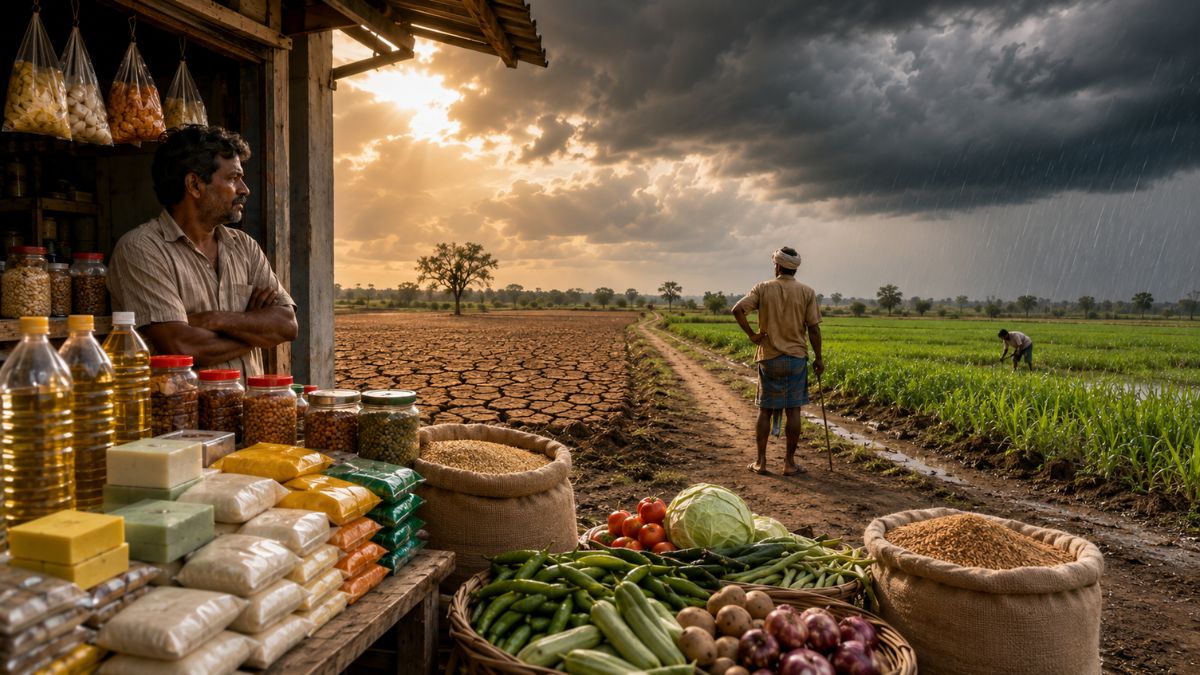
India's inflation dynamics are increasingly influenced by monsoon patterns amid recent erratic rainfall and El Niño conditions. Retail food inflation rose to 4.78% in May 2026, contributing to a 16-month high in the Consumer Price Index at 3.93%. Rural inflation also increased due to delayed rains and high temperatures, affecting agricultural output and rural demand. While crude oil prices have eased following a West Asia truce, food prices—comprising about 40% of the inflation basket—remain a key factor for the Reserve Bank of India's interest rate decisions. FMCG companies monitor these developments closely, noting potential risks but also resilience from diversified operations.
First-hand measurement across 3 sources
We measured how 3 outlets covered this story. Coverage leans balanced overall (Left 3%, Centre 95%, Right 2%). Overall sentiment is neutral (55/100). Lens Score 32/100 — low public interest.
Outlets analysed (first-hand measurement by TBN's Bias Engine):
- mint— balanced framing, neutral sentiment
- mint— balanced framing, neutral sentiment
- thefinancialexpress— balanced framing, neutral sentiment
AI Analysis
The articles present a primarily economic and policy-focused perspective without partisan framing. They include viewpoints from government data sources, ratings agencies, and corporate leaders, reflecting concerns about inflation, rural economy, and monetary policy. The coverage balances official statistics with expert analysis and industry responses, avoiding political polarization or ideological bias.
The overall tone is cautiously analytical, highlighting challenges posed by erratic monsoon and inflation pressures while acknowledging mitigating factors such as recent rainfall improvements and diversified corporate strategies. The sentiment is mixed, combining concern over rural economic stress and inflation with measured optimism about potential resilience and easing crude prices.
How 3 sources covered this story
Each source's own headline, political lean, and sentiment — so you can see framing differences at a glance.