Skip to content
Get the Balanced News app for a better experience!
The Balanced News Logo
Analytics
The Balanced News Logo

Stay Balanced, Stay Informed

Menu
  • Browse News
  • Underreported Stories
  • Curated Feeds
  • Insights
  • Analytics
  • Our Writers
  • About Us
  • Download App
Learn
  • How It Works
  • Bias Detection
  • Lens Score
  • Source Bias Checker
  • Accountability
  • Custom Feeds
Newsroom
  • Writers & Analysts
  • About TBN
  • Editorial Standards
  • Corrections Policy
  • Our Partners
  • Insights
Socials
  • Youtube
  • Instagram
  • X
  • Facebook
News Categories
  • Trending
  • Politics
  • Sports
  • Business
  • Tech
  • Entertainment
  • Health
  • Science
  • Crime
  • Lifestyle
  • National
  • International
  • Good News
  • Crypto

Get Our App

Available for iOS and Android


LensFeedsInsightsAnalyticsTrendingGood NewsSportsPoliticsBusinessCrimeTechEntertainmentHealthNationalInternational

© 2026 The Balanced News. All rights reserved.

About UsEditorial StandardsCorrectionsHelp & SupportPrivacy PolicyTerms & Conditions
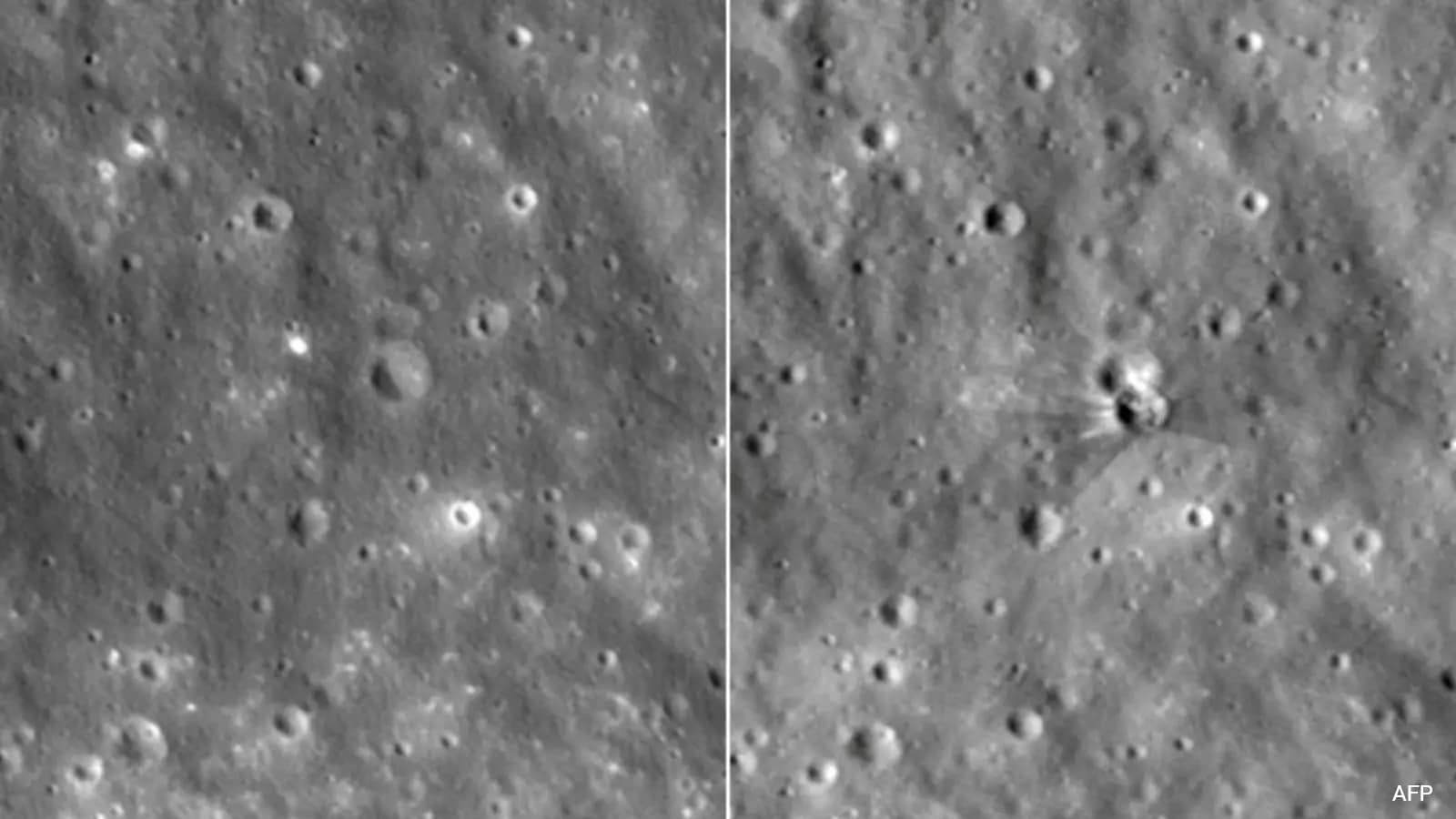
NASA Releases Images of 60-Foot Lunar Crater from SpaceX Rocket Impact
Categories

Categories

Related Coverage

Select a news story to see related coverage from other media outlets.

Related Coverage

Select a news story to see related coverage from other media outlets.

  1. Home
  2. /
  3. Technology

NASA Releases Images of 60-Foot Lunar Crater from SpaceX Rocket Impact

Analysed 19 Aug 2026·3 sources analysed·India·Technology
NASA Releases Images of 60-Foot Lunar Crater from SpaceX Rocket ImpactPreviousNext

NASA's Lunar Reconnaissance Orbiter captured detailed images of a 60-foot-wide crater on the moon formed by the impact of a discarded SpaceX Falcon 9 rocket's upper stage on August 5. The rocket, launched in 2025 to deploy private moon landers, collided with the lunar surface at 5,400 mph after drifting in space for over a year. NASA collaborated with South Korea's Danuri spacecraft data to precisely image the crater, which shows distinct dark and bright streaks from excavated and fresh material. Officials noted such impacts are common and part of accepted lunar hardware disposal.

Sentiment
54%
TBN's observations

First-hand measurement across 3 sources

We measured how 3 outlets covered this story. No outlet gave this story a measurable political slant — there is no left–right reading to report. Overall sentiment is neutral (54/100). Lens Score 39/100.

Outlets measured: ndtv, businessstandard, mint. See how each one headlined and framed the same story in the source comparison below.

AI analysis of 3 sources · Published under editorial oversight by The Balanced News
Analysed 19 Aug 2026· How this analysis is produced· Editorial standards· Corrections

AI Analysis

Sentiment — Neutral (54/100)

Sentiment was consistent across outlets (50–62/100), indicating broadly factual reporting rather than editorialising.

Coverage timeline

mint broke this story on 19 Aug, 01:50 am. Other outlets followed.

19 Aug, 01:50 am3 sources · 73 min19 Aug, 03:03 am
AI analysis by the TBN Bias Engine · beat methodology byAshwin Alsi· Technology Editor· editorial standards byOjas Kale
← Previous
Apple Updates EU App Store Fees to Comply with Digital Markets Act
Next →
OpenAI Pauses Advanced AI Training to Enhance Security After Cybersecurity Incident
  1. 1
    mint19 Aug, 01:50 am
    NASA releases first images of crater left by SpaceX rocket that crashed into the moon Mint
  2. 2
    businessstandard19 Aug, 02:38 am
    Nasa images show 60-foot-wide crater on moon after SpaceX rocket crash
  3. 3
    ndtv19 Aug, 03:03 am
    NASA Releases Images Of Moon Crater Carved By Crashed SpaceX Rocket

Who's involved

Institutions and figures named across source coverage.

Government
Korea AeroSpace AdministrationNational Aeronautics and Space Administration
Corporate
Space Exploration Technologies Corporation

Story context

Category
Tech
Location
India
Sources analysed
3
Last analysed
19 Aug 2026
Key entities
SpaceXNASARocketMoonMultistage rocketLunar Reconnaissance OrbiterDanuriImpact craterSpacecraftMicrometeoriteSolar windCosmic ray