India Raises ATF Prices by 10% with New Three-Year Price Stabilisation Scheme
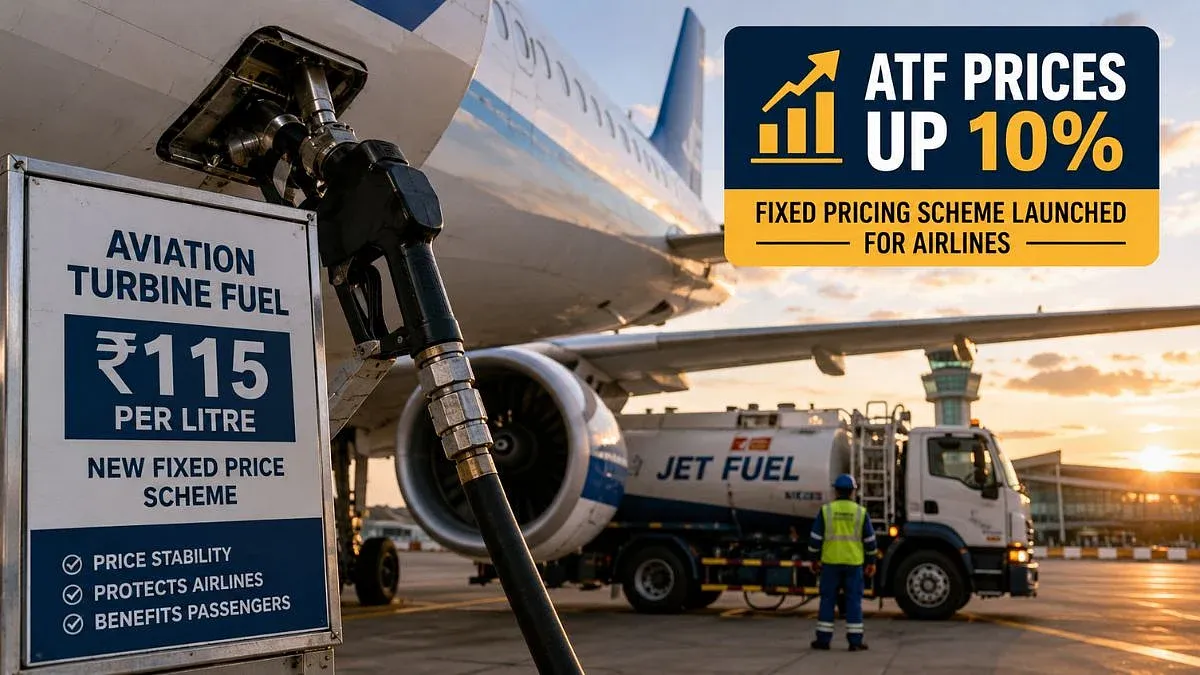
Aviation turbine fuel (ATF) prices in India rose by about 10%, reaching Rs 115 per litre for domestic airlines under a new government-backed price stabilisation scheme. This voluntary plan locks fuel prices for up to three years to protect carriers and passengers from global oil price volatility. Airlines opting out will pay market-linked rates, currently around Rs 142 per litre. The government has also set up a Rs 10,000 crore fund to support the scheme amid rising fuel costs driven by geopolitical tensions and increased operational expenses.
First-hand measurement across 9 sources
We measured how 9 outlets covered this story. Coverage leans balanced overall (Left 9%, Centre 84%, Right 7%). Overall sentiment is neutral (57/100). Lens Score 33/100 — low public interest.
Outlets analysed (first-hand measurement by TBN's Bias Engine):
- economictimes— balanced framing, neutral sentiment
- news18— balanced framing, neutral sentiment
- businessstandard— balanced framing, neutral sentiment
- freepressjournal— balanced framing, neutral sentiment
- news18— balanced framing, neutral sentiment
- thetelegraph— balanced framing, neutral sentiment
- economictimes— balanced framing, positive sentiment
- freepressjournal— balanced framing, neutral sentiment
AI Analysis
The articles predominantly present a government-centric perspective highlighting policy measures to stabilize aviation fuel prices. Industry viewpoints on operational challenges and the need for deeper reforms are also included, offering a balanced view. There is no evident partisan framing; coverage focuses on factual reporting of the scheme's features and its impact on airlines and passengers.
The overall tone is neutral to cautiously optimistic, emphasizing the government's intervention as a relief measure for airlines facing rising fuel costs. While acknowledging operational pressures and flight reductions, the coverage avoids sensationalism, presenting the price stabilisation scheme as a pragmatic response to market volatility without expressing strong positive or negative sentiment.
How 9 sources covered this story
Each source's own headline, political lean, and sentiment — so you can see framing differences at a glance.