Local Heatwaves and West Asia Conflict Drive Up Costs of Indian Home-Cooked Meals
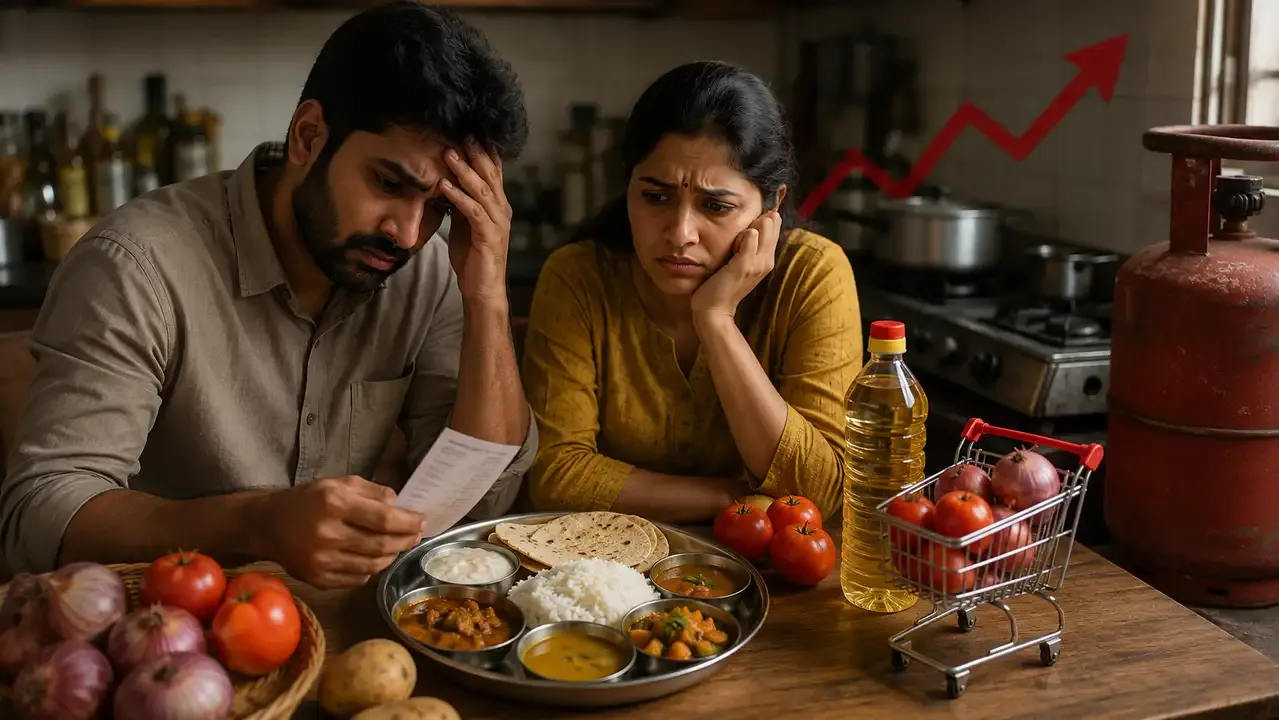
Rising costs of home-cooked meals in India reflect combined impacts of local climate disruptions and global geopolitical tensions. Severe summer heatwaves have damaged crops and increased poultry mortality, pushing up prices of tomatoes and chicken. Concurrently, the West Asia conflict has driven up prices of edible oils and cooking gas by about 10% year-on-year, affecting supply chains and transportation. These factors have led to a 4-6% annual increase in vegetarian and non-vegetarian thali costs, impacting household food affordability and nutrition.
First-hand measurement across 2 sources
We measured how 2 outlets covered this story. Coverage leans balanced overall (Left 5%, Centre 93%, Right 2%). Overall sentiment is negative (32/100). Lens Score 25/100 — low public interest.
Outlets analysed (first-hand measurement by TBN's Bias Engine):
- timesnow— balanced framing, neutral sentiment
- wion— balanced framing, negative sentiment
AI Analysis
The articles present a largely economic and environmental perspective without partisan framing. They highlight the effects of international conflict and domestic climate events on food prices, reflecting concerns from both market analysts and consumer viewpoints. The coverage includes government and expert insights but avoids political blame, focusing instead on factual impacts on households.
The overall tone is neutral to slightly concerned, emphasizing the economic pressures on consumers due to rising food costs. While the articles note negative effects on affordability and nutrition, the language remains descriptive and factual, avoiding sensationalism. The sentiment reflects awareness of challenges without emotional or alarmist language.
How 2 sources covered this story
Each source's own headline, political lean, and sentiment — so you can see framing differences at a glance.