India Shifts Energy Imports: US Leads LPG, Oman Tops LNG, Russia Remains Top Crude Supplier
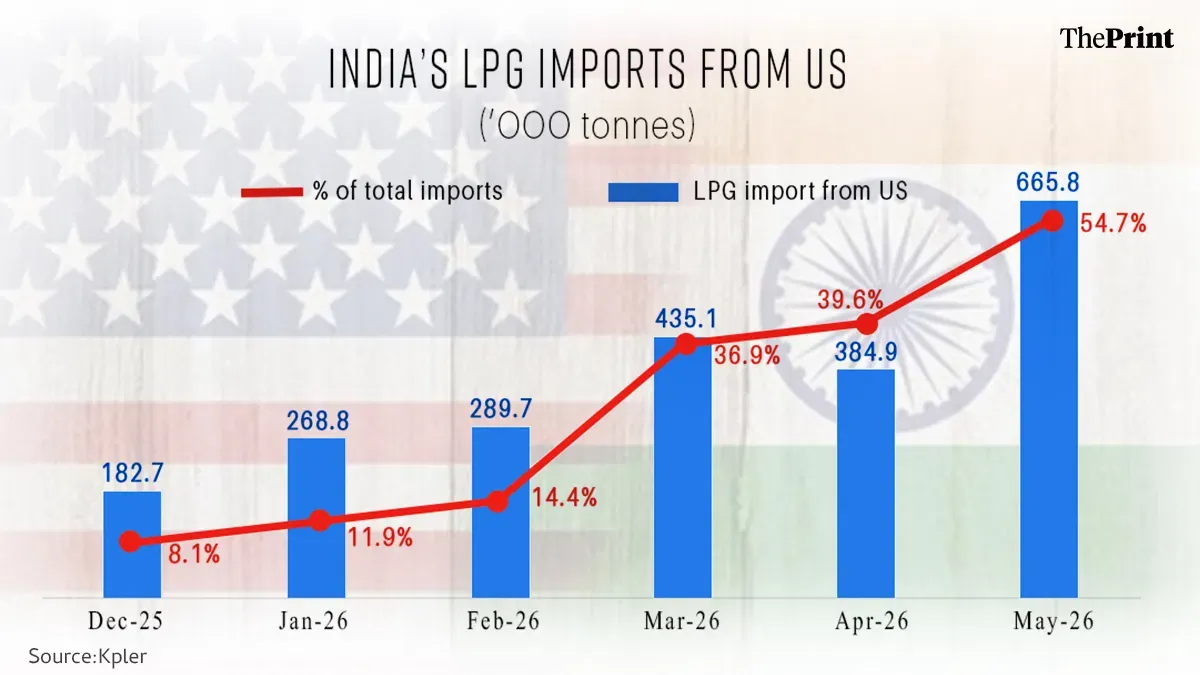
India's energy imports have shifted significantly due to the West Asia conflict, with the US becoming the largest supplier of liquefied petroleum gas (LPG) in May 2026, accounting for about 55% of imports amid Gulf supply disruptions. Oman overtook Qatar as India's top liquefied natural gas (LNG) supplier in March, as attacks on Gulf infrastructure curtailed Qatari exports. Despite geopolitical tensions, Russia remained India's leading crude oil supplier, though its market share growth has slowed. Increased domestic LPG production and diversified sourcing have helped India manage supply challenges.
First-hand measurement across 9 sources
We measured how 9 outlets covered this story. Coverage leans balanced overall (Left 5%, Centre 91%, Right 4%). Overall sentiment is neutral (59/100). Lens Score 30/100 — low public interest.
Outlets analysed (first-hand measurement by TBN's Bias Engine):
- economictimes— balanced framing, neutral sentiment
- thefinancialexpress— balanced framing, neutral sentiment
- freepressjournal— balanced framing, neutral sentiment
- republicworld— balanced framing, neutral sentiment
- economictimes— balanced framing, neutral sentiment
- firstpost— balanced framing, neutral sentiment
- theprint— balanced framing, neutral sentiment
- economictimes— balanced framing, neutral sentiment
AI Analysis
The article group presents a range of perspectives focusing on India's strategic energy sourcing amid geopolitical tensions. Sources highlight shifts from traditional Gulf suppliers to alternatives like the US and Oman, reflecting pragmatic economic and security considerations. Coverage includes government data, industry expert insights, and trade intelligence, maintaining a neutral tone without favoring any political stance or attributing blame for disruptions.
The overall sentiment is neutral to cautiously optimistic, emphasizing India's adaptive response to supply disruptions through diversification and increased domestic production. While acknowledging challenges from the West Asia conflict, the coverage focuses on recovery signs and strategic adjustments rather than crisis or alarm, balancing concerns with practical developments in energy imports.