Skip to content
Get the Balanced News app for a better experience!
The Balanced News Logo
Analytics
The Balanced News Logo

Stay Balanced, Stay Informed

Menu
  • Browse News
  • Underreported Stories
  • Curated Feeds
  • Insights
  • Analytics
  • Our Writers
  • About Us
  • Download App
Learn
  • How It Works
  • Bias Detection
  • Lens Score
  • Source Bias Checker
  • Accountability
  • Custom Feeds
Newsroom
  • Writers & Analysts
  • About TBN
  • Editorial Standards
  • Corrections Policy
  • Our Partners
  • Insights
Socials
  • Youtube
  • Instagram
  • X
  • Facebook
News Categories
  • Trending
  • Politics
  • Sports
  • Business
  • Tech
  • Entertainment
  • Health
  • Science
  • Crime
  • Lifestyle
  • National
  • International
  • Good News
  • Crypto

Get Our App

Available for iOS and Android


LensFeedsInsightsAnalyticsTrendingGood NewsSportsPoliticsBusinessCrimeTechEntertainmentHealthNationalInternational

© 2026 The Balanced News. All rights reserved.

About UsEditorial StandardsCorrectionsHelp & SupportPrivacy PolicyTerms & Conditions
Australian Road Projects Incorporate Millions of Recycled Bottles in Construction
Categories

Categories

Related Coverage

Select a news story to see related coverage from other media outlets.

Related Coverage

Select a news story to see related coverage from other media outlets.

  1. Home
  2. /
  3. Business

Australian Road Projects Incorporate Millions of Recycled Bottles in Construction

Analysed 14 Sept 2026·2 sources analysed·Wyongah, New South Wales, Australia·Business
Australian Road Projects Incorporate Millions of Recycled Bottles in ConstructionNext

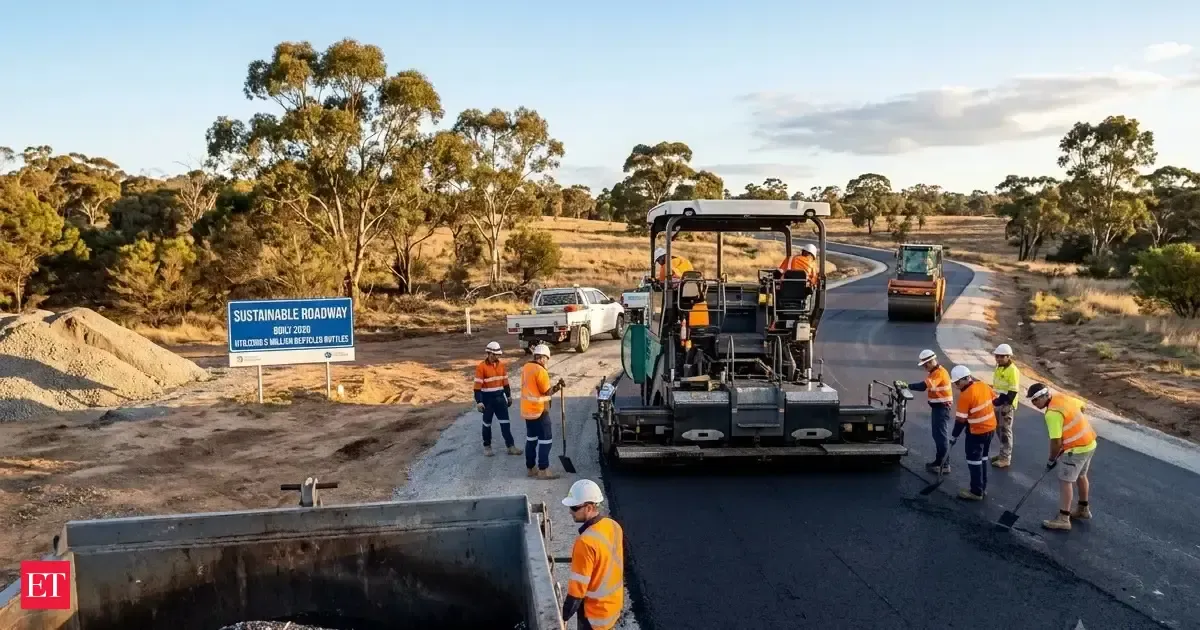
In Australia, innovative road projects have incorporated large amounts of recycled materials to reduce waste and environmental impact. In 2020, the Central Coast Council in Wyongah used over 90% recycled content, including five million glass bottles, plastic, and concrete, in road construction without increasing costs or time. Similarly, in 2018, Victoria integrated 8,000 tonnes of crushed recycled glass, equivalent to 40 million bottles, into the Tullamarine Freeway widening, demonstrating practical applications of circular economy principles in infrastructure.

Sentiment
75%
TBN's observations

First-hand measurement across 2 sources

We measured how 2 outlets covered this story. No outlet gave this story a measurable political slant — there is no left–right reading to report. Overall sentiment is positive (75/100). Lens Score 43/100.

Outlets measured: economictimes, economictimes. See how each one headlined and framed the same story in the source comparison below.

AI analysis of 2 sources · Published under editorial oversight by The Balanced News
Analysed 14 Sept 2026· How this analysis is produced· Editorial standards· Corrections

AI Analysis

Sentiment — Positive (75/100)

Sentiment was consistent across outlets (75–75/100), indicating broadly factual reporting rather than editorialising.

Coverage timeline

economictimes broke this story on 14 Sept, 08:02 pm. Other outlets followed.

14 Sept, 08:02 pm2 sources · 4 min14 Sept, 08:06 pm
AI analysis by the TBN Bias Engine · beat methodology byMrunal Wange· Business & Economy Editor· editorial standards byOjas Kale
Next →
Direct Benefit Transfers Reach Rs 2.08 Lakh Crore Across 320 Welfare Schemes
  • 1
    economictimes14 Sept, 08:02 pm
    In 2018, Victoria put the equivalent of 40 million discarded bottles into a freeway; 8,000 tonnes of crushed glass went into one widening project
  • 2
    economictimes14 Sept, 08:06 pm
    In 2020, Australia built more than 90 of a road project from recycled waste; five million bottles went into a job that cost no more than a standard build
  • Who's involved

    Institutions and figures named across source coverage.

    Government
    Sustainability VictoriaCentral Coast CouncilVictorian Auditor-General's Office

    Story context

    Category
    Business
    Location
    Wyongah, New South Wales, Australia
    Sources analysed
    2
    Last analysed
    14 Sept 2026
    Key entities
    Glass recyclingRecyclingPlasticAustraliaTonneLandfillCentral Coast Council (New South Wales)GravelRoad surfaceConcreteWyongah, New South WalesGreenhouse gas emissions