Missile Attack on Qatari LNG Carrier Highlights Strait of Hormuz Security Risks
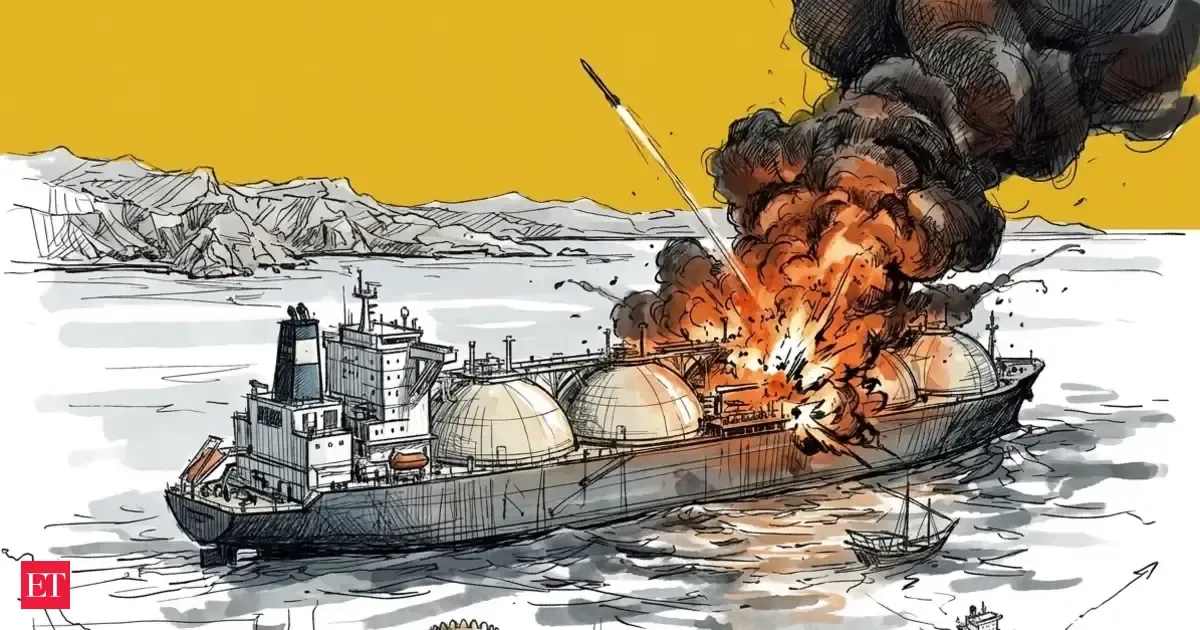
A Qatari liquefied natural gas (LNG) carrier, Al Rekayyat, was attacked by missiles fired by Iran's Revolutionary Guards near the Strait of Hormuz, reigniting concerns over the security of this vital energy corridor. While large-scale conflict fears have eased following a recent US-Iran framework agreement, the incident highlights ongoing risks of repeated disruptions to commercial shipping, potentially affecting global energy markets and trade stability in the region.
First-hand measurement across 3 sources
We measured how 3 outlets covered this story. Coverage leans balanced overall (Left 10%, Centre 82%, Right 8%). Overall sentiment is neutral (35/100). Lens Score 42/100 — moderate-to-low public interest.
Outlets analysed (first-hand measurement by TBN's Bias Engine):
- ndtv— balanced framing, negative sentiment
- economictimes— balanced framing, neutral sentiment
- economictimes— balanced framing, neutral sentiment
AI Analysis
The articles primarily present a factual account of the missile attack without overt political framing. They reference US officials and reports attributing the attack to Iran's Revolutionary Guards, reflecting a Western perspective on the incident. The coverage acknowledges the recent US-Iran framework agreement, indicating some recognition of diplomatic efforts, but focuses on the persistent security challenges in the region.
The overall tone is cautious and concerned, emphasizing the vulnerability of the Strait of Hormuz and potential impacts on energy markets. The sentiment is neither overtly alarmist nor reassuring, balancing the easing of large-scale conflict fears with the reality of ongoing threats to commercial shipping and trade stability.
How 3 sources covered this story
Each source's own headline, political lean, and sentiment — so you can see framing differences at a glance.