Biofouling Delays Hundreds of Oil Tankers Despite Strait of Hormuz Reopening
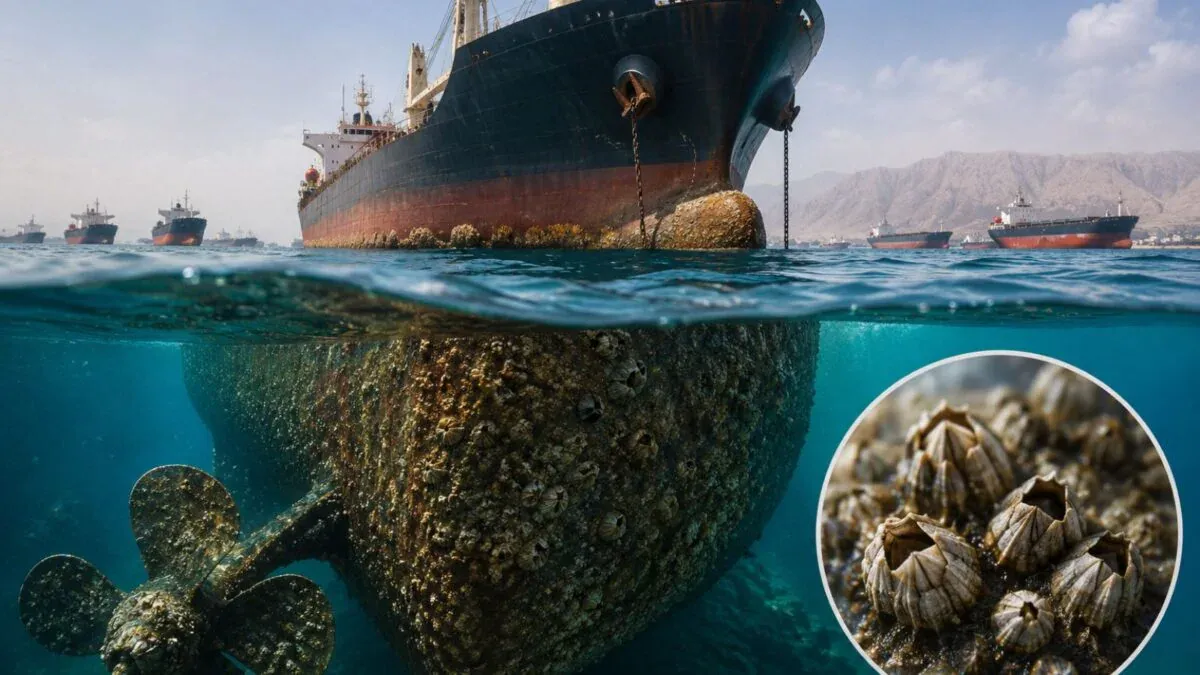
Following a ceasefire in the Middle East, over 600 oil tankers remain stranded in the Strait of Hormuz due to extensive biofouling—accumulations of barnacles, algae, mussels, and other marine organisms on ship hulls. This buildup increases drag, fuel consumption, and operational costs, requiring costly underwater cleaning before vessels can resume normal operations. The Persian Gulf's warm, shallow waters have accelerated marine growth, creating a significant logistical challenge for the global shipping industry despite the reopening of the strait.
First-hand measurement across 2 sources
We measured how 2 outlets covered this story. Coverage leans balanced overall (Left 0%, Centre 100%, Right 0%). Overall sentiment is neutral (48/100). Lens Score 29/100 — low public interest.
Outlets analysed (first-hand measurement by TBN's Bias Engine):
- news18— balanced framing, neutral sentiment
- news18— balanced framing, neutral sentiment
AI Analysis
The article group presents a largely technical and economic perspective on the issue, focusing on the operational challenges faced by shipping companies due to biofouling. There is minimal political framing beyond noting the ceasefire between the US and Iran as context. Sources emphasize industry and environmental factors without attributing blame or political motives, maintaining a neutral stance on the conflict and its aftermath.
The overall tone across the articles is neutral to slightly concerned, highlighting the unexpected operational difficulties caused by marine growth on stranded vessels. While the reopening of the Strait of Hormuz is presented as positive, the focus on the costly and time-consuming cleaning process introduces a pragmatic caution. There is no emotional or sensational language, with coverage centered on factual challenges and industry responses.