Biofouling Delays Over 600 Tankers from Sailing After Strait of Hormuz Ceasefire
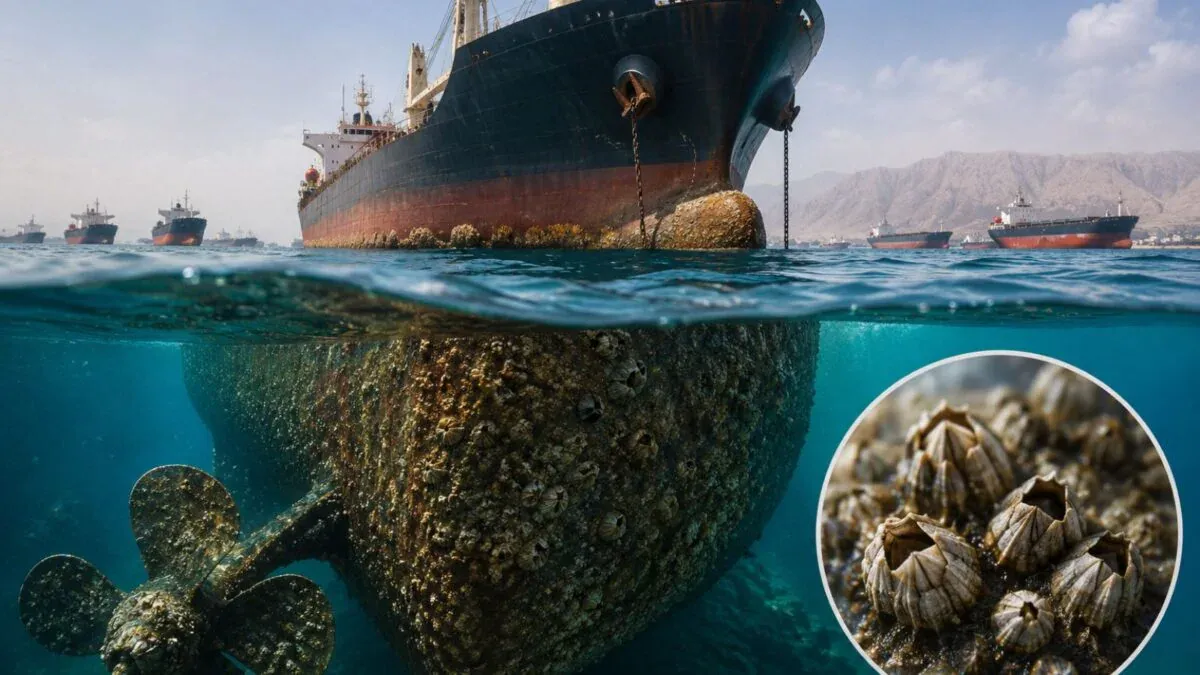
Following a US-Iran ceasefire, over 600 oil tankers remain stranded in the Strait of Hormuz due to biofouling—marine organisms like barnacles and algae accumulating on ship hulls during months of anchorage. This buildup increases drag, fuel consumption, and emissions, necessitating extensive underwater cleaning by specialist divers before vessels can resume operations. The cleaning process is labor-intensive and costly, posing a significant challenge to restoring normal shipping and oil flow through the strategic waterway.
First-hand measurement across 2 sources
We measured how 2 outlets covered this story. Coverage leans balanced overall (Left 0%, Centre 100%, Right 0%). Overall sentiment is neutral (50/100). Lens Score 29/100 — low public interest.
Outlets analysed (first-hand measurement by TBN's Bias Engine):
- news18— balanced framing, neutral sentiment
- news18— balanced framing, neutral sentiment
AI Analysis
The articles focus primarily on the operational and economic challenges faced by the shipping industry following the US-Iran ceasefire, without delving into political analysis or assigning blame. They present the situation from a maritime and economic perspective, highlighting the technical issue of biofouling affecting vessel movement. The coverage avoids political framing and centers on industry and environmental factors.
The tone across the articles is neutral to slightly concerned, emphasizing the practical difficulties and economic implications of biofouling on stranded ships. There is no overtly positive or negative sentiment toward any party; instead, the coverage highlights the logistical challenges and the scale of the cleaning effort required to resume normal shipping operations.
How 2 sources covered this story
Each source's own headline, political lean, and sentiment — so you can see framing differences at a glance.