Skip to content
Get the Balanced News app for a better experience!
The Balanced News Logo
Analytics
The Balanced News Logo

Stay Balanced, Stay Informed

Menu
  • Browse News
  • Underreported Stories
  • Curated Feeds
  • Insights
  • Analytics
  • Our Writers
  • About Us
  • Download App
Learn
  • How It Works
  • Bias Detection
  • Lens Score
  • Source Bias Checker
  • Accountability
  • Custom Feeds
Newsroom
  • Writers & Analysts
  • About TBN
  • Editorial Standards
  • Corrections Policy
  • Our Partners
  • Insights
Socials
  • Youtube
  • Instagram
  • X
  • Facebook
News Categories
  • Trending
  • Politics
  • Sports
  • Business
  • Tech
  • Entertainment
  • Health
  • Science
  • Crime
  • Lifestyle
  • National
  • International
  • Good News
  • Crypto

Get Our App

Available for iOS and Android


LensFeedsInsightsAnalyticsTrendingGood NewsSportsPoliticsBusinessCrimeTechEntertainmentHealthNationalInternational

© 2026 The Balanced News. All rights reserved.

About UsEditorial StandardsCorrectionsHelp & SupportPrivacy PolicyTerms & Conditions
Global Bond Yields Rise Amid US Spending, Foreign Demand, and Market Pressures
Categories

Categories

Related Coverage

Select a news story to see related coverage from other media outlets.

Related Coverage

Select a news story to see related coverage from other media outlets.

  1. Home
  2. /
  3. Business

Global Bond Yields Rise Amid US Spending, Foreign Demand, and Market Pressures

Analysed 3 Sept 2026·3 sources analysed·Iran·Business
Global Bond Yields Rise Amid US Spending, Foreign Demand, and Market PressuresPreviousNext

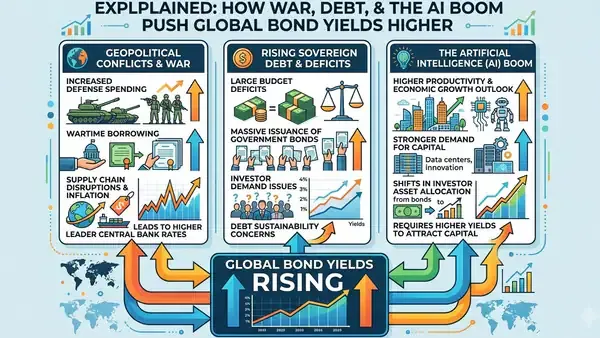
Global bond markets are experiencing rising yields due to factors including increased US defense spending linked to the Iran conflict, higher oil prices, and substantial government borrowing. The US faces pressure as long-term Treasury yields near multi-decade highs, influenced by foreign investor behavior, notably Japan's shifting bond purchases. Higher yields raise borrowing costs for governments, corporations, and consumers worldwide, affecting mortgages, loans, and investment in sectors like AI. Policymakers are monitoring these trends amid concerns over debt sustainability and market stability.

Sentiment
42%
TBN's observations

First-hand measurement across 3 sources

We measured how 3 outlets covered this story. No outlet gave this story a measurable political slant — there is no left–right reading to report. Overall sentiment is neutral (42/100). Lens Score 39/100.

Outlets measured: mint, businessstandard, hindustantimes. See how each one headlined and framed the same story in the source comparison below.

AI analysis of 3 sources · Published under editorial oversight by The Balanced News
Analysed 3 Sept 2026· How this analysis is produced· Editorial standards· Corrections

AI Analysis

Sentiment — Neutral (42/100)

Sentiment was consistent across outlets (35–50/100), indicating broadly factual reporting rather than editorialising.

Coverage timeline

hindustantimes broke this story on 3 Sept, 02:26 pm. Other outlets followed.

3 Sept, 02:26 pm3 sources · 3 h3 Sept, 05:46 pm
AI analysis by the TBN Bias Engine · beat methodology byMrunal Wange· Business & Economy Editor· editorial standards byOjas Kale
← Previous
Shenu Agarwal Named President of SIAM for 2026-27 Term
Next →
Cohance Lifesciences to Invest $18 Million in NJ Bio and Aruka Bio
  1. 1
    hindustantimes3 Sept, 02:26 pm
    Why is the US bond market under pressure? Japan, Fed rates, AI borrowing and 40T debt explained
  2. 2
    businessstandard3 Sept, 04:54 pm
    Yielding trouble
  3. 3
    mint3 Sept, 05:46 pm
    How war, debt and the AI boom are pushing global bond yields higher? Explained Today News

Who's involved

Institutions and figures named across source coverage.

Government
Federal ReserveUnited States TreasuryUnited States Department of the Treasury

Story context

Category
Business
Location
Iran
Sources analysed
3
Last analysed
3 Sept 2026
Key entities
Bond marketJapanUnited States Department of the TreasuryGovernment debtArtificial intelligenceUnited KingdomMortgage loanFinanceFinancial marketPrivate sectorInflationPrice of oil