India Expands Ethanol Blending to Boost Energy Security and Farmer Incomes
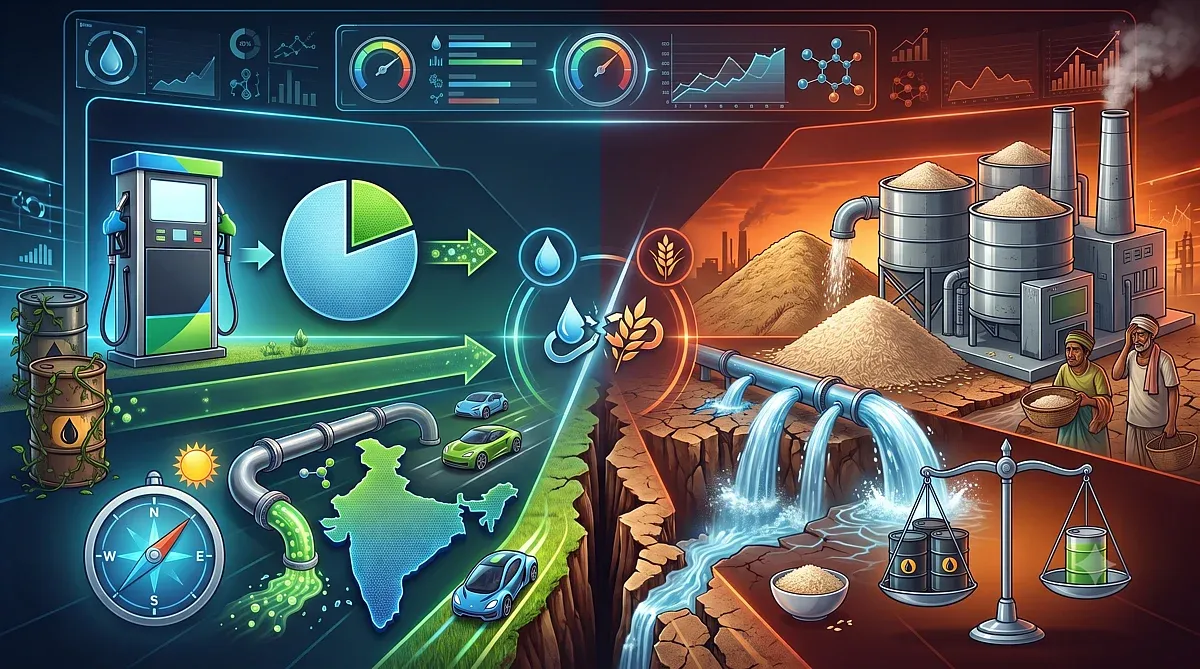
India's ethanol blending program aims to reduce crude oil imports and boost rural incomes by expanding feedstock sources beyond sugarcane to include surplus rice, broken grains, and maize. Inspired by Brazil's long-standing ethanol model, India seeks to increase blending targets from E20 to E25 while addressing concerns about food and water resource impacts. The initiative has injected significant earnings into farming communities by creating a stable market for agricultural surpluses, supporting national energy security and rural economic transformation.
First-hand measurement across 3 sources
We measured how 3 outlets covered this story. Coverage leans balanced overall (Left 17%, Centre 71%, Right 12%). Overall sentiment is neutral (63/100). Lens Score 24/100 — low public interest.
Outlets analysed (first-hand measurement by TBN's Bias Engine):
- httpswwwoutlookindiacom— balanced framing, neutral sentiment
- news18— balanced framing, positive sentiment
- httpswwwoutlookindiacom— balanced framing, neutral sentiment
AI Analysis
The articles present a range of perspectives including government policy goals, strategic energy considerations, and rural economic impacts. They highlight official initiatives and international comparisons without partisan framing. The coverage includes both optimistic views on ethanol's benefits and cautionary notes on resource concerns, reflecting a balanced representation of policy ambitions and challenges.
The overall tone is mixed-positive, emphasizing the economic benefits for farmers and strategic energy goals while acknowledging concerns about food and water resources. The sentiment balances enthusiasm for rural income growth and energy independence with prudent attention to potential environmental and social trade-offs.
How 3 sources covered this story
Each source's own headline, political lean, and sentiment — so you can see framing differences at a glance.