India's Trade Agreements with Europe Face Political and Regulatory Challenges
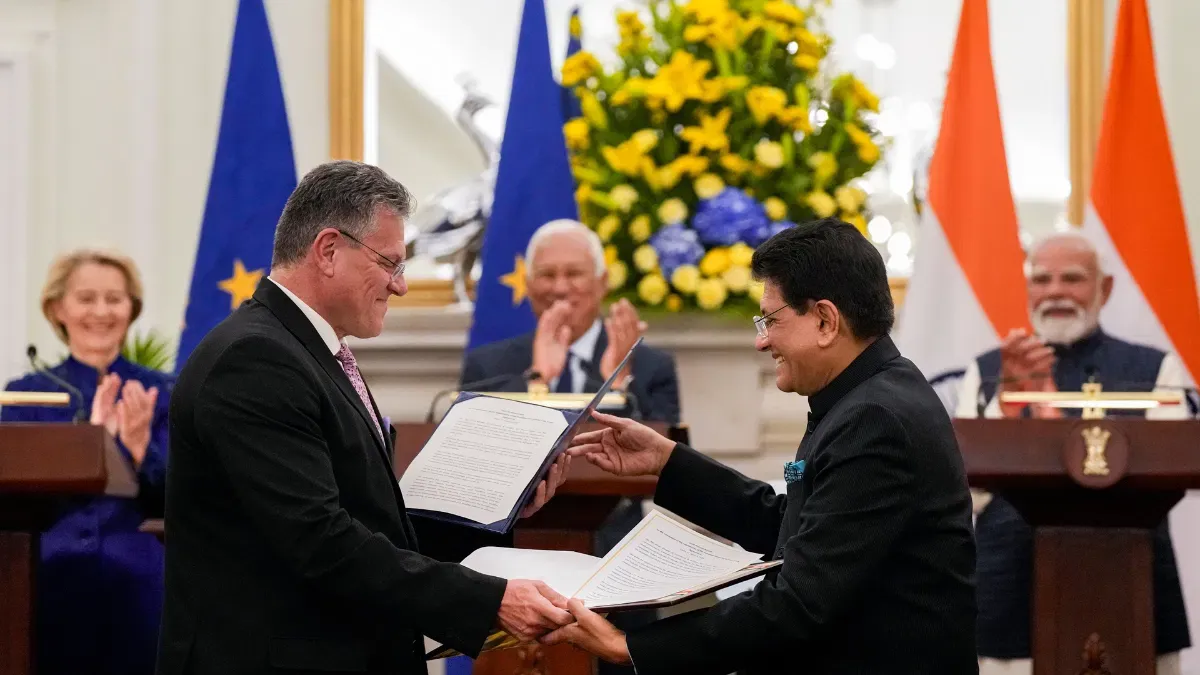
India has signed major trade agreements with the European Union and the United Kingdom, aiming to strengthen long-term economic ties. However, these agreements face challenges such as political instability in Europe and regulatory actions like the EU's ban on Brazilian agricultural imports under the Mercosur deal. The EU-Mercosur agreement includes a rebalancing mechanism to address such disruptions. Experts note that political volatility and domestic pressures in Europe may affect the implementation and durability of these trade commitments.
First-hand measurement across 2 sources
We measured how 2 outlets covered this story. Coverage leans balanced overall (Left 10%, Centre 85%, Right 5%). Overall sentiment is neutral (52/100). Lens Score 27/100 — low public interest.
Outlets analysed (first-hand measurement by TBN's Bias Engine):
- theprint— balanced framing, neutral sentiment
- thetelegraph— balanced framing, neutral sentiment
AI Analysis
The articles present a range of political perspectives, highlighting both the strategic intentions behind India's trade agreements and the political instability in European countries that may impact these deals. They discuss domestic political pressures within the EU and UK without assigning blame, reflecting a balanced view of the complexities involved in international trade diplomacy.
The overall tone is cautiously analytical, acknowledging the significance of the trade agreements while recognizing challenges such as regulatory bans and political volatility. Coverage is mixed, combining optimism about the agreements' potential with concerns over their practical implementation amid uncertain political environments.
How 2 sources covered this story
Each source's own headline, political lean, and sentiment — so you can see framing differences at a glance.