Skip to content
Get the Balanced News app for a better experience!
The Balanced News Logo
Analytics
The Balanced News Logo

Stay Balanced, Stay Informed

Menu
  • Browse News
  • Underreported Stories
  • Curated Feeds
  • Insights
  • Analytics
  • Our Writers
  • About Us
  • Download App
Learn
  • How It Works
  • Bias Detection
  • Lens Score
  • Source Bias Checker
  • Accountability
  • Custom Feeds
Newsroom
  • Writers & Analysts
  • About TBN
  • Editorial Standards
  • Corrections Policy
  • Our Partners
  • Insights
Socials
  • Youtube
  • Instagram
  • X
  • Facebook
News Categories
  • Trending
  • Politics
  • Sports
  • Business
  • Tech
  • Entertainment
  • Health
  • Science
  • Crime
  • Lifestyle
  • National
  • International
  • Good News
  • Crypto

Get Our App

Available for iOS and Android


LensFeedsInsightsAnalyticsTrendingGood NewsSportsPoliticsBusinessCrimeTechEntertainmentHealthNationalInternational

© 2026 The Balanced News. All rights reserved.

About UsEditorial StandardsCorrectionsHelp & SupportPrivacy PolicyTerms & Conditions
U.S. Projects Convert Organic Waste into Renewable Energy and Sustainable Fuels
Categories

Categories

Related Coverage

Select a news story to see related coverage from other media outlets.

Related Coverage

Select a news story to see related coverage from other media outlets.

  1. Home
  2. /
  3. Business

U.S. Projects Convert Organic Waste into Renewable Energy and Sustainable Fuels

Analysed 2 Sept 2026·4 sources analysed·Deerfield, Massachusetts, United States·Business
U.S. Projects Convert Organic Waste into Renewable Energy and Sustainable FuelsPreviousNext

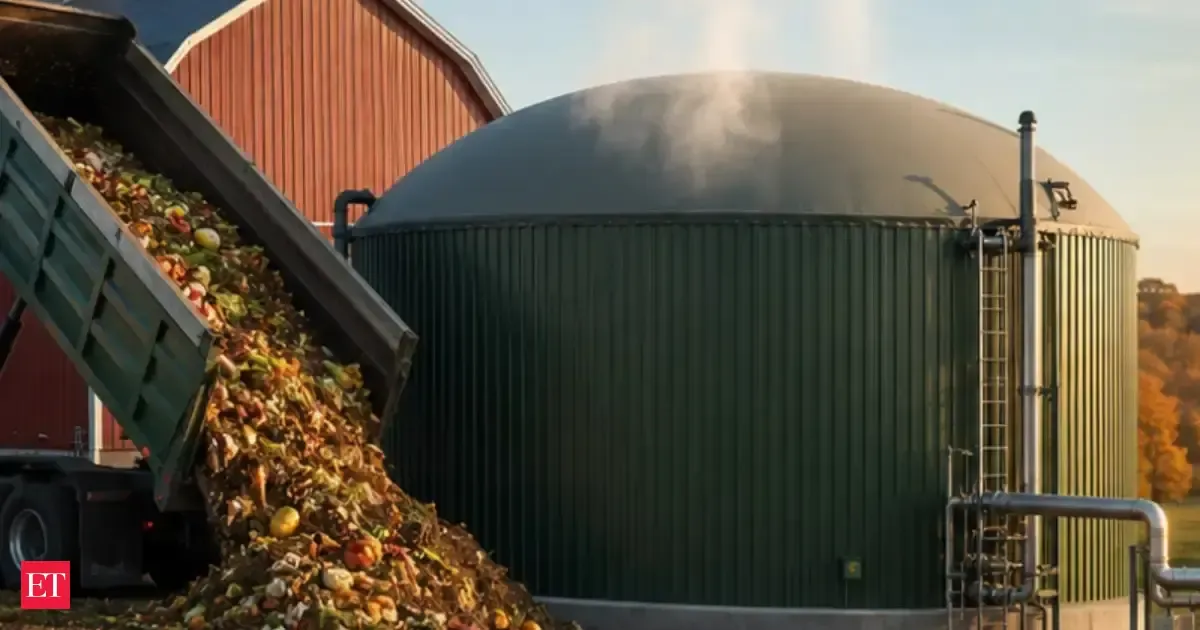
Several U.S. initiatives demonstrate innovative uses of organic waste to produce renewable energy and fuels. Massachusetts' Bar-Way Farm converts food waste and manure into electricity powering 900 homes. California's Perris facility processes 334,000 tons of food and green waste annually, generating renewable natural gas and fertilizer. Washington State University researchers developed a method to enhance sewage sludge digestion, increasing gas output and reducing costs. Additionally, the National Renewable Energy Laboratory created a process to convert food waste into sustainable jet fuel, potentially cutting carbon emissions significantly.

Sentiment
75%
TBN's observations

First-hand measurement across 4 sources

We measured how 4 outlets covered this story. No outlet gave this story a measurable political slant — there is no left–right reading to report. Overall sentiment is positive (75/100). Lens Score 47/100.

Outlets measured: economictimes, economictimes, economictimes, economictimes. See how each one headlined and framed the same story in the source comparison below.

AI analysis of 4 sources · Published under editorial oversight by The Balanced News
Analysed 2 Sept 2026· How this analysis is produced· Editorial standards· Corrections

AI Analysis

Sentiment — Positive (75/100)

Sentiment was consistent across outlets (74–75/100), indicating broadly factual reporting rather than editorialising.

Coverage timeline

economictimes broke this story on 1 Sept, 09:04 am. Other outlets followed.

1 Sept, 09:04 am4 sources · 23 h2 Sept, 07:45 am
AI analysis by the TBN Bias Engine · beat methodology byMrunal Wange· Business & Economy Editor· editorial standards byOjas Kale
← Previous
NMDC Reports 21% Rise in August Iron Ore Production and Increased Sales
Next →
Indian Auto Industry Urged to Build Advanced Tech Capabilities and Global Leadership
  1. 1
    economictimes1 Sept, 09:04 am
    California's CR R digester can process 334,000 tons of food and green waste yearly, yielding 4 million diesel-gallon equivalents of RNG and 250,000 tons of fertilizer
  2. 2
    economictimes1 Sept, 02:22 pm
    In 2021, NREL fermented food waste into volatile fatty acids and catalytically upgraded them to jet fuel; the SAF was estimated to cut net carbon emissions by up to 165 when landfill disposal was assumed
  3. 3
    economictimes1 Sept, 08:35 pm
    Earlier in 2026, WSU researchers heated and pressurized sewage sludge with oxygen, producing 200 more renewable gas. Now the process cuts treatment costs from 494 to 253 per ton
  4. 4
    economictimes2 Sept, 07:45 am
    In Massachusetts, Bar-Way Farm digests 36,500 tons of food waste and 9,125 tons of manure every year, producing enough electricity for 900 homes

Who's involved

Institutions and figures named across source coverage.

Government
Massachusetts Clean Energy CenterUnited States Department of EnergyDepartment of EnergyUnited States Environmental Protection AgencyMassachusetts Department of Environmental ProtectionUnited States Department of Agriculture Natural Resources Conservation ServiceEnvironmental Protection Agency
Corporate
Eversource EnergyClean-Vantage LLCCR R EnvironmentalVanguard Renewables

Story context

Category
Business
Location
Deerfield, Massachusetts, United States
Sources analysed
4
Last analysed
2 Sept 2026
Key entities
LandfillMethaneFood loss and wasteAnaerobic digestionTonUnited StatesUnited States Environmental Protection AgencyElectricityFertilizerRenewable natural gasBiogasOrganic matter