Skip to content
Get the Balanced News app for a better experience!
The Balanced News Logo
Analytics
The Balanced News Logo

Stay Balanced, Stay Informed

Menu
  • Browse News
  • Underreported Stories
  • Curated Feeds
  • Insights
  • Analytics
  • Our Writers
  • About Us
  • Download App
Learn
  • How It Works
  • Bias Detection
  • Lens Score
  • Source Bias Checker
  • Accountability
  • Custom Feeds
Newsroom
  • Writers & Analysts
  • About TBN
  • Editorial Standards
  • Corrections Policy
  • Our Partners
  • Insights
Socials
  • Youtube
  • Instagram
  • X
  • Facebook
News Categories
  • Trending
  • Politics
  • Sports
  • Business
  • Tech
  • Entertainment
  • Health
  • Science
  • Crime
  • Lifestyle
  • National
  • International
  • Good News
  • Crypto

Get Our App

Available for iOS and Android


LensFeedsInsightsAnalyticsTrendingGood NewsSportsPoliticsBusinessCrimeTechEntertainmentHealthNationalInternational

© 2026 The Balanced News. All rights reserved.

About UsEditorial StandardsCorrectionsHelp & SupportPrivacy PolicyTerms & Conditions
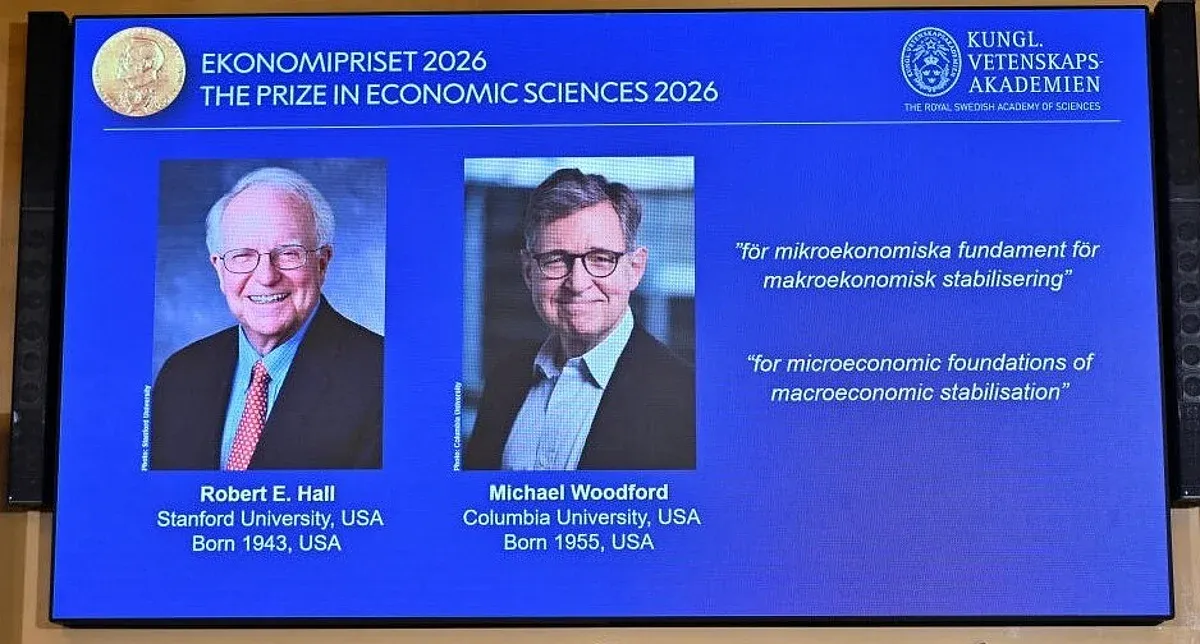
Nobel Prize in Economics 2026 Recognizes Research on Economic Stabilization and Expectations
Categories

Categories

Related Coverage

Select a news story to see related coverage from other media outlets.

Related Coverage

Select a news story to see related coverage from other media outlets.

  1. Home
  2. /
  3. Business

Nobel Prize in Economics 2026 Recognizes Research on Economic Stabilization and Expectations

Analysed 16 Oct 2026·3 sources analysed·Bangalore, India·Business
Nobel Prize in Economics 2026 Recognizes Research on Economic Stabilization and ExpectationsNext

The 2026 Nobel Prize in Economics was awarded to Robert E. Hall and Michael Woodford for their work on the microeconomic foundations of macroeconomic stabilization. Their research emphasizes how households' and companies' future expectations influence current economic decisions, aiding policymakers in targeting fiscal support and stabilizing economies during disruptions. Their insights highlight the importance of credible commitments by central banks and effective communication of policies, with implications for countries like India facing inflation and supply shocks.

Sentiment
57%
TBN's observations

First-hand measurement across 3 sources

We measured how 3 outlets covered this story. No outlet gave this story a measurable political slant — there is no left–right reading to report. Overall sentiment is neutral (57/100). Lens Score 37/100.

Outlets measured: deccanherald, thehindu, theprint. See how each one headlined and framed the same story in the source comparison below.

AI analysis of 3 sources · Published under editorial oversight by The Balanced News
Analysed 16 Oct 2026· How this analysis is produced· Editorial standards· Corrections

AI Analysis

Sentiment — Neutral (57/100)

Sentiment was consistent across outlets (52–68/100), indicating broadly factual reporting rather than editorialising.

Coverage timeline

theprint broke this story on 15 Oct, 09:34 pm. Other outlets followed.

15 Oct, 09:34 pm3 sources · 23 h16 Oct, 08:12 pm
AI analysis by the TBN Bias Engine · beat methodology byMrunal Wange· Business & Economy Editor· editorial standards byOjas Kale
Next →
C-CAMP Receives Rs 500 Crore from Centre's RDI Fund to Support Deeptech Startups
  1. 1
    theprint15 Oct, 09:34 pm
    Dasharatha's dilemma: What economics Nobel teaches central banks about keeping promises
  2. 2
    thehindu16 Oct, 06:45 pm
    Ripples from the future: On the Nobel Prize for Economics 2026
  3. 3
    deccanherald16 Oct, 08:12 pm
    Economics Nobel: Terms of stability

Who's involved

Institutions and figures named across source coverage.

Government
United States Federal ReserveReserve Bank of IndiaGovernment of India

Story context

Category
Business
Location
Bangalore, India
Sources analysed
3
Last analysed
16 Oct 2026
Key entities
Michael Dean WoodfordRobert Hall (economist)EconomicsNobel Memorial Prize in Economic SciencesIndiaNobel PrizeCentral bankInflationMicrofoundationsColumbia UniversityMacroeconomicsStanford University