3 hours agoBusiness
31LENS
2 SourcesIran
 thebalanced.news
Global Conflicts Narrow Air Routes as U.S. Airlines Adjust to Rising Fuel Costs
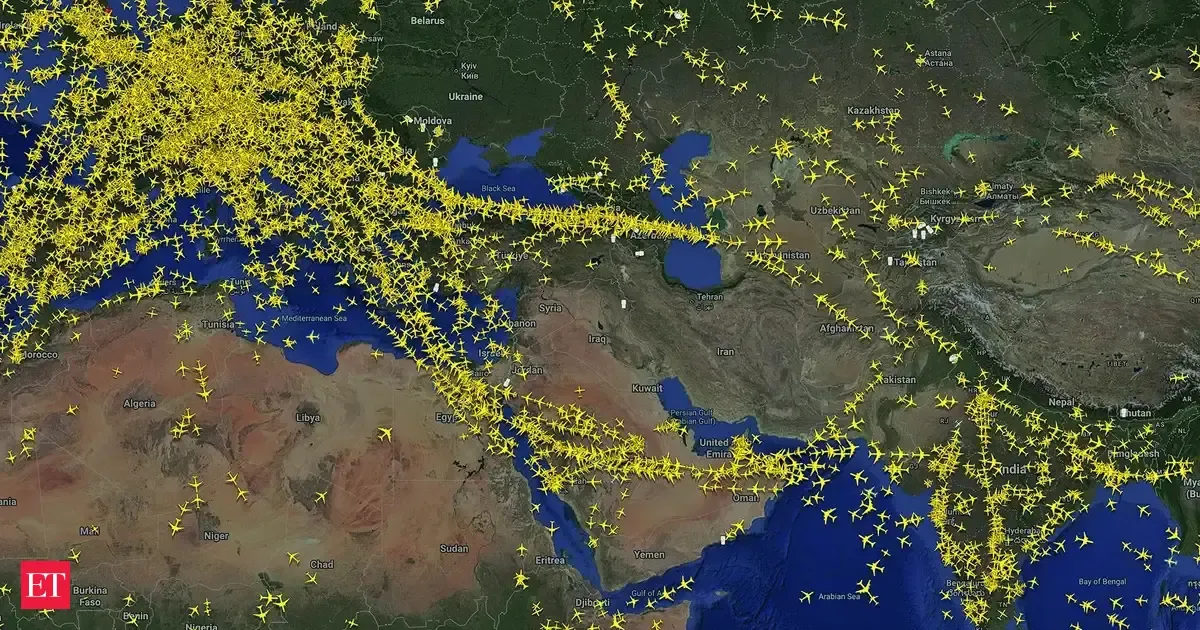
Global conflicts, including recent drone strikes in Azerbaijan linked to Iran, have narrowed key air corridors between Europe and Asia, complicating aviation logistics and increasing flight distances and fuel costs. Airlines face route viability challenges amid constrained airspace. Meanwhile, major U.S. carriers report strong domestic demand and have raised fares to offset higher fuel prices, adjusting capacity to maintain profitability despite global uncertainties affecting overseas operations.
Political Bias
5%93%2%
Sentiment
48%
20 stories available
View AI Analysis
Bias Analysis: The articles present perspectives from both international aviation logistics affected by geopolitical conflicts and U.S. airline industry responses. The first article focuses on the impact of Middle East tensions on flight routes, citing Azerbaijani and Iranian contexts, while the second highlights U.S. carriers' financial strategies amid fuel price pressures. Both sources maintain a factual tone without partisan framing, representing operational and economic viewpoints.
Sentiment: Coverage combines concern over disrupted international flight corridors and increased operational costs with a cautiously optimistic tone regarding U.S. airlines' ability to manage demand and adjust fares. The sentiment is mixed, reflecting challenges from geopolitical tensions alongside resilience and strategic adaptation within the airline industry.
Lens Score: 31/100 — Story is well-covered by media outlets. Public interest: 0/100. Coverage gap: 100%.
Related Coverage
Select a news story to see related coverage from other media outlets.