Singapore Court Sentences Two Indians for Illegal Cross-Border Remittance Scheme
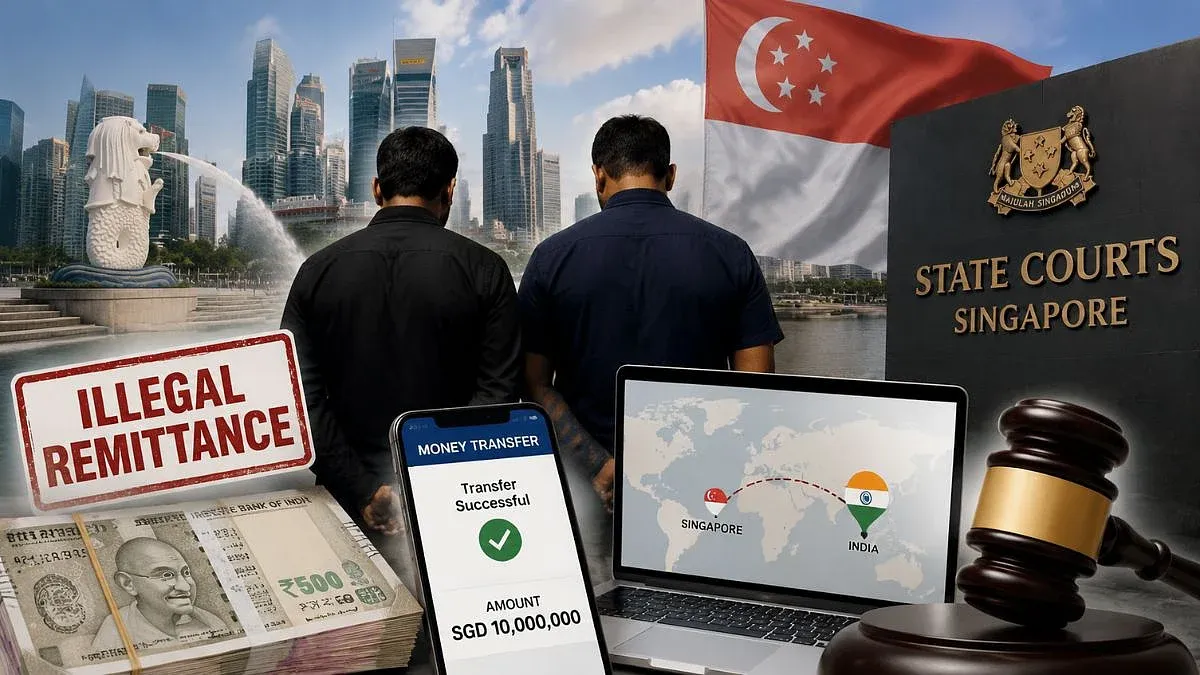
A Singapore court sentenced two Indian nationals, Angappan Arivalagan and Durairaj Kulothungan, to prison terms of 15 months and three weeks, and eight months and three weeks respectively, for operating an unauthorized cross-border remittance network. They withdrew funds from migrant workers' bank accounts without licenses and sent money to India. The operation involved purchasing goods with the withdrawn cash, which were then shipped overseas and sold. Authorities arrested Kulothungan in July 2023 after a tip-off, seizing 51 ATM cards and nearly SGD 75,000 in cash, with Arivalagan arrested the following month. Prosecutors reported over SGD 10 million was illegally remitted between January and July 2023.
First-hand measurement across 3 sources
We measured how 3 outlets covered this story. Coverage leans balanced overall (Left 0%, Centre 100%, Right 0%). Overall sentiment is negative (30/100). Lens Score 44/100 — moderate-to-low public interest.
Outlets analysed (first-hand measurement by TBN's Bias Engine):
- freepressjournal— balanced framing, negative sentiment
- thetribune— balanced framing, negative sentiment
- news18— balanced framing, negative sentiment
AI Analysis
The articles present a straightforward legal report focusing on the court's sentencing of two Indian nationals for unauthorized money transfers. Coverage is factual and centered on law enforcement and judicial actions without political framing. The perspectives include official statements from prosecutors and details of the criminal activity, with no evident political bias or partisan viewpoints.
The tone across the articles is neutral and factual, emphasizing the legal consequences and procedural details of the case. There is no emotional language or sensationalism; the coverage is focused on reporting the court's decision, the nature of the offense, and the investigation, resulting in an overall objective and informative sentiment.
How 3 sources covered this story
Each source's own headline, political lean, and sentiment — so you can see framing differences at a glance.