Nursing Programs in India Enhance Practical Training to Address Workforce Shortage
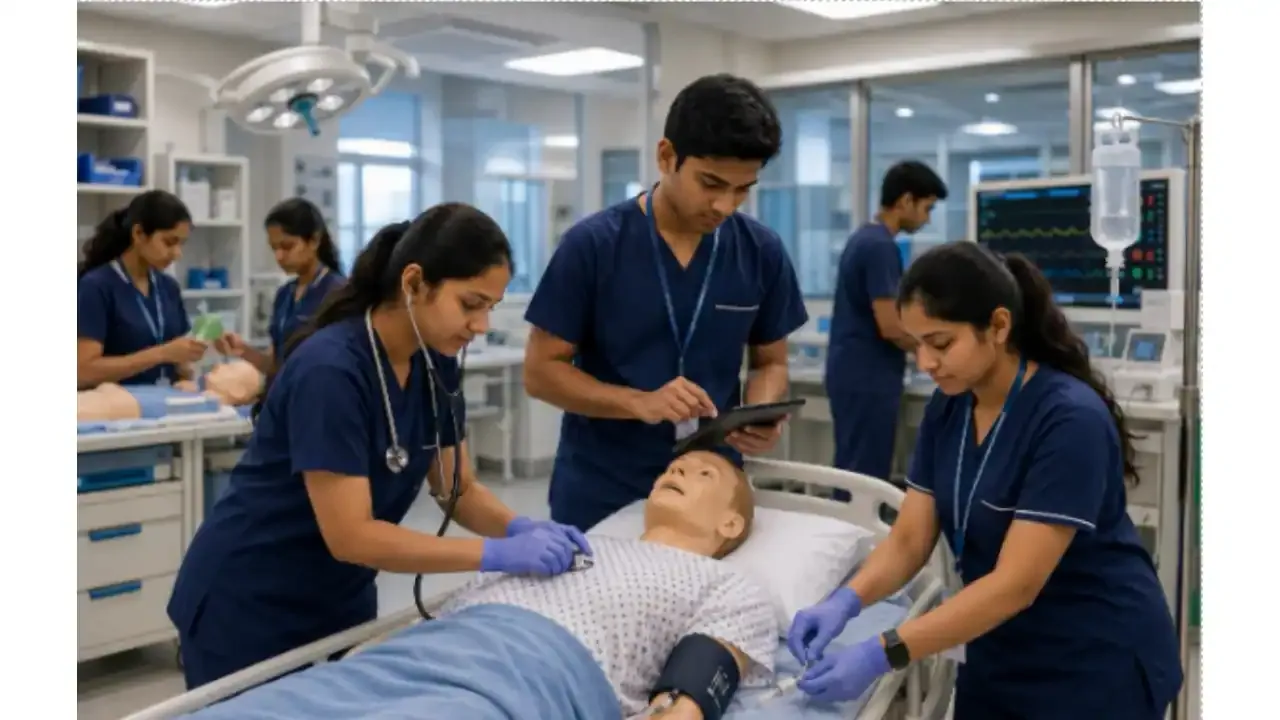
Nursing education in India faces challenges as many students lack practical clinical experience despite theoretical training. With a projected shortage of nearly 2 million nurses by 2030, hospitals increasingly seek graduates ready for real-world healthcare from day one. To address this, some colleges are adopting practice-based training, including advanced simulation labs, to better prepare students for clinical environments. Four nursing programs exemplify this approach, aiming to enhance job readiness through stronger practical exposure and alignment with hospital systems.
First-hand measurement across 2 sources
We measured how 2 outlets covered this story. Coverage leans balanced overall (Left 0%, Centre 100%, Right 0%). Overall sentiment is positive (70/100). Lens Score 28/100 — low public interest.
Outlets analysed (first-hand measurement by TBN's Bias Engine):
- zeenews— balanced framing, positive sentiment
- zeenews— balanced framing, positive sentiment
AI Analysis
The articles primarily focus on educational and healthcare system challenges without political framing. They highlight institutional responses to workforce needs, reflecting perspectives from educational institutions and healthcare providers. There is no evident partisan viewpoint; the coverage centers on systemic issues and solutions within nursing education and healthcare demand.
The tone across the articles is generally neutral to constructive, emphasizing challenges in nursing education alongside proactive measures to improve clinical readiness. While acknowledging shortages and gaps, the coverage highlights positive developments in training programs, presenting a balanced view of problems and responses without overtly negative or overly optimistic language.
How 2 sources covered this story
Each source's own headline, political lean, and sentiment — so you can see framing differences at a glance.