Skip to content
Get the Balanced News app for a better experience!
The Balanced News Logo
Analytics
The Balanced News Logo

Stay Balanced, Stay Informed

Menu
  • Browse News
  • Underreported Stories
  • Curated Feeds
  • Insights
  • Analytics
  • Our Writers
  • About Us
  • Download App
Learn
  • How It Works
  • Bias Detection
  • Lens Score
  • Source Bias Checker
  • Accountability
  • Custom Feeds
Newsroom
  • Writers & Analysts
  • About TBN
  • Editorial Standards
  • Corrections Policy
  • Our Partners
  • Insights
Socials
  • Youtube
  • Instagram
  • X
  • Facebook
News Categories
  • Trending
  • Politics
  • Sports
  • Business
  • Tech
  • Entertainment
  • Health
  • Science
  • Crime
  • Lifestyle
  • National
  • International
  • Good News
  • Crypto

Get Our App

Available for iOS and Android


LensFeedsInsightsAnalyticsTrendingGood NewsSportsPoliticsBusinessCrimeTechEntertainmentHealthNationalInternational

© 2026 The Balanced News. All rights reserved.

About UsEditorial StandardsCorrectionsHelp & SupportPrivacy PolicyTerms & Conditions
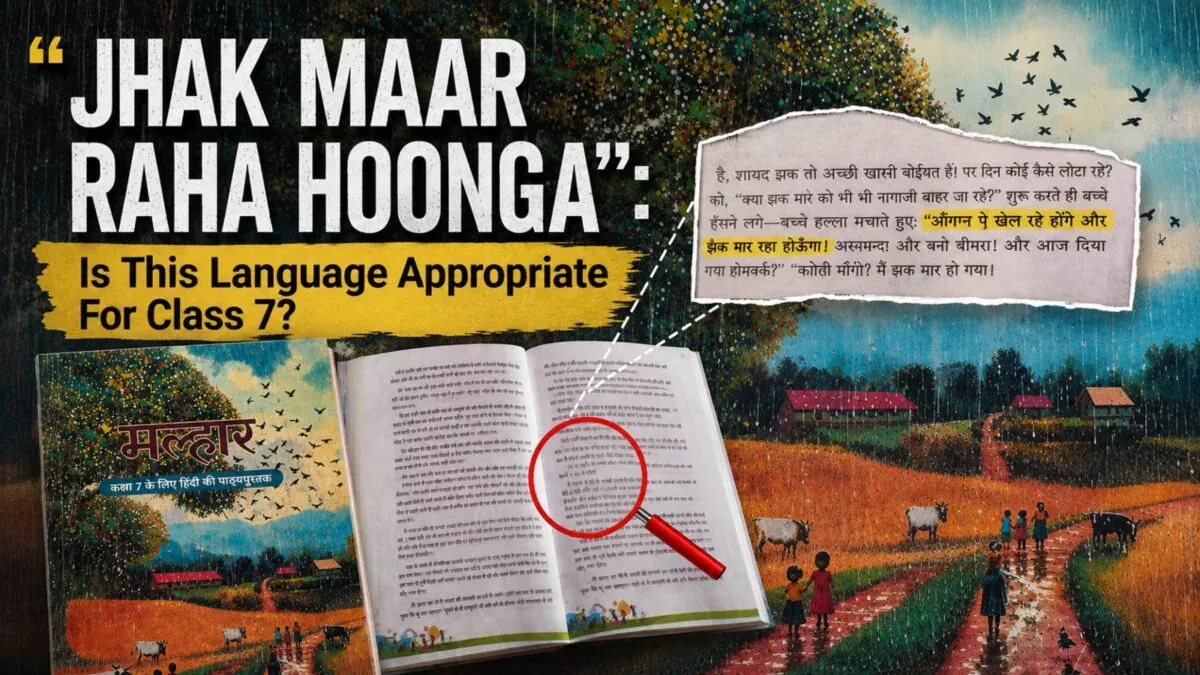
Colloquial Hindi Phrase in Class 7 Textbook Prompts Discussion on Language Use
Categories

Categories

Related Coverage

Select a news story to see related coverage from other media outlets.

Related Coverage

Select a news story to see related coverage from other media outlets.

  1. Home
  2. /
  3. Education

Colloquial Hindi Phrase in Class 7 Textbook Prompts Discussion on Language Use

Analysed 17 Aug 2026·3 sources analysed·Education
Colloquial Hindi Phrase in Class 7 Textbook Prompts Discussion on Language UsePreviousNext

A Hindi phrase, "Jhak Maar Raha Hounga," appearing in a Class 7 NCERT Hindi textbook has sparked questions about the use of colloquial language in educational materials. The phrase, an idiomatic expression meaning being compelled or doing something futile, raises debate on whether such informal language is appropriate for students. The discussion centers on whether textbooks should remove colloquial terms or teach their meanings and contexts, distinguishing between conversational and formal usage.

Sentiment
50%
TBN's observations

First-hand measurement across 3 sources

We measured how 3 outlets covered this story. No outlet gave this story a measurable political slant — there is no left–right reading to report. Overall sentiment is neutral (50/100). Lens Score 30/100.

Outlets measured: news18, news18, news18. See how each one headlined and framed the same story in the source comparison below.

AI analysis of 3 sources · Published under editorial oversight by The Balanced News
Analysed 17 Aug 2026· How this analysis is produced· Editorial standards· Corrections

AI Analysis

Sentiment — Neutral (50/100)

Sentiment was consistent across outlets (50–50/100), indicating broadly factual reporting rather than editorialising.

Coverage timeline

news18 broke this story on 17 Aug, 05:21 am. Other outlets followed.

17 Aug, 05:21 am3 sources · 5 min17 Aug, 05:26 am
AI analysis by the TBN Bias Engine · beat methodology byOjas Kale· Founder & Editor
← Previous
Universities Confront Challenges of AI Use in Student Assessments and Online Courses
Next →
UPSC Releases Civil Services Mains 2026 Admit Cards; Exam Starts August 21
  1. 1
    news1817 Aug, 05:21 am
    'Jhak Maar Raha Hounga': Why A Class 7 Textbook Phrase Has Sparked Questions
  2. 2
    news1817 Aug, 05:23 am
    'Jhak Maar Raha Hounga': Why A Class 7 Textbook Phrase Has Sparked Questions
  3. 3
    news1817 Aug, 05:26 am
    'Jhak Maar Raha Hounga': Why A Class 7 Textbook Phrase Has Sparked Questions

Who's involved

Institutions and figures named across source coverage.

Government
National Council of Educational Research and Training

Story context

Category
Education
Sources analysed
3
Last analysed
17 Aug 2026
Key entities
IdiomColloquialismHindiVocabularySpoken languageRegister (sociolinguistics)Language educationLiterary languageFormal languageSlangDialectLanguage