NCERT Class 9 Textbook Cites Manusmriti on Women's Status in Vedic and Later Periods
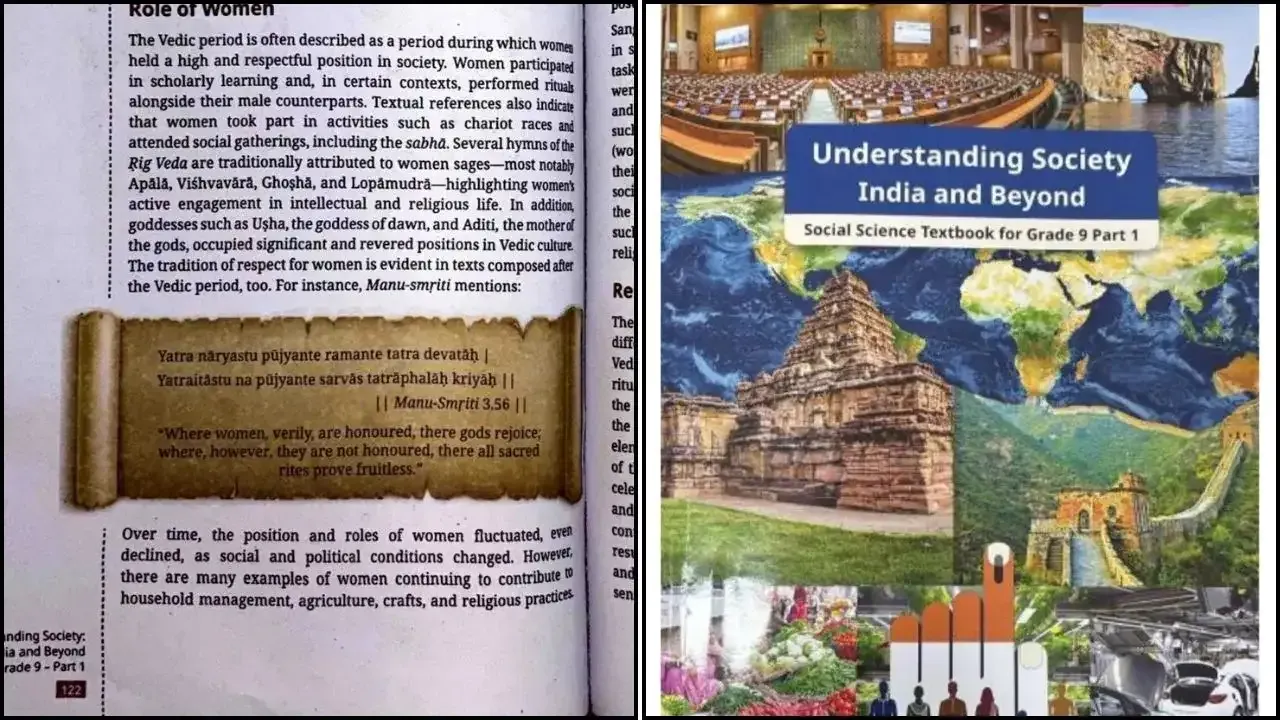
The NCERT's new Class 9 Social Science textbook highlights that women held a respected and active role during the Vedic period, participating in scholarly learning, rituals, and public assemblies. It cites Manusmriti 3.56 to illustrate this respect but notes that women's status fluctuated and declined over time due to changing social and political conditions. The textbook also references later historical periods where women contributed to household management, arts, and governance, including figures like Prabhavati Gupta.
First-hand measurement across 3 sources
We measured how 3 outlets covered this story. Coverage leans balanced overall (Left 22%, Centre 73%, Right 5%). Overall sentiment is neutral (59/100). Lens Score 29/100 — low public interest.
Outlets analysed (first-hand measurement by TBN's Bias Engine):
- ndtv— balanced framing, neutral sentiment
- timesnow— balanced framing, neutral sentiment
- news18— balanced framing, neutral sentiment
AI Analysis
The article group presents a largely educational and historical perspective, focusing on NCERT's textbook content without overt political framing. It includes references to ancient texts and historical examples, acknowledging debates around Manusmriti while maintaining a neutral tone. The coverage reflects academic viewpoints on women's evolving roles, avoiding partisan interpretations or ideological bias.
The overall sentiment across the articles is neutral and informative, emphasizing historical facts and scholarly interpretations. The tone acknowledges both respect for women in the Vedic period and the subsequent fluctuations in their status, without emotional or judgmental language. The coverage balances positive aspects of women's roles with contextual changes over time.
How 3 sources covered this story
Each source's own headline, political lean, and sentiment — so you can see framing differences at a glance.