Skip to content
Get the Balanced News app for a better experience!
The Balanced News Logo
Analytics
The Balanced News Logo

Stay Balanced, Stay Informed

Menu
  • Browse News
  • Underreported Stories
  • Curated Feeds
  • Insights
  • Analytics
  • Our Writers
  • About Us
  • Download App
Learn
  • How It Works
  • Bias Detection
  • Lens Score
  • Source Bias Checker
  • Accountability
  • Custom Feeds
Newsroom
  • Writers & Analysts
  • About TBN
  • Editorial Standards
  • Corrections Policy
  • Our Partners
  • Insights
Socials
  • Youtube
  • Instagram
  • X
  • Facebook
News Categories
  • Trending
  • Politics
  • Sports
  • Business
  • Tech
  • Entertainment
  • Health
  • Science
  • Crime
  • Lifestyle
  • National
  • International
  • Good News
  • Crypto

Get Our App

Available for iOS and Android


LensFeedsInsightsAnalyticsTrendingGood NewsSportsPoliticsBusinessCrimeTechEntertainmentHealthNationalInternational

© 2026 The Balanced News. All rights reserved.

About UsEditorial StandardsCorrectionsHelp & SupportPrivacy PolicyTerms & Conditions
Studies Examine Vinegar and Borax as Kitchen Cleaners but Note Disinfection Limits
Categories

Categories

Related Coverage

Select a news story to see related coverage from other media outlets.

Related Coverage

Select a news story to see related coverage from other media outlets.

  1. Home
  2. /
  3. Lifestyle

Studies Examine Vinegar and Borax as Kitchen Cleaners but Note Disinfection Limits

Analysed 9 Sept 2026·2 sources analysed·Lifestyle
Studies Examine Vinegar and Borax as Kitchen Cleaners but Note Disinfection LimitsPreviousNext

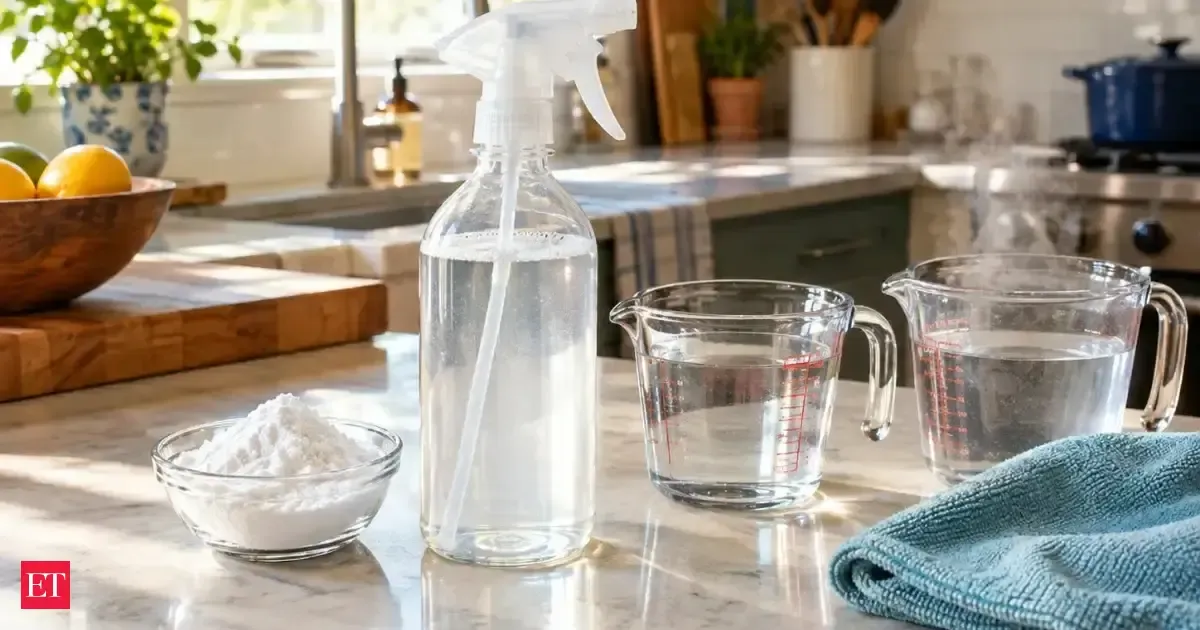
Research shows that undiluted white vinegar heated to 130°F for one minute can reduce common kitchen pathogens like Listeria, E. coli, and Salmonella by over 99.999% on hard surfaces under lab conditions. However, vinegar is not EPA-registered as a disinfectant and is less effective on porous surfaces or viruses. A DIY cleaner combining borax and vinegar can break down grease and grime but does not provide certified disinfection, highlighting that vinegar-based sprays should not replace approved disinfectants.

Sentiment
52%
TBN's observations

First-hand measurement across 2 sources

We measured how 2 outlets covered this story. No outlet gave this story a measurable political slant — there is no left–right reading to report. Overall sentiment is neutral (52/100). Lens Score 45/100.

Outlets measured: economictimes, economictimes. See how each one headlined and framed the same story in the source comparison below.

AI analysis of 2 sources · Published under editorial oversight by The Balanced News
Analysed 9 Sept 2026· How this analysis is produced· Editorial standards· Corrections

AI Analysis

Sentiment — Neutral (52/100)

Sentiment was consistent across outlets (52–52/100), indicating broadly factual reporting rather than editorialising.

Coverage timeline

economictimes broke this story on 9 Sept, 08:13 am. Other outlets followed.

9 Sept, 08:13 am2 sources · 6 h9 Sept, 02:29 pm
AI analysis by the TBN Bias Engine · beat methodology byAniket Awate· Culture & Digital Media Writer· editorial standards byOjas Kale
← Previous
Ganesh Chaturthi 2026 Offers Highlight HP, ASUS Laptops and Samsung Foldable Phones
Next →
Peanut Butter and Jelly Sandwich Celebrates 125 Years as American Lunchbox Staple
1
economictimes9 Sept, 08:13 am
Use undiluted 5 white vinegar at 130 F for 1 minute; Colorado State Extension says it can reduce Listeria, E. coli, and Salmonella by over 99.999 on hard surfaces
  • 2
    economictimes9 Sept, 02:29 pm
    Unlock the Secrets of a DIY All-Purpose Cleaner: Borax, Vinegar, and Hot Water
  • Who's involved

    Institutions and figures named across source coverage.

    Government
    Colorado State University ExtensionUnited States Environmental Protection AgencyCornell University College of Agriculture and Life Sciences Occupational and Environmental Health Program

    Story context

    Category
    Lifestyle
    Sources analysed
    2
    Last analysed
    9 Sept 2026
    Key entities
    VinegarDisinfectantUnited States Environmental Protection AgencyListeriaEscherichia coliSalmonellaColorado State UniversityPathogenSodium bicarbonateListeria monocytogenesPorosityRoom temperature