Gulf States Condition Trade with Iran on Addressing Missile and Proxy Concerns
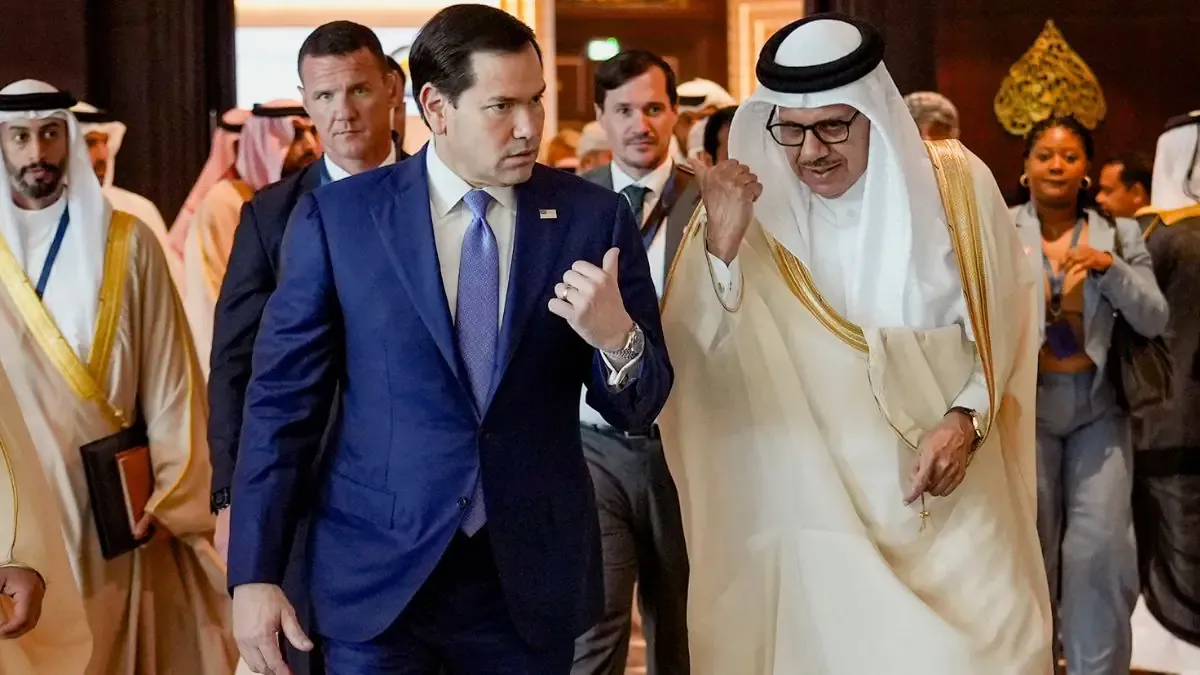
Gulf foreign ministers, meeting with US Secretary of State Marco Rubio, stated that lasting regional peace depends on Iran addressing concerns over its missile program, drone capabilities, and support for proxies. They emphasized that any trade and investment with Iran would be conditional and reversible, contingent on Iran's compliance with agreements and cessation of destabilizing behavior. Meanwhile, maritime traffic through the Strait of Hormuz increased to 70 vessels, the highest since its closure on March 1, though Iran warned against unauthorized crossings.
First-hand measurement across 2 sources
We measured how 2 outlets covered this story. Coverage leans balanced overall (Left 10%, Centre 80%, Right 10%). Overall sentiment is neutral (45/100). Lens Score 34/100 — low public interest.
Outlets analysed (first-hand measurement by TBN's Bias Engine):
- firstpost— balanced framing, neutral sentiment
- mint— balanced framing, neutral sentiment
AI Analysis
The articles present perspectives primarily from Gulf states and US officials emphasizing security concerns related to Iran's missile program and regional proxies. They reflect a cautious stance toward economic engagement with Iran, highlighting conditionality tied to compliance. Iranian viewpoints are indirectly referenced through warnings about Strait of Hormuz crossings, showing a focus on regional security dynamics without overt partisan framing.
The overall tone is cautious and measured, focusing on security issues and diplomatic conditions without sensationalism. Coverage balances the Gulf states' demand for addressing threats with factual reporting on increased maritime activity and Iran's warnings, resulting in a neutral and informative sentiment.
How 2 sources covered this story
Each source's own headline, political lean, and sentiment — so you can see framing differences at a glance.