West Bengal Minister Comments on Egg Attacks on TMC Leaders and Encounter Critics
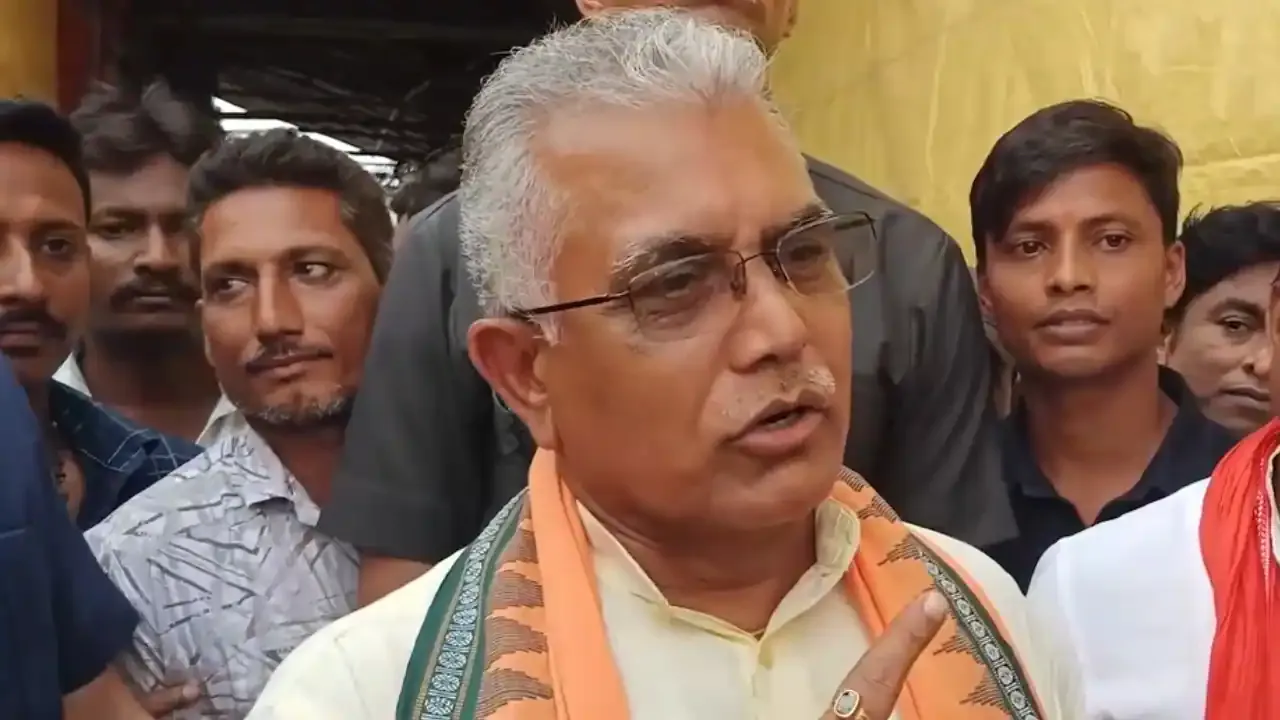
In West Bengal, several Trinamool Congress (TMC) leaders, including Mamata Banerjee and Abhishek Banerjee, have faced egg-throwing protests following the party's election defeat. West Bengal minister Dilip Ghosh defended these incidents as a harmless form of dissent compared to violence, calling them an "innovation" to express anger over alleged corruption. Separately, Ghosh criticized intellectuals opposing a police encounter killing the prime accused in a high-profile rape-murder case, urging protesters to direct their anger at such critics instead of wasting eggs.
First-hand measurement across 3 sources
We measured how 3 outlets covered this story. Coverage leans left-leaning overall (Left 56%, Centre 27%, Right 17%). Overall sentiment is negative (30/100). Lens Score 45/100 — moderate-to-low public interest.
Outlets analysed (first-hand measurement by TBN's Bias Engine):
- indiatoday— left-leaning framing, negative sentiment
- moneycontrol— left-leaning framing, negative sentiment
- ndtv— left-leaning framing, negative sentiment
AI Analysis
The articles present perspectives primarily from West Bengal BJP minister Dilip Ghosh, who defends egg-throwing protests against TMC leaders and criticizes opposition intellectuals. The coverage includes BJP framing of the police encounter as justice and TMC as targets of public anger. Opposition viewpoints are implied through protest actions and slogans but are less directly represented, reflecting a focus on government and ruling party narratives.
The overall tone is mixed, combining critical and defensive elements. The egg-throwing incidents and police encounter evoke tension and controversy, with Ghosh's remarks reflecting a confrontational stance. While the protests are described as nonviolent, the language around the encounter and political attacks carries a charged, adversarial sentiment, balancing condemnation with justification.