India's Youth Employment Challenges Amid Economic Uncertainties and Public Spending Debates
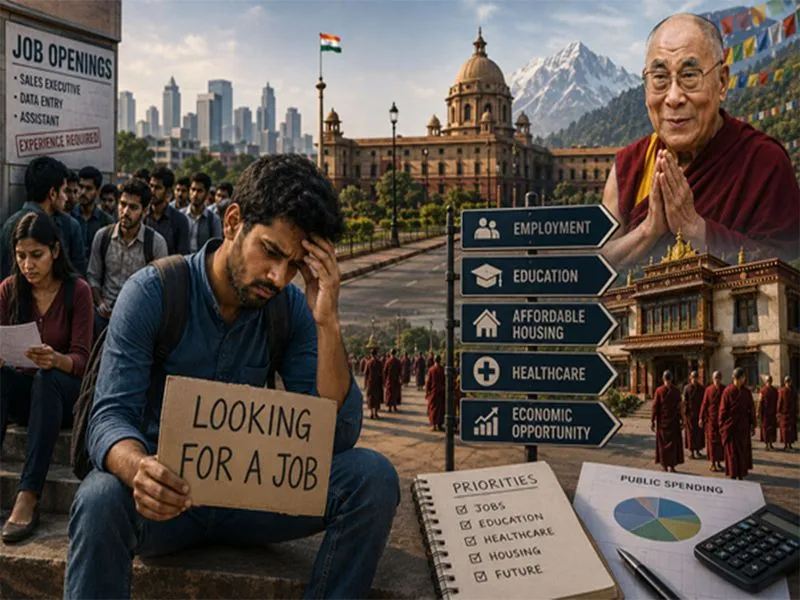
India faces ongoing challenges in youth employment, with a 9.9% unemployment rate among those aged 15-29 and 13.6% in urban areas as of 2025. Despite educational progress, many young people struggle with job stability, rising living costs, and housing affordability. Economic uncertainties, including global commodity price fluctuations and supply-chain issues, affect public spending decisions. Concurrently, public discussion has emerged around a proposed new residence for the Dalai Lama amid these economic concerns.
First-hand measurement across 2 sources
We measured how 2 outlets covered this story. Coverage leans balanced overall (Left 30%, Centre 60%, Right 10%). Overall sentiment is neutral (42/100). Lens Score 33/100 — low public interest.
Outlets analysed (first-hand measurement by TBN's Bias Engine):
- businessstandard— balanced framing, neutral sentiment
- thetribune— balanced framing, neutral sentiment
AI Analysis
The articles present a primarily economic and social perspective focusing on youth unemployment and public spending priorities without overt political alignment. They include government acknowledgments of economic challenges and public concerns, reflecting a balanced view of policy issues and societal impacts. The mention of the Dalai Lama's residence proposal introduces a political dimension but is reported as part of public discourse rather than partisan framing.
The overall tone is measured and factual, highlighting ongoing challenges faced by Indian youth in employment and economic conditions. While concerns about unemployment and economic pressures are emphasized, the coverage remains neutral without sensationalism, balancing acknowledgment of progress in education with persistent difficulties and public debate on spending priorities.