Skip to content
Get the Balanced News app for a better experience!
The Balanced News Logo
Analytics
The Balanced News Logo

Stay Balanced, Stay Informed

Menu
  • Browse News
  • Underreported Stories
  • Curated Feeds
  • Insights
  • Analytics
  • Our Writers
  • About Us
  • Download App
Learn
  • How It Works
  • Bias Detection
  • Lens Score
  • Source Bias Checker
  • Accountability
  • Custom Feeds
Newsroom
  • Writers & Analysts
  • About TBN
  • Editorial Standards
  • Corrections Policy
  • Our Partners
  • Insights
Socials
  • Youtube
  • Instagram
  • X
  • Facebook
News Categories
  • Trending
  • Politics
  • Sports
  • Business
  • Tech
  • Entertainment
  • Health
  • Science
  • Crime
  • Lifestyle
  • National
  • International
  • Good News
  • Crypto

Get Our App

Available for iOS and Android


LensFeedsInsightsAnalyticsTrendingGood NewsSportsPoliticsBusinessCrimeTechEntertainmentHealthNationalInternational

© 2026 The Balanced News. All rights reserved.

About UsEditorial StandardsCorrectionsHelp & SupportPrivacy PolicyTerms & Conditions
Vande Mataram's Historical Role and Its Status as India's National Song
Categories

Categories

Related Coverage

Select a news story to see related coverage from other media outlets.

Related Coverage

Select a news story to see related coverage from other media outlets.

  1. Home
  2. /
  3. Politics

Vande Mataram's Historical Role and Its Status as India's National Song

Analysed 22 Aug 2026·2 sources analysed·India·Politics
Vande Mataram's Historical Role and Its Status as India's National SongPreviousNext

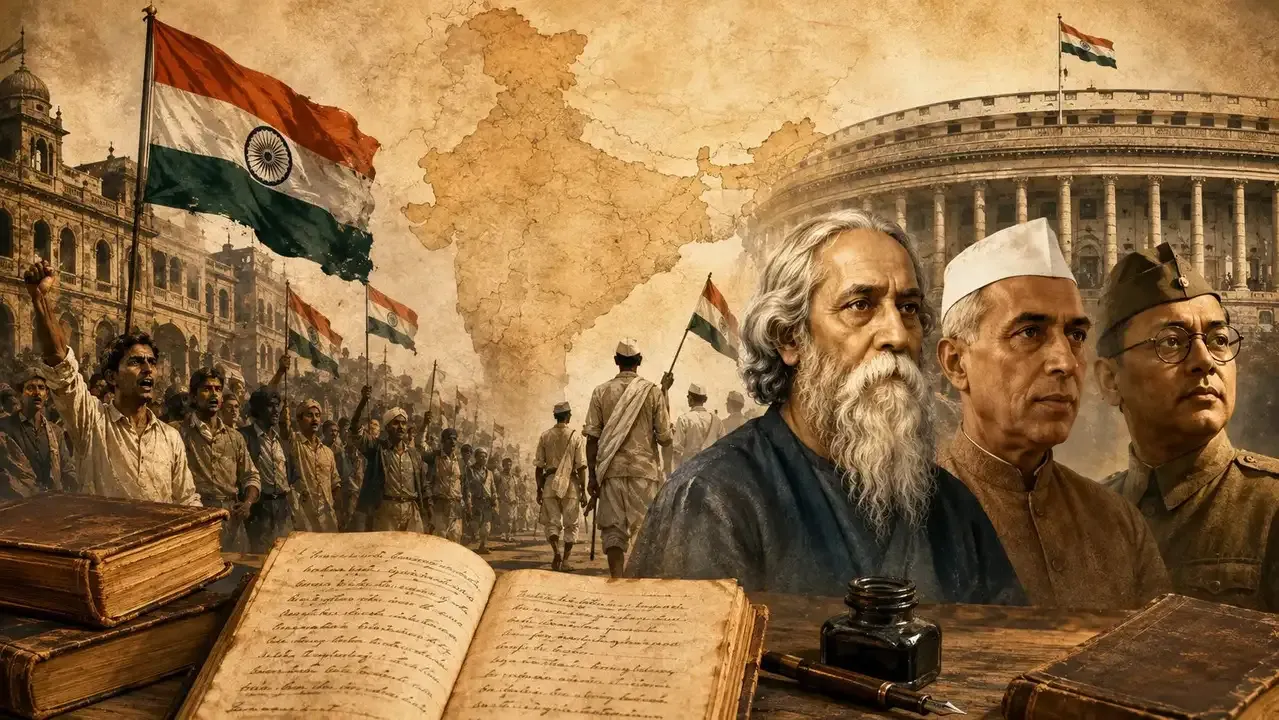
Vande Mataram, written by Bankim Chandra Chattopadhyay in the 19th century and featured in his novel Anandamath, has played a significant role in India's history. It became a symbol of resistance during the 1905 Swadeshi movement against British colonial policies. While the song originally had six stanzas, only the first two are commonly sung at national events due to historical controversies. Its evolution reflects its importance as both a cultural and political emblem in India's freedom struggle.

Sentiment
59%
TBN's observations

First-hand measurement across 2 sources

We measured how 2 outlets covered this story. No outlet gave this story a measurable political slant — there is no left–right reading to report. Overall sentiment is neutral (59/100). Lens Score 28/100.

Outlets measured: timesnow, timesnow. See how each one headlined and framed the same story in the source comparison below.

AI analysis of 2 sources · Published under editorial oversight by The Balanced News
Analysed 22 Aug 2026· How this analysis is produced· Editorial standards· Corrections

AI Analysis

Sentiment — Neutral (59/100)

Sentiment was consistent across outlets (50–68/100), indicating broadly factual reporting rather than editorialising.

Coverage timeline

timesnow broke this story on 21 Aug, 10:42 am. Other outlets followed.

21 Aug, 10:42 am2 sources · 17 h22 Aug, 03:20 am
  1. 1
AI analysis by the TBN Bias Engine · beat methodology byPrajakta Kale· Political Analyst· editorial standards byOjas Kale
← Previous
Assam Forum Urges Scientific Approach to Address Flood and Environmental Challenges
Next →
Clash Between ABVP and NSUI at Pune COEP Ahead of Rahul Gandhi Event
timesnow21 Aug, 10:42 am
Why Vande Mataram Has Emerged as a Clarion Call Against Radical Forces
  • 2
    timesnow22 Aug, 03:20 am
    Vande Mataram: From a Poem to a National Song And The Story of its Six Stanzas
  • Story context

    Category
    Politics
    Location
    India
    Sources analysed
    2
    Last analysed
    22 Aug 2026
    Key entities
    Vande MataramAnandamathBankim Chandra ChatterjeeSwadeshi movementBritish RajPartition of Bengal (1905)George Curzon, 1st Marquess Curzon of KedlestonBengalIndiaIndian people