West Bengal State Formation Day Sparks Debate on Identity and Demographics
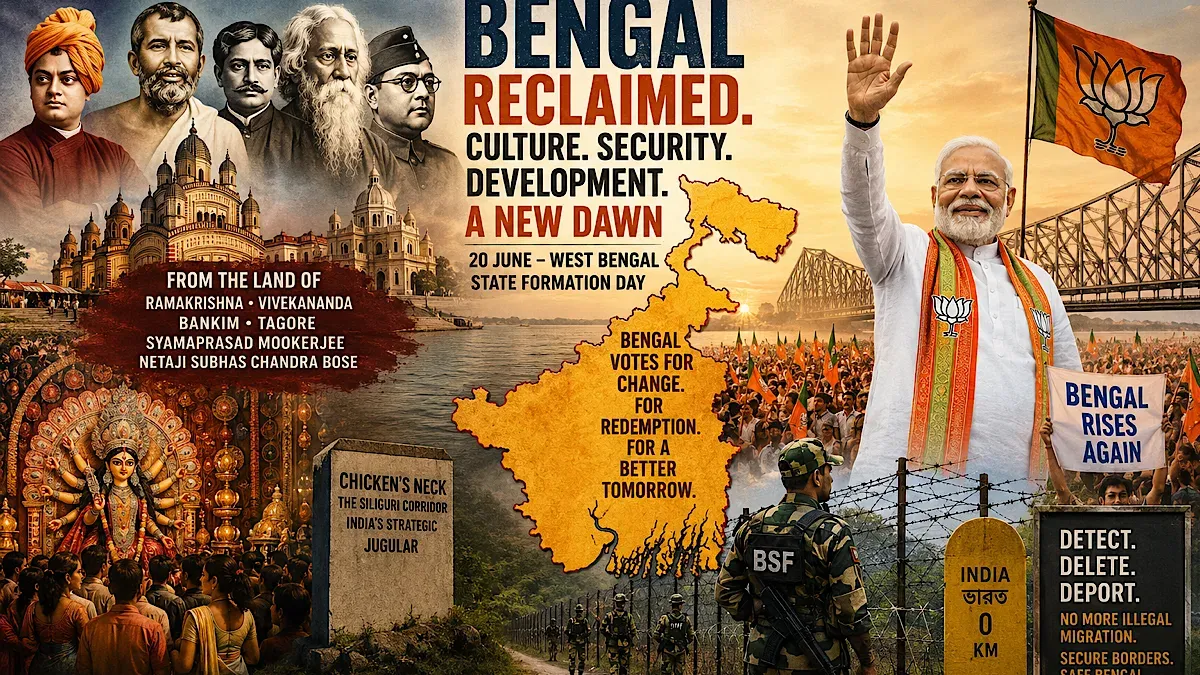
West Bengal's State Formation Day on June 20 marks the 1947 decision to partition Bengal, creating the Indian state with a Hindu majority. The commemoration has sparked debate about Bengali identity, demographic changes, and political shifts. While some view it as reclaiming cultural heritage amid concerns over migration and political control, others question linking identity to administrative events, highlighting historical complexities and differing perspectives on Bengal's partition and cultural unity.
First-hand measurement across 2 sources
We measured how 2 outlets covered this story. Coverage leans right-leaning overall (Left 15%, Centre 22%, Right 63%). Overall sentiment is neutral (60/100). Lens Score 33/100 — low public interest.
Outlets analysed (first-hand measurement by TBN's Bias Engine):
- thestatesman— right-leaning framing, neutral sentiment
- thetelegraph— right-leaning framing, neutral sentiment
AI Analysis
The articles reflect contrasting political perspectives: one emphasizes concerns over demographic shifts and political reclamation by a nationalist party, framing it as a cultural rescue; the other questions the politicization of West Bengal Day and cautions against narrowing Bengali identity to administrative milestones. Both viewpoints highlight historical and cultural contexts but differ in framing the significance of the commemoration and its political implications.
The overall tone is mixed, combining a sense of cultural pride and political assertion with skepticism and caution. One article conveys urgency about demographic and political changes, while the other adopts a reflective stance on identity and historical irony. This blend results in a balanced sentiment that neither fully endorses nor dismisses the commemoration's significance.