Sonam Wangchuk's Hunger Strike Highlights Education Accountability Debate in India
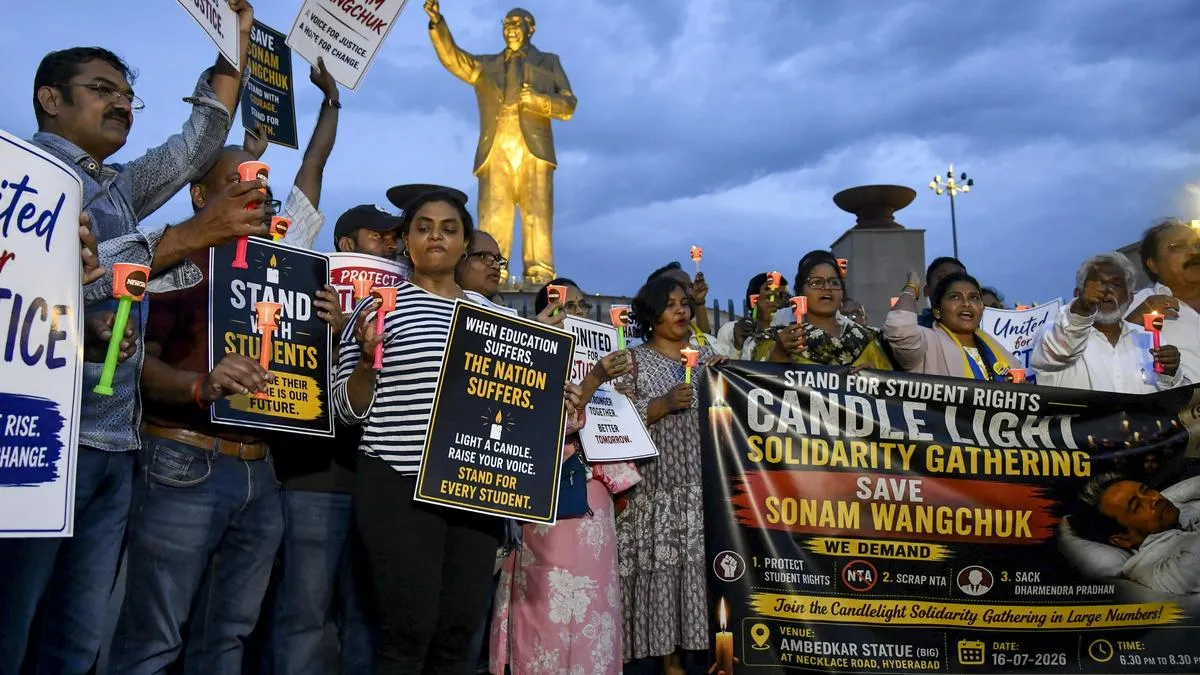
Sonam Wangchuk, an engineer and educator, is on an indefinite hunger strike demanding the resignation of Union Education Minister Dharmendra Pradhan over exam-related issues, aiming to highlight accountability in India's education system. Supporters view this as a call for institutional reform, while critics label it political blackmail undermining democratic mandates. Commentators note a broader challenge in assigning responsibility for systemic problems, emphasizing the need for clear accountability beyond individual actors.
First-hand measurement across 3 sources
We measured how 3 outlets covered this story. Coverage leans centre-left overall (Left 37%, Centre 36%, Right 27%). Overall sentiment is neutral (42/100). Lens Score 18/100 — low public interest.
Outlets analysed (first-hand measurement by TBN's Bias Engine):
- thehindu— balanced framing, neutral sentiment
- indianexpress— left-leaning framing, negative sentiment
- news18— right-leaning framing, negative sentiment
AI Analysis
The articles represent diverse political perspectives: one emphasizes Wangchuk's protest as a moral appeal for educational reform and institutional accountability; another frames it as a politically motivated challenge to a democratically elected minister; a third reflects on the broader difficulty of attributing responsibility in governance. This range captures both activist and government-supporting viewpoints, as well as analytical commentary on political accountability.
The overall sentiment is mixed, combining concern and respect for Wangchuk's personal sacrifice with criticism of the protest's political implications. While some coverage underscores the urgency of educational reform and accountability, others highlight skepticism about the protest's motives and effectiveness. Analytical pieces add a neutral, reflective tone on systemic governance challenges, balancing emotional and critical elements.