India Criticizes Pakistan at UN, Questions Indus Waters Treaty and Terrorism Policies
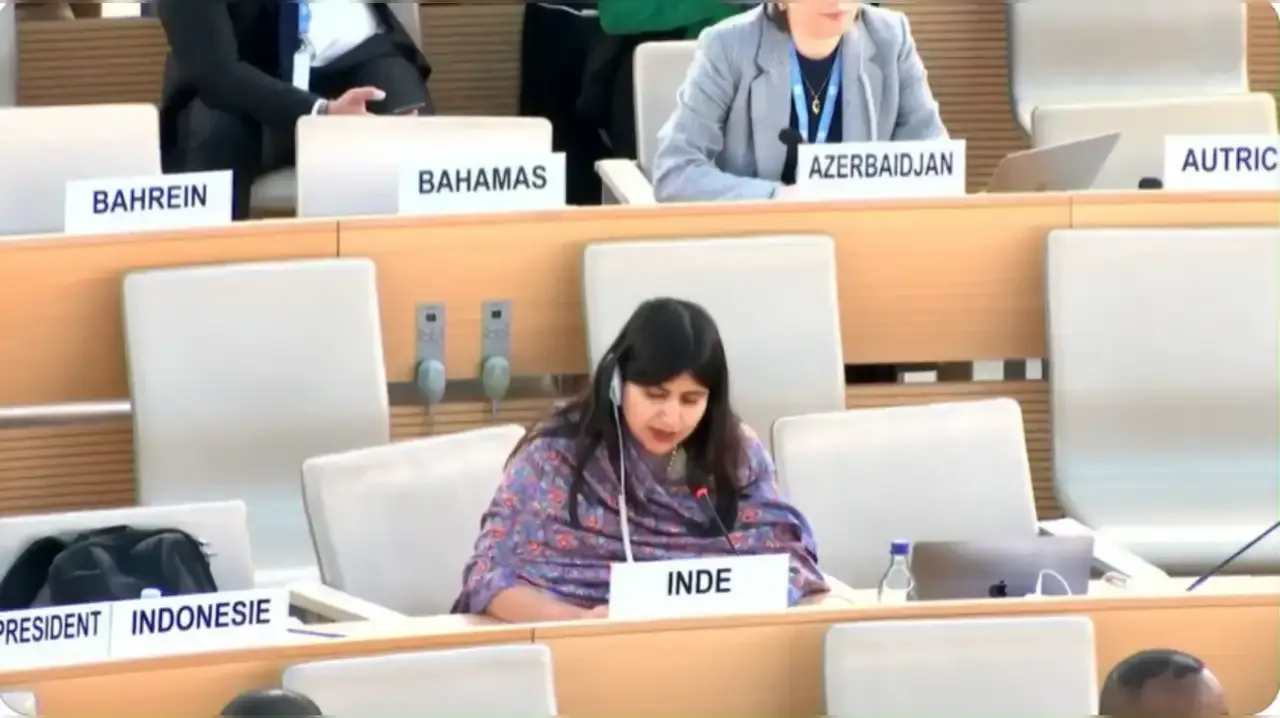
At the 62nd UN Human Rights Council session, India's First Secretary Anupama Singh sharply criticized Pakistan, describing it as a "Frankenstein state" that sponsors terrorism while portraying itself as a victim. India questioned the relevance of the 1960 Indus Waters Treaty, calling it outdated and suspended its implementation following a terror attack until Pakistan ceases support for cross-border terrorism. Singh reaffirmed Jammu and Kashmir as an integral part of India and condemned Pakistan's actions in Pakistan-occupied Jammu and Kashmir, highlighting repression and civilian casualties.
First-hand measurement across 6 sources
We measured how 6 outlets covered this story. Coverage leans right-leaning overall (Left 10%, Centre 21%, Right 69%). Overall sentiment is neutral (34/100). Lens Score 32/100 — low public interest.
Outlets analysed (first-hand measurement by TBN's Bias Engine):
- thestatesman— right-leaning framing, neutral sentiment
- wion— right-leaning framing, negative sentiment
- news18— right-leaning framing, negative sentiment
- republicworld— right-leaning framing, negative sentiment
- timesnow— right-leaning framing, negative sentiment
- thetribune— right-leaning framing, neutral sentiment
AI Analysis
The article group predominantly reflects India's official diplomatic stance, emphasizing accusations against Pakistan regarding terrorism and the Indus Waters Treaty. Pakistan's perspective is largely absent, with coverage focusing on India's rebuttals and criticisms. The framing centers on India's narrative of Pakistan as a state sponsoring terrorism and the call for treaty reassessment, reflecting a government viewpoint without presenting counterarguments from Pakistan.
The overall tone across the articles is critical and assertive, with India strongly condemning Pakistan's policies and actions. The language conveys disapproval and highlights tensions, particularly regarding terrorism and Kashmir. While the sentiment is predominantly negative toward Pakistan, it remains formal and diplomatic, focusing on official statements rather than emotive or sensational language.